

I have looked at a lot of Web3 gaming projects, and to be honest, most of them start sounding the same after a while. Nice visuals, a token, some reward mechanics, a promise of community, and the usual idea that this time the system will be sustainable. That is exactly why @Pixels caught my attention in a different way when I looked deeper.
At first, it is easy to see it as just another casual blockchain game. Farming, progression, social features, light gameplay, simple access. But the more I paid attention, the more I felt that the real story is no longer just the game itself. For me, the interesting part now is how the ecosystem seems to be evolving through Stacked.
What stands out is that Stacked does not feel like a random extra feature added for hype. It feels more like an attempt to solve one of the biggest problems in Web3 gaming: most reward systems attract activity, but they do not build real attachment. They push people to show up, but not necessarily to stay. That difference matters a lot.
What I find interesting about @Pixels is that the conversation is slowly shifting from simple in game rewards to a broader structure built around missions, streaks, behavior, targeting, anti abuse systems, and smarter reward logic. In other words, it feels less like a project asking, “How do we distribute more?” and more like one asking, “How do we reward better?”
That is a much more important question.
Because in my view, the failure of many GameFi projects was never just about token price. It was about incentive design. They rewarded the wrong behavior, too early, too aggressively, and then acted surprised when people extracted value instead of building it. What makes @Pixels more interesting to me now is that it seems to understand that retention is not created by bigger emissions alone. It is created by better participation loops.
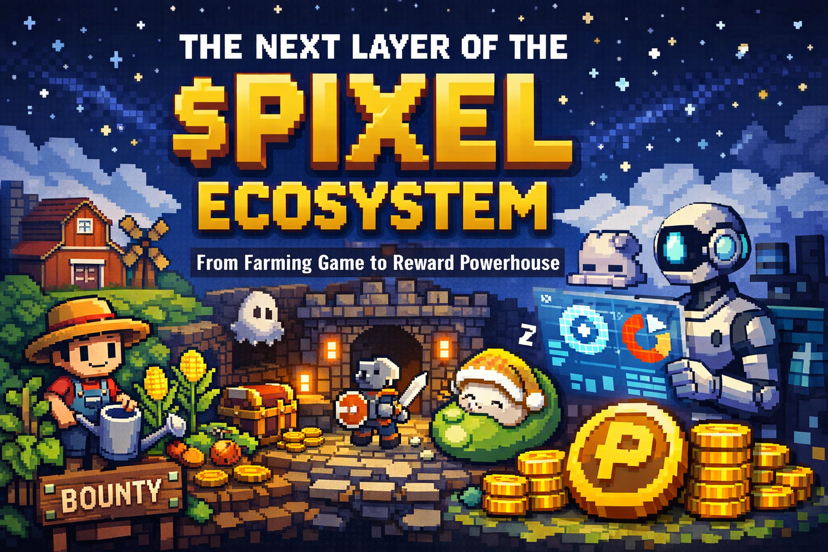
That is where $PIXEL starts to look more meaningful to me.
If Stacked keeps expanding as a reward and retention layer, then $PIXEL may stop being seen as something tied only to one gameplay loop. It starts looking more like a piece of a wider ecosystem structure. And for me, that is where the real upside in the story is. Not in short term excitement, but in whether the system can connect engagement, utility, and sustainability in a way that actually lasts.
I am not saying everything is already proven. It is still early, and execution will decide everything. But I do think @Pixels is moving in a more interesting direction than many people realize.
That is why I keep watching it.
Not because it is loud.
Because it feels like it is trying to build something deeper.