
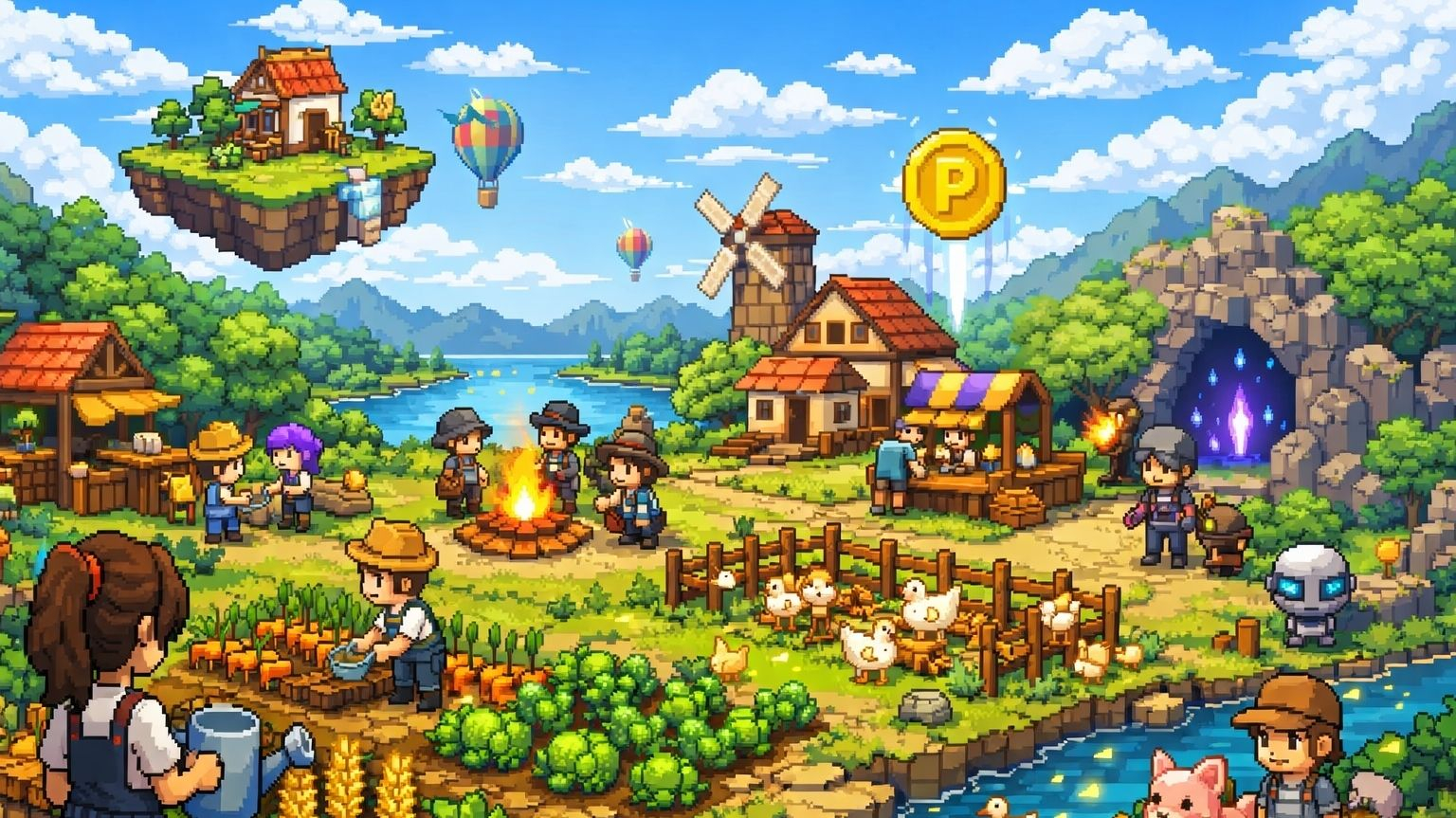
Gaming has always evolved with the times. From simple arcade machines to massive online worlds, every generation has introduced new ways for people to play, connect, and compete. Today, another transformation is taking place as players begin to look for more than entertainment alone. They want experiences that feel rewarding, communities that feel real, and progress that carries value. Pixels.xyz is part of that new wave, and it is doing it in a way that feels natural, fun, and easy to enjoy.
At first glance, Pixels.xyz looks like a charming farming adventure with colorful pixel art and a relaxed atmosphere. It brings back the comfort of classic games where planting crops, gathering resources, and exploring a peaceful world were enough to keep players engaged for hours. But beneath that familiar style is a deeper experience built for modern players. It combines gameplay, social interaction, and digital ownership into one growing ecosystem where time spent inside the game can feel more meaningful.
That is one of the biggest reasons Pixels has captured attention. Many people are curious about Web3 gaming, but they often feel overwhelmed by technical language and complicated systems. Pixels removes much of that friction. Instead of forcing players to understand complex technology first, it invites them into a game world that feels welcoming from the very beginning. You do not need to be an expert to enjoy planting your first crop or completing your first quest. You simply start playing, and the deeper layers reveal themselves over time.
The beauty of this approach is that it respects the player. Good games should not feel like homework. They should feel like places you want to return to after a busy day. Pixels understands that idea well. There is something deeply satisfying about logging in, checking your farm, harvesting resources, and seeing gradual progress unfold. Small actions lead to visible rewards, and that sense of movement keeps players engaged without pressure.
As the experience grows, so do the opportunities inside the world. Farming may be the starting point, but it is far from the whole story. Players can craft useful items, gather rare materials, complete tasks, explore new areas, and interact with others across the map. Every session can feel a little different depending on what you choose to focus on. Some players enjoy efficiency and planning. Others prefer exploration or community activities. The game leaves room for different personalities, which is one of its strongest qualities.
Community is where Pixels becomes even more interesting. Many farming games are peaceful but solitary. You manage your land, make progress, and play mostly alone. Pixels introduces a shared world filled with real people who are building farms, trading goods, helping each other, and creating a lively environment. This changes the feeling of the game completely. A simple task becomes more enjoyable when you know thousands of others are growing alongside you.
Online communities often decide whether a game becomes memorable or forgettable. Players stay where they feel connected. They return where friendships form and where their presence matters. Pixels benefits from that social energy because it turns individual progress into part of a larger world. Even casual interactions can make the game feel alive. A trade, a conversation, or shared advice can transform an ordinary moment into something memorable.
Another reason Pixels stands out is its ownership model. In traditional games, players may spend years collecting items, improving accounts, or building status, yet they rarely have meaningful control over those digital assets. Pixels introduces a system where certain in-game elements can carry ownership utility. This creates a stronger emotional connection because progress feels more personal. Your farm is not just temporary data on a server. It becomes part of your journey inside the ecosystem.
Of course, ownership alone would not be enough to make the project special. If the gameplay were dull, the technology would not save it. What gives Pixels real potential is that the game remains enjoyable at its core. The visuals are warm and nostalgic. The world feels approachable. The systems are rewarding without being overwhelming. It understands a simple truth that many projects forget: players come for fun before they stay for features.
The pixel-art design deserves special attention because it plays a larger role than many people realize. Great visual style is not only about appearance. It shapes emotion. Pixels creates a sense of comfort and curiosity the moment you enter the world. It feels familiar, almost like revisiting a childhood memory, while still offering something new. That balance between nostalgia and innovation helps the game appeal to both experienced gamers and newcomers.
There is also strategy beneath the relaxed surface. Resources matter. Time matters. Choices matter. Should you focus on farming cycles, crafting items, exploring for materials, or participating in the player economy? Different paths can lead to success, which makes the game feel open rather than restrictive. Instead of forcing everyone into one perfect method, Pixels allows players to create their own rhythm.
That freedom is valuable because no two players enjoy games in exactly the same way. Some want to optimize every minute. Some want to decorate and create. Some want to socialize more than grind. A healthy game world supports all of these styles, and Pixels shows signs of understanding that balance. It gives structure without removing creativity.
For anyone starting fresh, the smartest move is to slow down and enjoy the learning process. New players often rush into games searching for the fastest rewards, but long-term enjoyment usually comes from understanding the systems naturally. Learn how farming works. Explore the map. Complete beginner tasks. Watch how the economy moves. Talk with other players. The more familiar the world becomes, the more opportunities you begin to notice.
Patience also protects players from one of the most common mistakes in emerging gaming spaces: chasing hype instead of value. Trends can move quickly, and excitement can rise and fall overnight. But games built around strong communities and enjoyable mechanics tend to last longer than projects powered only by speculation. Pixels appears strongest when approached as a world to enjoy rather than a shortcut to quick rewards.
Another smart strategy is to specialize over time. Once you understand the basics, focus on the parts of the game you genuinely enjoy. If farming relaxes you, become efficient at it. If trading interests you, study market behavior. If exploration excites you, learn where opportunities hide. Progress feels better when it matches your personality instead of copying someone else’s path.
Consistency is often more powerful than intensity. A player who returns regularly, improves slowly, and adapts over time usually builds stronger results than someone who rushes for a few days and quits. Pixels rewards steady engagement, and that mirrors real life more than many games do. Meaningful growth rarely happens all at once.
Some people still believe Web3 gaming only attracts players focused on profit. That idea misses the bigger picture. Rewards may bring attention, but community, creativity, and ownership are what create loyalty. Pixels works because it offers multiple reasons to stay. If markets become quiet, the game world can still be worth visiting. If rewards fluctuate, friendships and progress still matter.
The future potential of Pixels is perhaps the most exciting part. A successful online world can become much more than a game. It can grow into a social space, a creator platform, a digital economy, or a long-term community hub. When enough people gather around a shared world, unexpected possibilities begin to emerge. That is how lasting ecosystems are built.
Every growing platform will face challenges. Balance changes, economic adjustments, feature updates, and player expectations are part of the journey. No online game develops perfectly. What matters most is whether the project keeps improving and listening. Teams that adapt with their communities often build something stronger over time.
In the end, Pixels.xyz feels important because it shows that innovation does not need to come at the cost of enjoyment. It proves that modern technology can support fun instead of replacing it. It demonstrates that rewards can exist without removing creativity, and ownership can exist without making a game feel cold or complicated.
Sometimes the future of gaming does not arrive through giant explosions or flashy graphics. Sometimes it begins with a small digital farm, a handful of seeds, and a community of players growing something together.
