
Pixels & Its Stacked Ecosystem: Building the Future of Modular Digital Innovation
In today’s rapidly evolving digital landscape, platforms that offer flexibility, scalability, and seamless integration are leading the next wave of innovation. Pixels, as a concept and ecosystem, represents more than just a visual unit—it symbolizes modularity, composability, and the power of stacking technologies to create dynamic digital experiences.
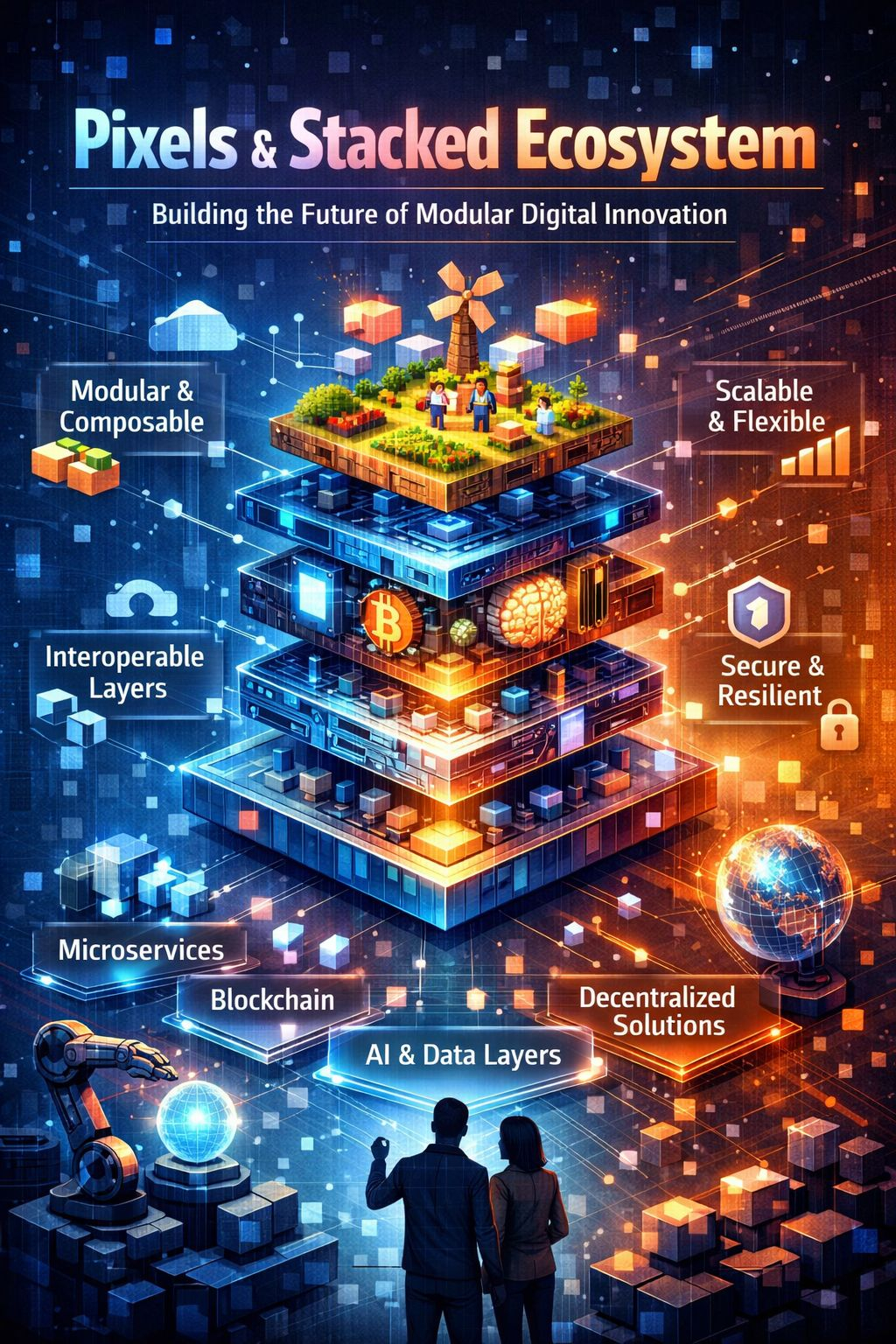
At its core, the Pixels ecosystem is built on the idea of “stackability.” Instead of relying on monolithic systems, it encourages the use of smaller, specialized components—“pixels”—that can be layered together to form complex applications. This modular approach allows developers and creators to customize solutions according to specific needs, reducing redundancy and increasing efficiency.
One of the key strengths of the stacked ecosystem is interoperability. Each layer in the stack communicates with others through well-defined interfaces, enabling seamless data flow and functionality. Whether it’s integrating APIs, blockchain layers, AI models, or user interface components, Pixels ensures that each element can function independently while contributing to the overall system.
Another critical advantage is scalability. Traditional systems often struggle when scaling due to tightly coupled architectures. In contrast, a stacked ecosystem allows individual components to scale independently. For example, a data-processing layer can expand without affecting the user interface layer, ensuring optimal performance even under heavy demand.
Security and resilience are also enhanced in this model. By distributing functionality across multiple layers, the system avoids single points of failure. If one component is compromised or fails, others can continue operating, maintaining overall system stability. This layered defense strategy is especially relevant in decentralized environments and Web3 applications.
Moreover, the Pixels ecosystem fosters innovation by lowering the barrier to entry. Developers can build on existing layers instead of starting from scratch, accelerating development cycles. This encourages experimentation, rapid prototyping, and the creation of niche solutions that can later be integrated into larger systems.
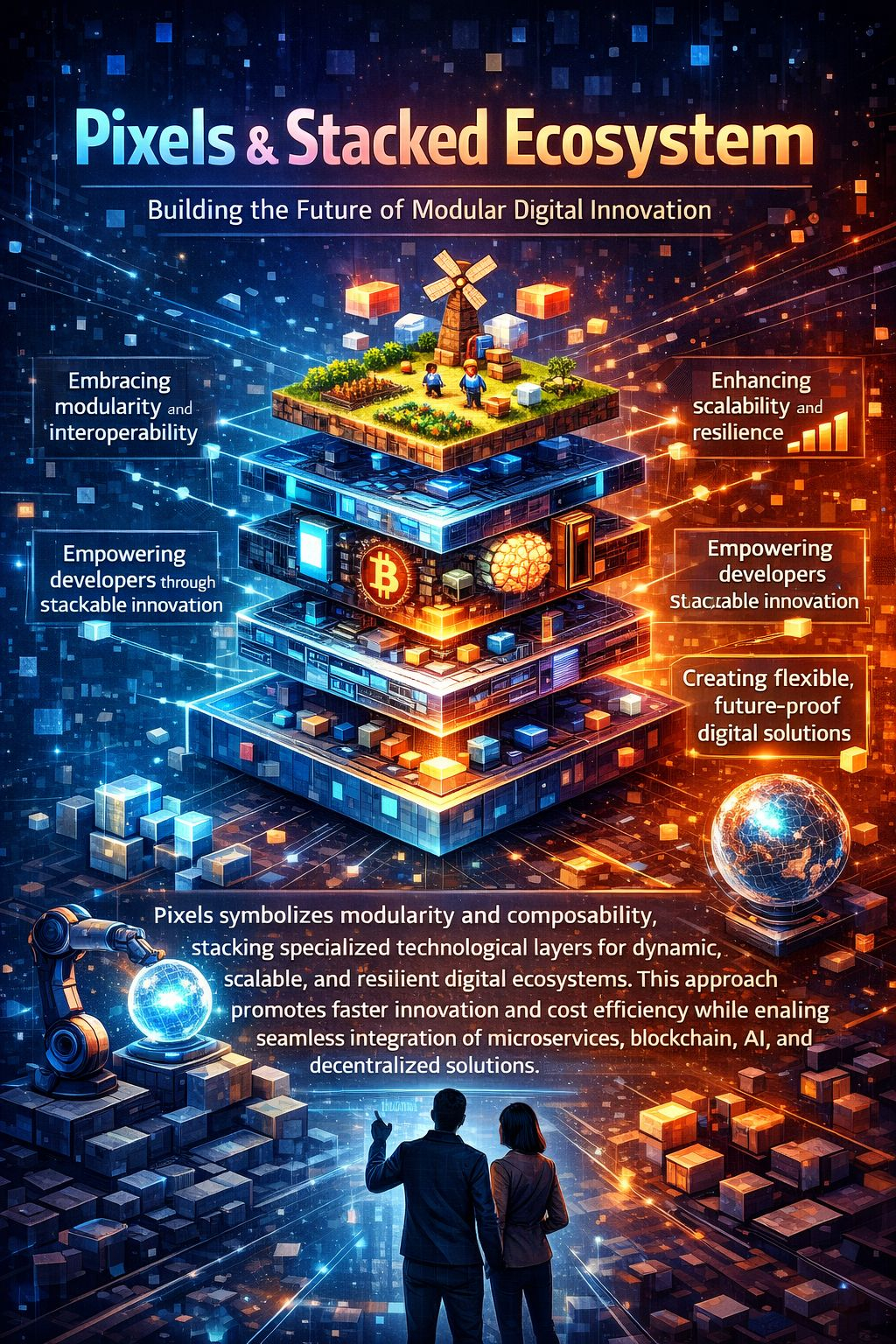
From a business perspective, the stacked approach enables cost efficiency and adaptability. Organizations can adopt only the layers they need, avoiding unnecessary infrastructure costs. As requirements evolve, new components can be added or replaced without overhauling the entire system.
Looking ahead, the Pixels and stacked ecosystem model aligns closely with emerging trends such as microservices, composable architecture, and decentralized platforms. It empowers both developers and businesses to create flexible, future-proof solutions that can adapt to changing technologies and user demands.
In conclusion, Pixels is not just a technological framework—it is a philosophy of building smarter, modular, and interconnected systems. By embracing a stacked ecosystem, the digital world moves closer to a future where innovation is faster, systems are more resilient, and possibilities are virtually limitless.