
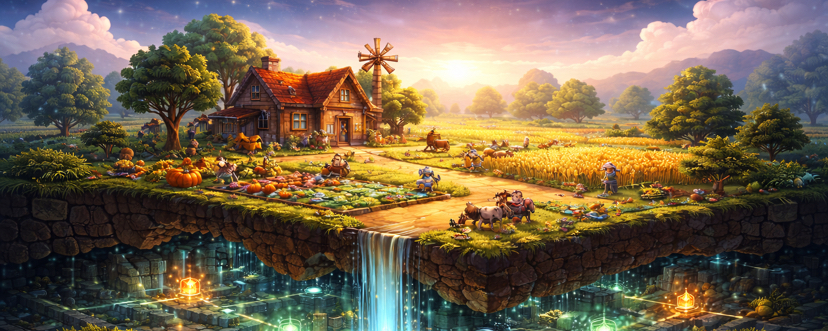
At first, Pixels can look almost too simple.
You plant. You gather. You decorate. You move through a soft, familiar world that does not seem difficult to understand. That surface is part of why the game works. It lowers resistance. It makes the player feel comfortable before asking them to think too hard about anything.
But the longer I look at it, the less I think its real strength is simplicity alone.
I think its real strength is that it teaches players how to read value.
That may sound abstract at first, but I think it matters more than people realize. In many games, value stays hidden behind numbers, menus, or systems that only a small group of players fully understands. Progress exists, but the logic behind that progress often feels distant. You do things, rewards appear, and eventually you learn what is good mostly through repetition.
Pixels feels different to me.
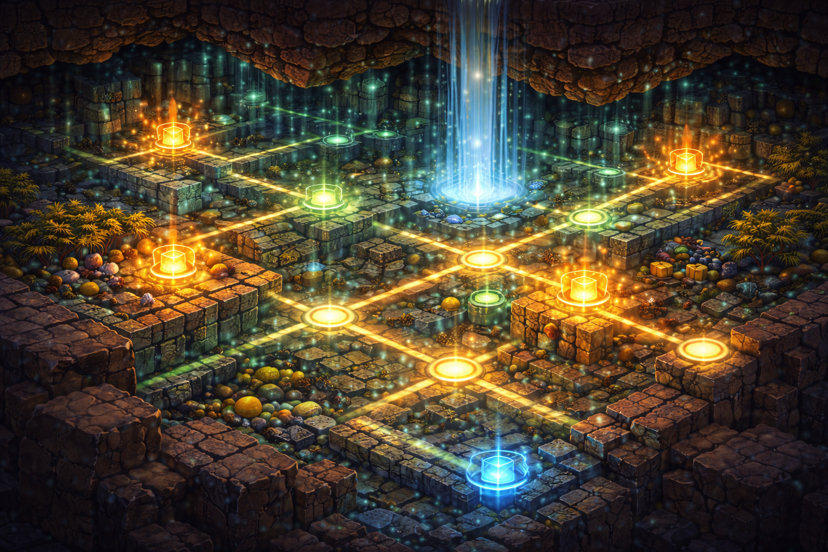
Here, value becomes visible through the world itself. You start noticing that not all resources matter in the same way. Not all upgrades open the same doors. Not all choices are only cosmetic. Some decisions affect access. Some affect production. Some affect visibility. Some affect how efficiently you can move through the world over time.
And once that becomes clear, the game stops feeling like a set of casual actions and starts feeling more like a readable system.
That is what makes it interesting.
It is not only asking players to progress. It is teaching them what is worth paying attention to.
Scarcity matters.
Placement matters.
Timing matters.
Aesthetics can matter.
Ownership can matter.
Routine can matter.

These things are not explained only as theory. They are felt through interaction. The player learns them by moving through the world and seeing how different choices lead to different outcomes. That creates a very different relationship with the economy underneath the game.
Instead of value feeling external, it starts to feel intuitive.
And I think that is one of the quiet reasons @Pixels has more depth than people assume. What looks like a light farming game on the surface is also a world where players are slowly building economic intuition without necessarily calling it that.
They are learning how to read signals.
How to recognize constraints.
How to notice opportunities.
How to tell the difference between motion and progress.
That is a big shift, because once a game can do that well, it becomes more than a loop of rewards. It becomes a place where players begin to understand how value is created inside the world, not just how to collect it after the fact.
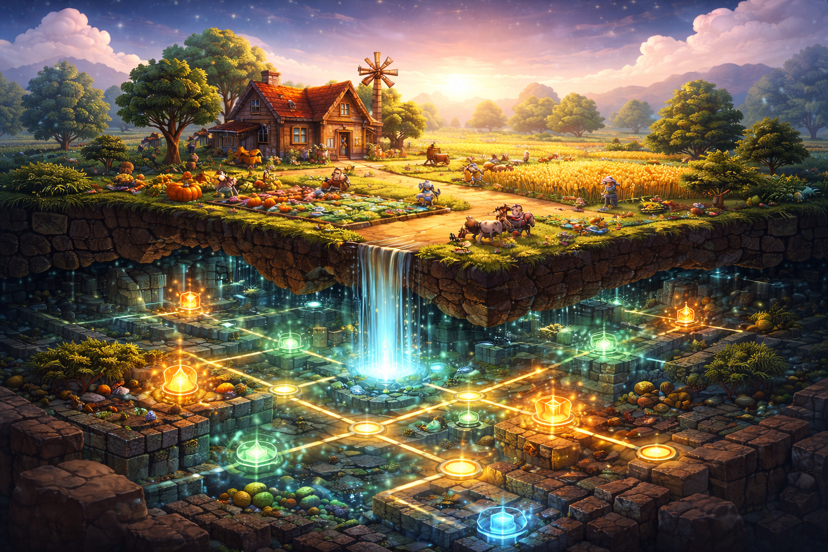
For me, that is one of the most underrated things @Pixels is doing.
It is not just building progression.
It is not just building retention.
It is building legibility.
And in digital worlds, that might matter more than we think.
Because a system becomes stronger when players do not just use it, but actually understand what matters inside it.