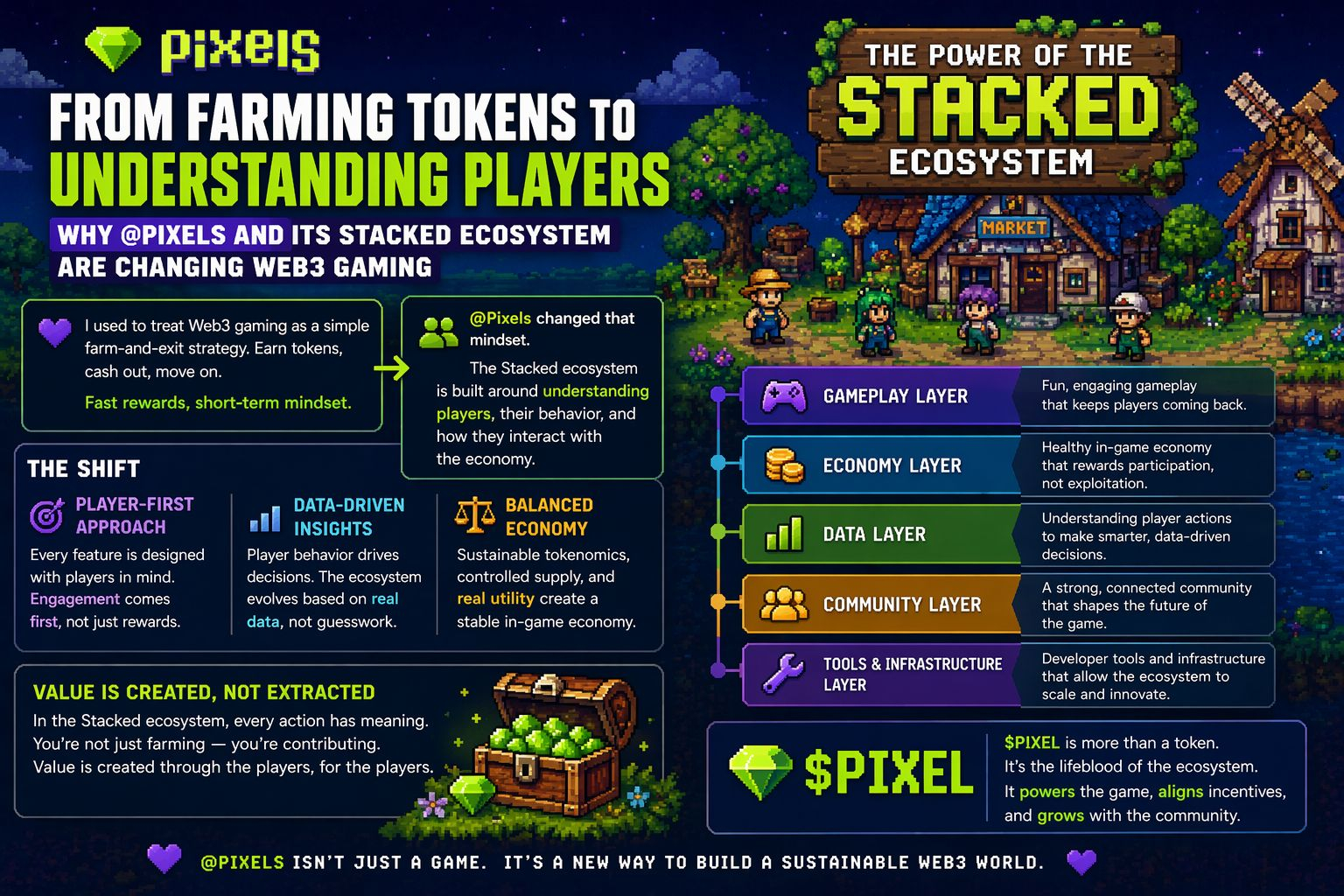
used to treat Web3 gaming as a simple farm-and-exit strategy. The goal was clear: earn tokens quickly, secure profits, and move on before the hype faded. It felt efficient, but at the same time, it lacked depth and long-term vision. Most projects were built around short-term incentives, and once rewards dropped, user interest disappeared just as fast.
Everything changed when I started exploring @Pixels and its Stacked ecosystem.
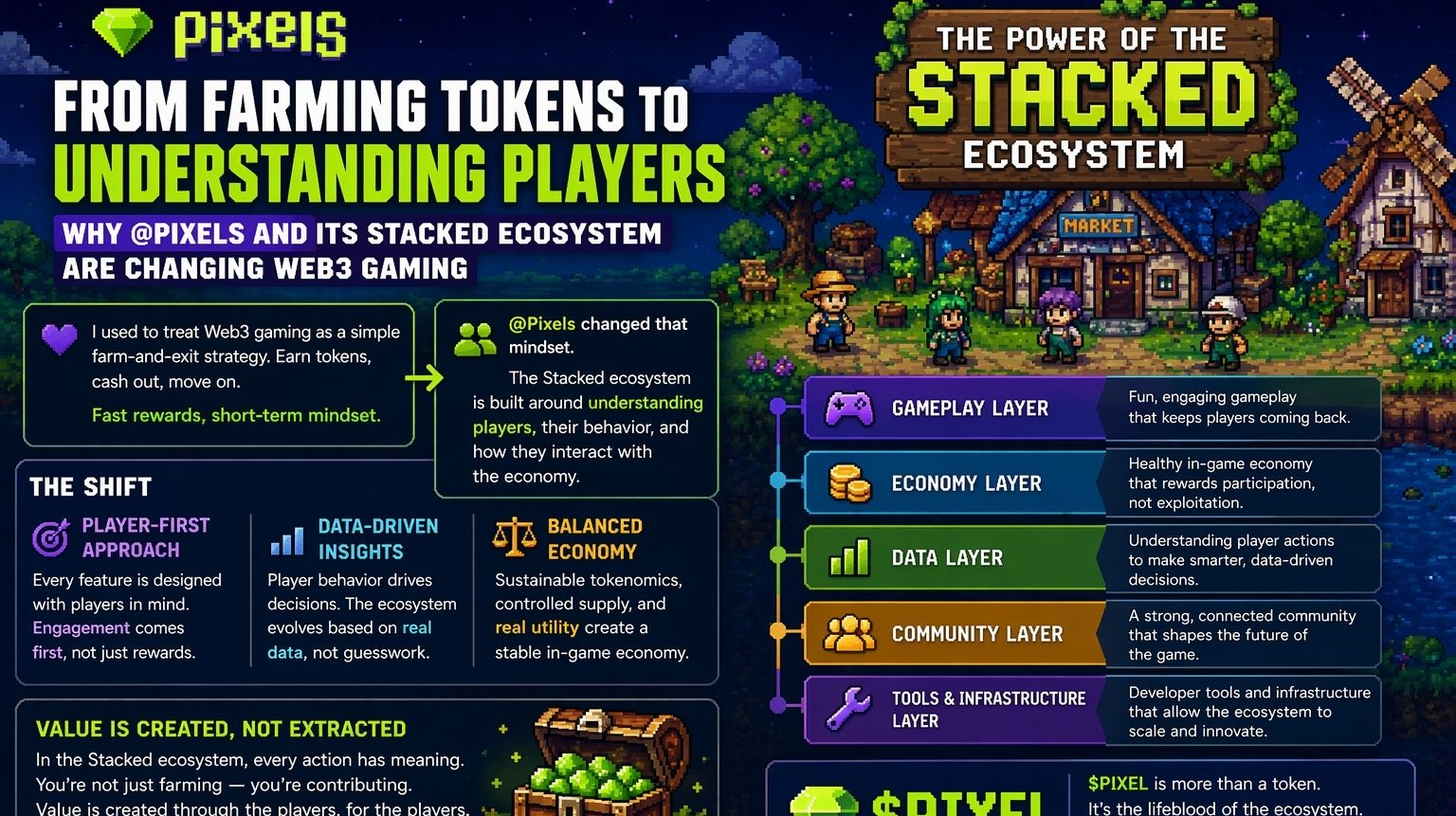
What makes @Pixels different is its focus on understanding players rather than just rewarding them. The Stacked ecosystem is designed around how users behave, how they interact with the in-game economy, and how their actions contribute to a larger system. This isn’t just play-to-earn — it’s play-to-participate, play-to-build, and play-to-grow.
Instead of extracting value from players, the ecosystem creates value through them. Every action has meaning, whether it’s farming, trading, or engaging with the community. This creates a more stable and scalable environment where growth is driven organically, not artificially.
The Stacked model also introduces balance. A healthy economy requires more than rewards — it needs sustainability, controlled token flow, and real utility. That’s where $PIXEL stands out. It’s not just a reward token; it’s a core part of an interconnected system that aligns incentives between players, builders, and the platform itself.
Over time, my perspective shifted. I stopped looking for quick exits and started focusing on long-term participation. That’s the real power of @Pixels — it changes how you think about Web3 gaming.
In a space full of hype-driven projects, @Pixels is building something deeper: a player-first ecosystem with real foundations. And that’s exactly why I believe $PIXEL has strong potential moving forward.
#Web3GamingFuture #PixelTokens