
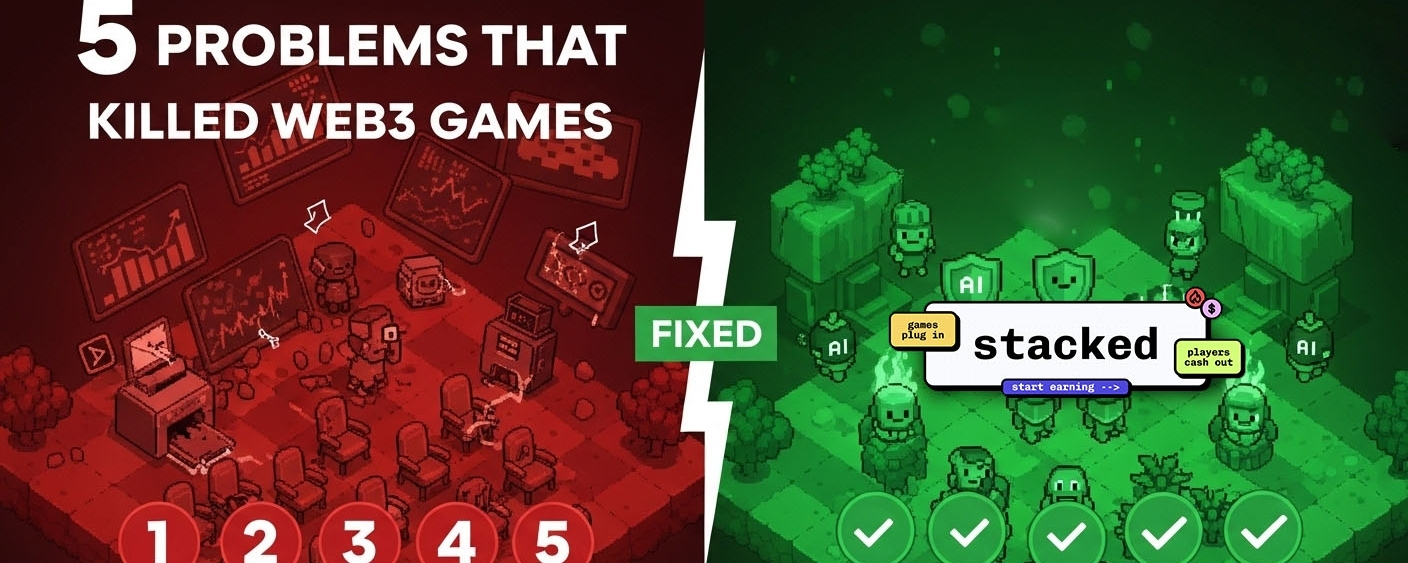

I remember the first time I realized something felt off in Web3 gaming. It wasn’t a dramatic collapse or a headline moment. It was quieter than that. A game I had been watching closely still had users, still had rewards flowing, still had activity on-chain. But underneath, the texture had changed. The players weren’t really playing anymore. They were extracting.
That subtle shift helps explain why so many Web3 games didn’t just struggle, they unraveled.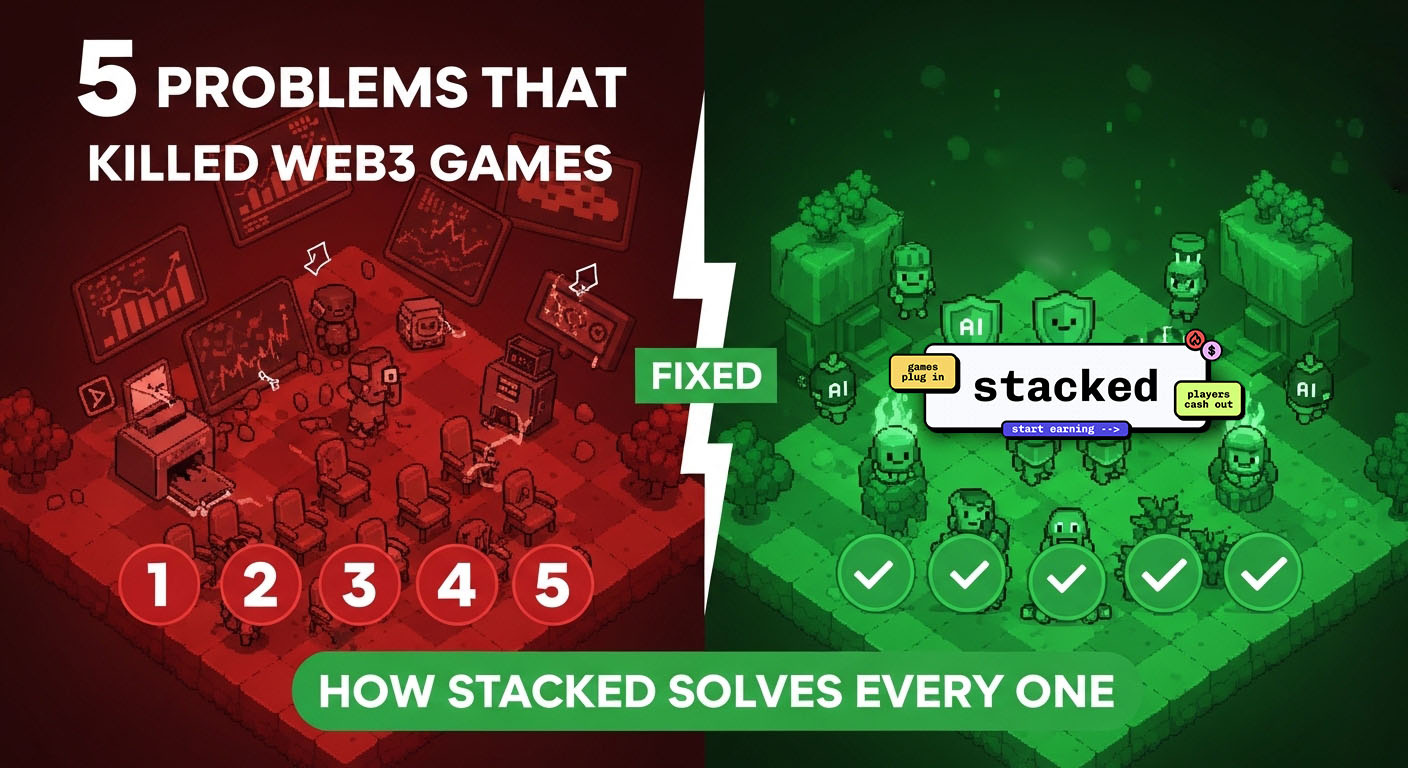
People often blame the bear market, and yes, timing matters. But when you look closer, the collapse lines up too neatly with how rewards were designed. It wasn’t just external pressure. The foundation itself had cracks.
Take the early play-to-earn systems where rewards were distributed broadly without much targeting. On the surface, it looked fair. Everyone could earn. But underneath, there was no distinction between someone who actually cared about the game and someone running scripts to farm tokens. Data from DappRadar showed retention falling sharply in those early models, and that number tells a story. If users aren’t staying, it means the rewards are attracting the wrong behavior. It means the system is feeding activity, not engagement.
And once that dynamic starts, it compounds.
That momentum creates another effect. Bots begin to dominate. Not just a few, but entire networks of them. Sybil attacks, where one actor pretends to be dozens, become rational behavior because the system allows it. Reports from Naavik pointed to this as one of the biggest structural failures in P2E economies. When one person can simulate fifty players, rewards stop being incentives and start becoming leaks.
On the surface, it looks like growth. More wallets, more transactions. Underneath, it’s hollow. The economy is being drained by participants who were never meant to sustain it.
Understanding that helps explain why even the biggest games couldn’t hold their position. Consider what happened with Axie Infinity. At its peak, it defined the space. But then trading volume dropped by 98 percent as token inflation spiraled. That number isn’t just about market cycles. It reveals something deeper. The reward system was injecting more value than the ecosystem could absorb.
And when that imbalance sets in, the system doesn’t correct itself. It accelerates the problem.
Meanwhile, another layer of failure was quietly building. Studios didn’t actually know if their rewards were working. They could see tokens being distributed, but they couldn’t measure whether those tokens were creating retention or revenue. It’s a strange situation when you think about it. In traditional gaming, every incentive is tracked, tested, adjusted. In Web3, for a long time, rewards were just… emitted.
So what you had was an economy without feedback. No clear signal of what was effective. No way to tune the system in real time.
And that lack of feedback loops leads to something more visible. The games themselves start to lose their identity. When rewards are too easy, too frequent, too detached from meaningful actions, they override the gameplay. Players optimize for extraction, not enjoyment. The experience flattens into repetitive tasks because those tasks are the most efficient way to earn.
You could feel it in how people talked about these games. Not in terms of strategy or creativity, but in terms of yield. Once rewards slowed, the illusion broke. And when that happened, there wasn’t enough game left to hold people.
By 2025, over 300 Web3 games had shut down according to DappRadar. That number matters, but what matters more is what it represents. It’s not just failure. It’s a pattern. A system that depended entirely on new players entering to sustain rewards eventually runs out of new players.
Growth was the engine. But growth isn’t stable.
When I first looked at what the Pixels team was building with Stacked, what stood out wasn’t just the features. It was the framing. They weren’t trying to make rewards bigger. They were trying to make them precise.
That distinction changes everything.
On the surface, targeted rewards sound simple. Give incentives to the right players. But underneath, it requires identifying what “right” actually means. Engagement has to be measured in behavior, not just activity. Are players completing meaningful tasks. Are they returning over time. Are they contributing to the ecosystem in ways that sustain it.
If that targeting holds, it shifts rewards from being a cost to being an investment.
The same layered thinking applies to fraud prevention. Blocking bots isn’t just about banning accounts. It’s about making it difficult for fake behavior to mimic real engagement. Stronger detection systems reduce leakage, but they also change incentives. If farming becomes harder, real players face less competition for rewards.
That creates a cleaner signal across the system.
Then there’s the idea of an AI-driven economic layer. It sounds abstract at first, but the core function is straightforward. Monitor the economy in real time and adjust rewards dynamically. If inflation rises, emissions can be reduced. If engagement drops, incentives can be reallocated.
What this enables is something Web3 games have lacked. Adaptability.
Of course, that introduces its own risks. Automated systems can overcorrect. They can respond to short-term signals in ways that disrupt long-term balance. Whether this approach holds steady over time remains to be seen. Early signs suggest it works better than static models, but it’s still an evolving layer.
The more interesting piece, at least to me, is return on reward spend. It sounds like a technical metric, but it translates into a simple question. For every token distributed, what do you get back.
Retention. Revenue. Engagement.
If that feedback loop is clear, studios can make informed decisions. They can stop guessing. And that changes how games are built from the ground up. Rewards become tools, not just incentives.
Meanwhile, personalization adds another dimension. Instead of giving every player the same tasks, the system adapts to how individuals actually play. A competitive player might be rewarded for PvP activity. A builder might earn through crafting or exploration.
This creates a more natural connection between gameplay and rewards. It aligns incentives with behavior instead of forcing behavior to match incentives.
And yet, there’s a counterargument worth taking seriously. Even with better targeting and smarter systems, rewards can still distort gameplay. If the underlying game isn’t engaging on its own, no amount of optimization will fix it.
So the success of something like Stacked doesn’t just depend on its mechanics. It depends on the quality of the games it supports.
Zooming out, this shift reflects a broader pattern in Web3 right now. The space is moving away from pure growth models and toward sustainability. You can see it in DeFi, where yield is becoming more grounded. You can see it in NFTs, where utility is being rethought. And you can see it here, where incentives are being redesigned to create steady engagement instead of short bursts.
If this direction holds, Web3 gaming stops being about earning as much as possible, as quickly as possible. It becomes about creating systems where value is earned over time, through participation that actually matters.
And maybe that’s the real shift.
The games that survive won’t be the ones that pay the most. They’ll be the ones where rewards feel like a reflection of play, not a replacement for it.
I remember the first time I realized something felt off in Web3 gaming. It wasn’t a dramatic crash or a headline moment. It was quieter than that. Players were still logging in, tokens were still being emitted, but the energy was gone. People weren’t playing because they wanted to. They were extracting what they could before leaving. That difference matters more than most metrics we track.
When people say 99% of Web3 games are dead or dying, it sounds exaggerated at first. But if you sit with the data for a minute, it starts to feel less like a hot take and more like a delayed acknowledgment. DappRadar tracked hundreds of projects shutting down or fading through 2025, and what stands out isn’t just the number itself. It’s the pattern underneath. These weren’t random failures. They followed the same structural cracks.
Rewards, which were supposed to be the foundation, ended up destabilizing everything.
Take the first issue. Rewards went to the wrong players. On the surface, it looked like growth. Wallet counts were rising, daily activity looked healthy, and emissions were flowing. But underneath, a large share of that activity wasn’t real engagement. It was extraction. Bots and farmers optimized for rewards, not gameplay, and because most systems couldn’t distinguish intent, they paid them anyway. What that enabled was a false sense of traction. What it created was a hollow player base.
Understanding that helps explain why retention collapsed so quickly in early play-to-earn models. It wasn’t that players suddenly lost interest. Many of them were never really there in the first place.
That momentum creates another effect. Once bots realize a system is easy to exploit, they scale. This is where the second problem takes shape. A single operator running dozens of wallets isn’t just a nuisance. It changes the entire economic balance. Naavik has pointed out how Sybil attacks became one of the most consistent drains on these ecosystems. If one person can behave like fifty, then your reward model is no longer tied to players. It’s tied to whoever scripts the system best.
On the surface, that looks like participation. Underneath, it’s dilution.
Then comes the part most teams didn’t fully measure. The economy itself. When I first looked at the numbers from The Block on Axie Infinity, the 98% drop in trading volume wasn’t just a statistic. It was a signal. It showed what happens when emissions outpace value creation for too long. Inflation doesn’t feel dangerous at first because rewards feel good. But over time, it erodes the reason those rewards matter.
Studios were distributing tokens without a clear feedback loop. They didn’t know if a dollar in rewards brought back more than a dollar in retention or revenue. Without that visibility, incentives become guesswork. And guesswork at scale gets expensive fast.
Meanwhile, something quieter was happening inside the games themselves. Rewards started to replace gameplay instead of supporting it. At a surface level, this looked like success. Players were grinding more, sessions were longer, activity was high. But the texture of that engagement had changed. It wasn’t curiosity or competition driving behavior. It was obligation.
Once rewards slowed, the illusion broke. Players didn’t leave because the economy changed. They left because there wasn’t enough underneath it to stay for.
That connects directly to the final issue. Most systems had no long-term retention design. They depended on constant inflows of new players to sustain rewards for existing ones. It worked as long as growth stayed ahead of emissions. But when growth slowed, which it always does, the entire structure inverted. New rewards couldn’t cover old expectations.
That’s when the collapse feels sudden, even though it was building the whole time.
What’s interesting about Stacked, built by the same team behind Pixels, is that it starts from a different assumption. Instead of asking how to distribute rewards, it asks who should receive them and why.
On the surface, their system looks like better targeting. Rewards go to players who are actually engaged. But underneath, that requires something more precise. It means tracking behavior in a way that separates intent from noise. Not just who logs in, but how they play, what they contribute, and whether they’re likely to stay.
That alone changes the economics. If rewards are concentrated on players who generate long-term value, then emissions stop being pure cost and start becoming investment. What that enables is a feedback loop where spending can be measured against retention and revenue, something most earlier systems lacked.
There’s also the layer of fraud control. Blocking bots isn’t new as an idea, but doing it effectively in open systems has always been difficult. Stacked’s approach leans on faster detection and response, which, if it holds, reduces the window where exploits are profitable. That matters because most bot activity isn’t loyal. It moves to wherever the system is weakest.
Cut off that opportunity quickly, and the behavior shifts elsewhere.
The more ambitious piece is the idea of an AI-driven economic layer. On the surface, it’s described as balancing rewards in real time. Underneath, it’s an attempt to manage something most teams handled manually or not at all. Game economies are dynamic systems. Player behavior changes, market conditions shift, and static reward schedules can’t keep up.
If an automated system can adjust incentives based on actual outcomes, then the economy becomes responsive rather than fixed. That could stabilize things. It could also introduce new risks. Models are only as good as the data they learn from, and if that data is biased or incomplete, adjustments could amplify the wrong signals.
That uncertainty is worth holding onto.
What I find more grounded is the idea of tracking return on reward spend. It sounds simple, but it’s been missing from most Web3 games. If you can measure how much retention or revenue each unit of reward generates, then you can start making decisions that look more like product design and less like subsidy.
That shift feels small, but it changes incentives at the studio level. It forces teams to think about sustainability earlier, not after the economy starts breaking.
Meanwhile, personalization ties all of this together. Not every player values the same thing, and treating them as identical units has always been one of the quiet flaws in these systems. If rewards adapt to behavior, then engagement becomes more earned than extracted. Players feel seen rather than processed.
If this holds, it suggests a broader pattern. Web3 gaming is moving away from blanket incentives toward targeted ones. Away from growth at any cost toward retention that compounds over time. It’s less about how much you give out and more about how precisely you give it.
That doesn’t guarantee success. Better tools don’t automatically lead to better games. If the underlying experience isn’t compelling, no reward system will fix that. And if markets turn sharply again, even well-designed economies will be tested.
But it does address the foundation that failed before.
What all of this reveals is something simple but easy to ignore. The problem was never just too many rewards. It was rewards without understanding.
