
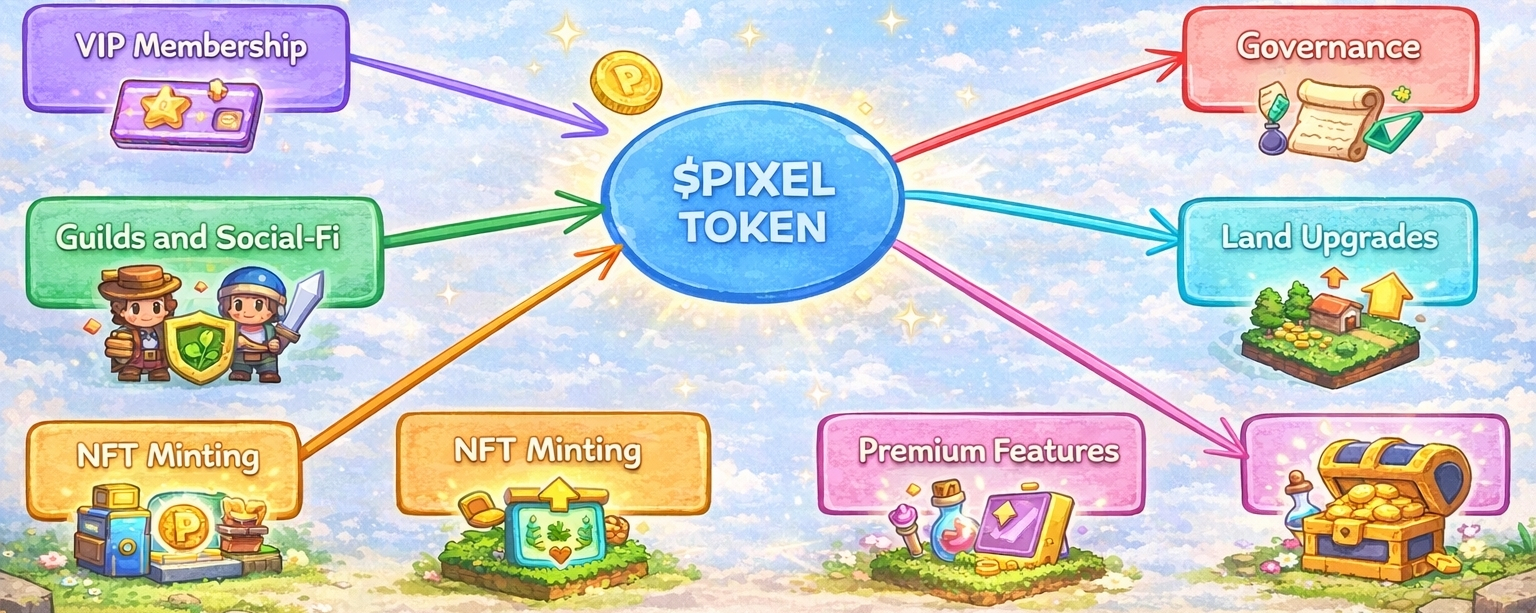

When I look at the growing ecosystem of @Pixels , one thing becomes very clear: Pixel is not just a reward token — it is the backbone of an entire digital economy. The utility map perfectly shows how deeply integrated it is across every layer of the game, and this is exactly what makes the Stacked ecosystem so powerful and sustainable. #pixel
At the center of everything is $PIXEL, connecting multiple utilities that go far beyond simple play-to-earn mechanics. For example, VIP Membership introduces an entirely new level of engagement. Players are not just participants anymore; they can unlock exclusive advantages, giving more meaning to long-term commitment. This directly supports retention, which is one of the biggest challenges in Web3 gaming.
Another key component is Guilds and SocialFi. This is where Pixels becomes more than just a game — it becomes a community-driven economy. Players can collaborate, compete, and build together, all while interacting through systems powered by $PIXEL. In the Stacked ecosystem, social interaction is no longer just a feature; it becomes a value-generating activity.
NFT Minting is also a crucial part of the ecosystem. Instead of isolated assets with little utility, NFTs in Pixels are integrated into gameplay and economy. Using $PIXEL for minting ensures that value flows back into the ecosystem rather than leaking out. This creates a circular economy where every action reinforces the token’s importance.
On the other side of the utility map, we see Governance. This is where things get even more interesting. Pixel holders are not just users — they are decision-makers. Giving the community a voice ensures that the ecosystem evolves in a way that reflects the interests of its most active participants. This aligns perfectly with the idea of decentralization, but in a practical and engaging way.
Land Upgrades add another layer of depth. Instead of static assets, land becomes dynamic and customizable. Players can invest in their progress, improve their productivity, and create unique experiences. This gives pixel a strong use case tied directly to in-game progression and personalization.
Then we have Premium Features, which highlight an important shift in how value is distributed. Traditionally, games rely heavily on external advertising or pay-to-win mechanics. But in the Stacked ecosystem, value is redirected toward players who actively contribute. Spending $PIXEL unlocks meaningful advantages while keeping the economy balanced and rewarding genuine engagement.
What makes all of this even more powerful is how the Stacked system ties everything together. It is not just about having multiple utilities — it is about how intelligently they interact. By analyzing player behavior and engagement, the system can optimize rewards, reduce inefficiencies, and ensure that value reaches the right participants. This minimizes exploitation from bots and creates a healthier, more sustainable environment.
In many Web3 projects, tokens struggle because they lack real demand or meaningful utility. But in @Pixels, every feature you interact with feeds back into $PIXEL. Whether it’s upgrading land, minting NFTs, joining guilds, or accessing premium features, the token remains at the center of activity.
This is what a true ecosystem looks like: one token, multiple utilities, and a strong feedback loop that continuously reinforces its value. The Stacked model is not just improving gameplay — it is redefining how digital economies can function in a fair and efficient way.
As the ecosystem continues to grow, it will be interesting to see how new features expand this utility map even further. But one thing is already clear: Pixel is not just part of the system — it is the system.