
👁️ I’ve watched this space long enough to recognize the rhythm before the melody. Things appear, gather followings, harden into narratives, then soften when reality pushes back. Privacy has always moved like that—quietly promised, loudly debated, never quite settled.
🎮 When something like PIXELS arrives—gentle, disarming, full of farming loops and exploration—it doesn’t feel like part of that older privacy conversation. It feels softer. Less ideological. But even simple mechanics carry assumptions about visibility, sharing, and withholding.
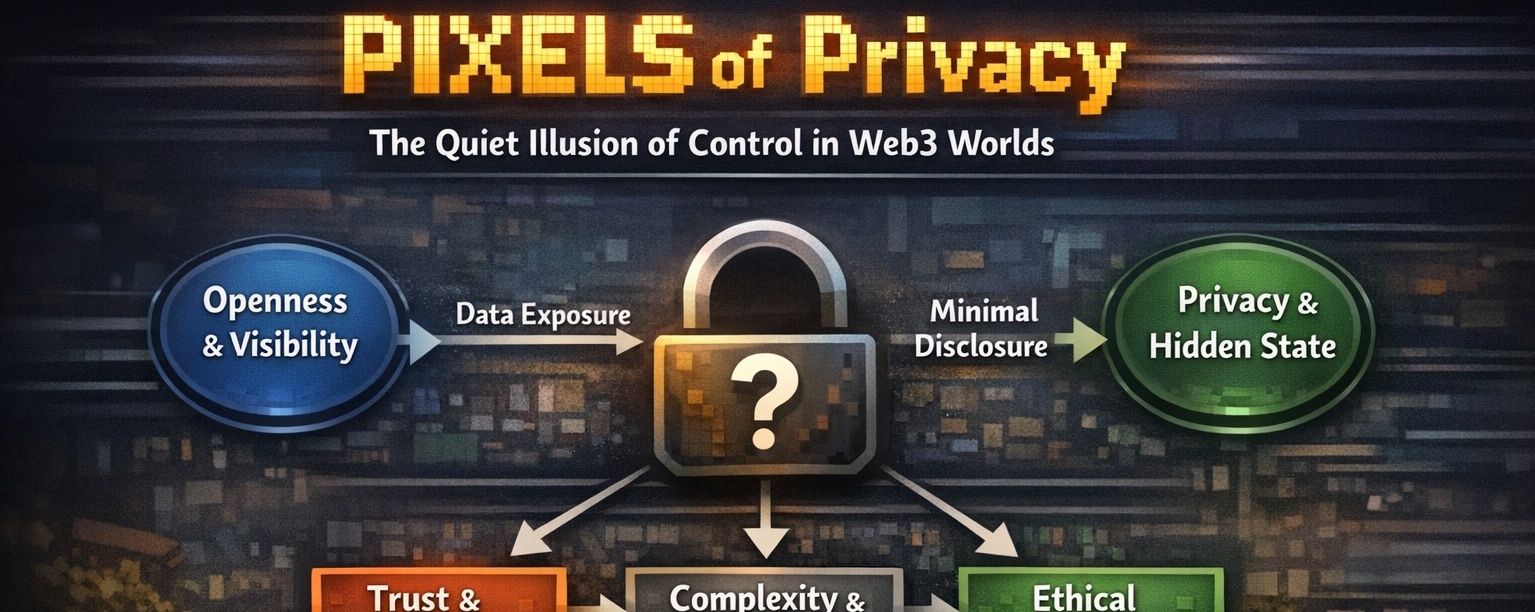
⚖️ “Privacy” in crypto was never just about hiding. It was about control—deciding what parts of you become legible. But systems that promise control tend to shift responsibility onto the user. You’re not just playing anymore. You’re managing exposure.
🤔 I wonder if most people actually want that. Not being watched is instinctive. Actively managing what’s seen is work. And invisible work accumulates into friction.
🌱 PIXELS feels approachable on the surface. You plant, gather, move through a persistent world. But beneath: a ledger. Traceability. Privacy features don’t erase the tension—they just move it around.
📦 Minimal disclosure sounds clean. Share only what’s necessary. But necessary to whom? Systems make that call. Governance tweaks it. Developers interpret it. Users inherit rules they didn’t write, assumptions about trust they didn’t choose.
⚠️ There’s an ethical discomfort that never resolves: privacy protects and obscures. It shields ordinary users. It also hides harm. Same mechanism, both things. People rarely hold both truths at once—maybe because that’s exhausting.
🧭 Usability complicates further. Open systems are easier to reason about. Privacy-focused ones ask you to trust what you can’t see. That’s not a trade most people consciously make. It just… happens.
🐢 Then there’s performance—not technical, but experiential. Subtle delays. Extra steps. Small frictions that shape behavior over time. Privacy rarely comes free.
🕯️ What I return to is trust—not the loud kind in whitepapers, but the quiet, day-to-day kind where you don’t have to think about the system. Privacy ironically pulls that trust into focus. It asks you to think about what you’d rather ignore.
🎭 In games like PIXELS, that tension feels out of place. The world invites casual innocence, but the infrastructure doesn’t allow it. Data has weight. Actions persist. Even “casual” participation feeds something permanent.
🏛️ Governance stays in the background until something breaks. Who decides how much privacy is enough? Who adjusts thresholds? Most users don’t ask these questions while planting crops. But they exist, quietly shaping everything.
🌀 I’ve stopped expecting clean answers. Privacy doesn’t simplify things—it rearranges them. It shifts burden, redistributes trust, introduces new ambiguity. Systems with softer edges make the contrast sharper. The more natural the surface, the easier to forget what sits underneath.
🧾 Maybe understanding is overrated. Maybe what matters is whether things feel safe enough, consistent enough, fair enough. Or maybe that’s just another narrative we tell ourselves when the complexity gets too quiet to notice.
---
