

When I first heard someone describe a game economy using the idea of “sinks and faucets,” it sounded overly technical. But the more I thought about it, the more it made sense. In fact, it’s one of the simplest ways to understand why some Web3 game economies thrive while others collapse.
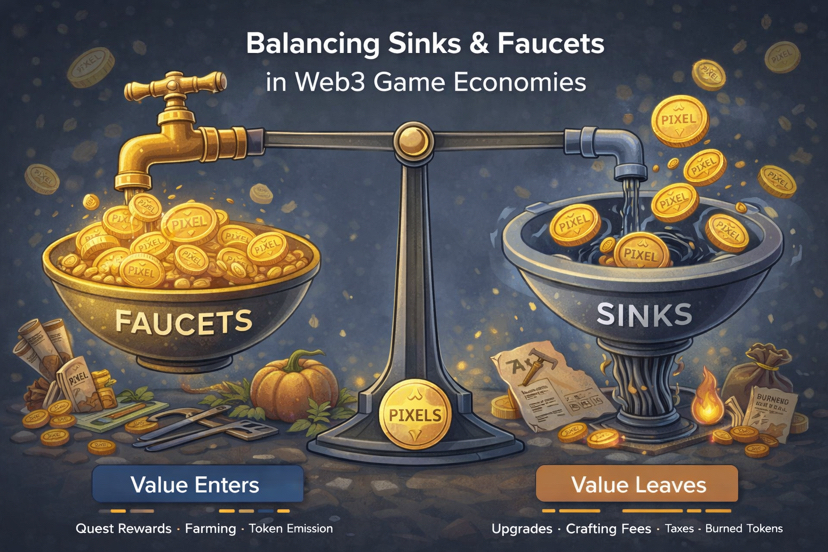
Faucets are how value enters the system quest rewards, farming output, activity bonuses, and token payouts. Sinks are where value leaves upgrade costs, crafting fees, taxes, and token burns. A sustainable economy needs both working together. Too many faucets create inflation. Too many sinks exhaust players. The challenge is keeping those forces balanced as player numbers rise and fall and token prices fluctuate.
Pixels clearly has both faucets and sinks in place, which shows the team understands the fundamentals. But designing them is only half the battle. Getting the balance right over time is much harder.
Player activity in Pixels has already shifted significantly since launch. During the points campaign leading up to the token event, engagement was high and the economy benefited from a large, active user base. Once the token launched, some speculative players left, and the dynamics changed. Fewer players naturally means fewer rewards generated but also fewer resources being spent. Whether that transition maintained a healthy equilibrium is something that really needs data to evaluate properly.
The land system introduces another layer. Landowners earn from players using their plots, which effectively acts as a faucet for owners and a sink for players without land. That creates a two tier economy where outcomes vary depending on ownership. It mirrors real world systems in some ways, which can either strengthen the design or introduce long term tension.
Seasonal events and limited-time mechanics also play an important role. They can temporarily increase sinks or faucets, helping the team fine tune the economy as conditions change. Used carefully, these tools can stabilize the system. Used poorly, they can create volatility.
Ultimately, the success of Pixels won’t come from having sinks and faucets alone, it will come from how well they’re adjusted over time. A healthy economy isn’t static. It’s something that requires constant monitoring, thoughtful tuning, and a deep understanding of player behavior.