Am văzut acest film de prea multe ori.
Lansări de jocuri. Imprimarea token-urilor. Jucătorii timpurii cultivă intens, se simt deștepți timp de aproximativ șase săptămâni—apoi întregul lucru se scurge pentru că emisiile au fost concepute ca un robinet fără logică de drenaj. Nu observi asta la început. Apoi lichiditatea se usucă, retenția se prăbușește, și brusc toată lumea este un „credincios pe termen lung” cu probleme de lichiditate la ieșire.
Pixels mergea pe o versiune a acelei căi. Nu pentru că jocul este prost—departe de asta—ci pentru că recompensele fixe și un singur centru de gravitate creează întotdeauna același rezultat: clustere de capital, extrageri, frunze.
Acum încearcă să rescrie asta.
Ceea ce se schimbă de fapt nu este 'mai multe recompense' sau 'distribuție mai bună.' Este control.
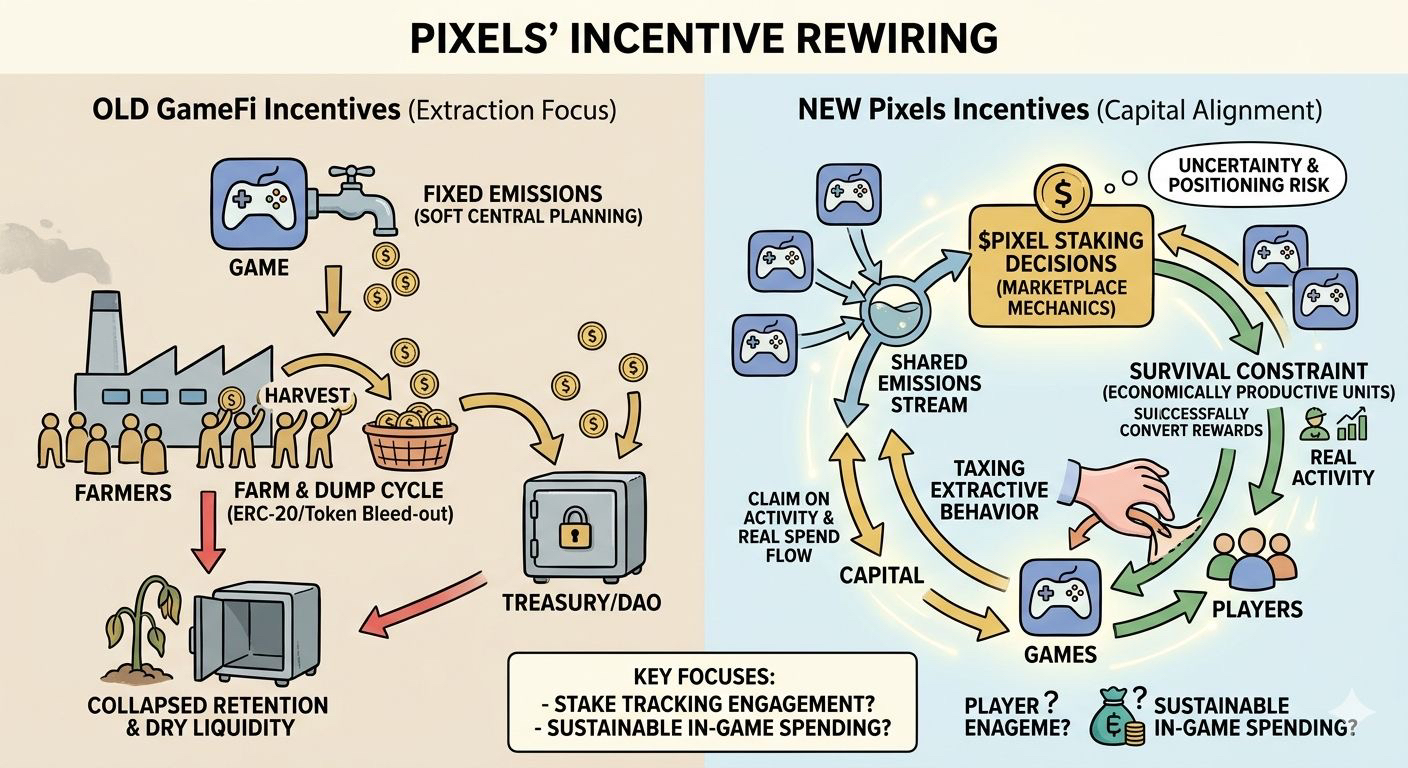
Până acum, emisiile aveau o planificare centralizată moale integrată. Puteai prezice unde vor merge recompensele. Puteai să o modelezi. Mai important, puteai să o exploatezi. Și oamenii au făcut-o.
Acum? Forțezi capitalul să ia decizii în condiții de incertitudine.
Mai multe jocuri extrag din același flux de emisii. La început, este selectat - alegeri sigure, flux controlat, bariere peste tot. Poți spune că nu au încredere în sistem încă. Corect. Nici eu nu aș avea.
Dar în momentul în care lași stakingul să decidă unde merg emisiile, ai transformat efectiv recompensele într-o piață. Și piețele sunt dezordonate.
Aici devine interesant - și unde nu sunt complet convins încă.
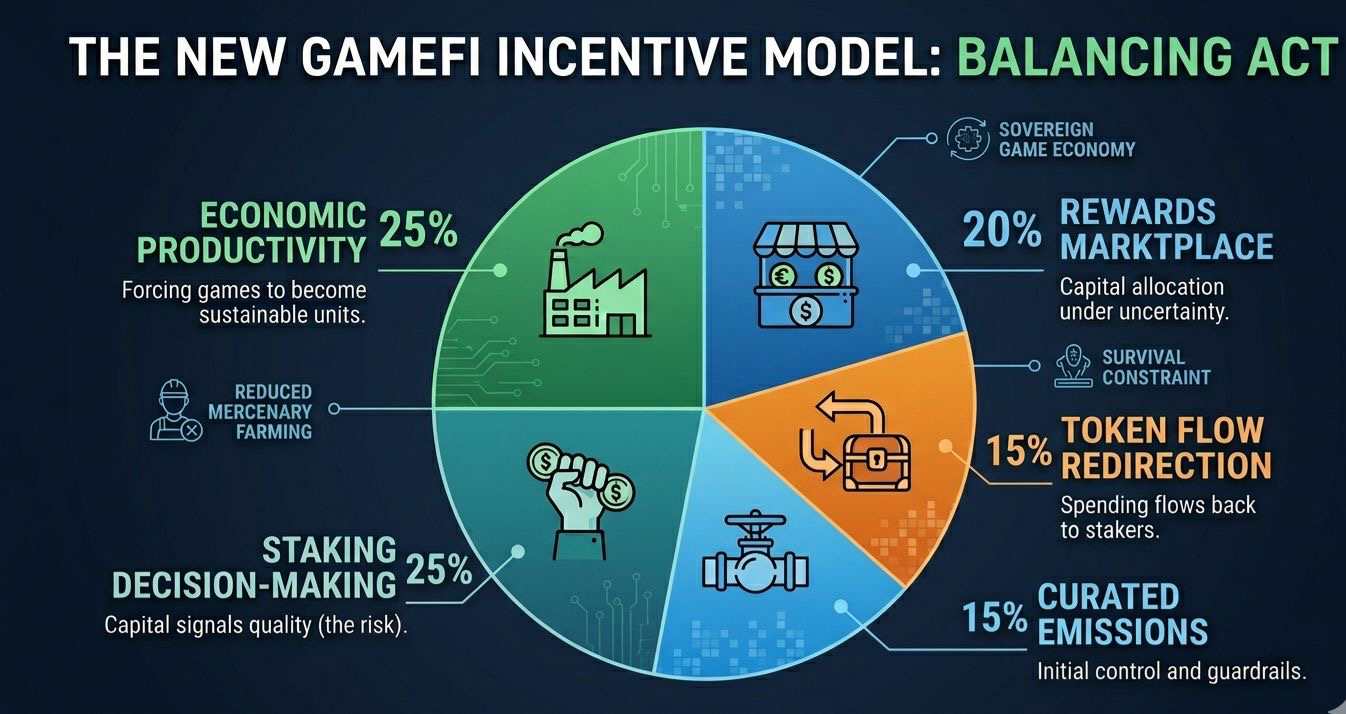
Când emisiile urmează stakingul, spui: alocarea capitalului = semnal de calitate.
În teorie, aceasta este elegantă. În practică, toți am văzut balenele 'semaforizând' orice le aduce beneficii pe termen scurt.
Dacă câțiva deținători mari decid să concentreze stakingul într-un singur joc, pot extrage emisii acolo indiferent dacă acel joc reține jucători. Ajungi cu gravitate artificială - recompensele urmăresc capitalul, nu jucătorii.
Deci da, aceasta ar putea reduce agricultura mercenarilor proști. Dar ar putea doar să o înlocuiască cu mercenari mai deștepți. Gust diferit. Aceleași instincte.
Stratul de acces deschis - unde orice joc poate câștiga emisii dacă dovedește că generează un return suficient pe cheltuielile de recompense - aceasta este partea care îmi place cu adevărat.
Pentru că acum introduci o constrângere de supraviețuire.
Dacă un joc nu poate transforma recompensele în activitate reală, nu primește hrană. Simplu.
Problema? Atingerea acelei limite în mod constant este greu - mai ales într-o piață bear unde achiziția de utilizatori este scumpă și atenția este fragmentată. Multe echipe vor descoperi că un gameplay 'suficient de bun' nu este suficient când recompensele nu mai subvenționează tot.
Forțezi practic jocurile să devină unități economice productive, nu doar ferme de conținut. Aceasta este o barieră mult mai înaltă decât cea cu care majoritatea studiourilor Web3 sunt obișnuite.
Partea pe care majoritatea oamenilor o subestimează este schimbarea fluxului de tokenuri.
Înainte, cheltuielile hrăneau în principal tezaurul - sună frumos pe hârtie (DAOs iubesc tezauri mari), dar nu face multe pentru participantul mediu pe termen scurt. Este o valoare abstractă.
Acum o parte din acea cheltuială revine la stakeri.
Îmi pasă mai mult de acest lucru decât de mecanica emisiilor.
Pentru că aici este locul unde $PIXEL începe să se comporte mai puțin ca un token de fermă și mai mult ca o cerere de activitate. Nu venituri în sensul tradițional, dar similar din punct de vedere direcțional.
Dacă jucătorii cheltuiesc de fapt în interiorul ecosistemului și stakerii capturează o parte din acel flux, ai introdus un motiv de a deține care nu este pur speculativ. Aceasta este rar în acest sector.
Încă fragil, totuși. Dacă cheltuielile se usucă, acel 'randament' dispare repede. Și dacă randamentele se comprimă prea mult, stakingul devine un parc de mașini în loc de o joacă de convingere.
Ceea ce încearcă cu adevărat este mai aproape de o economie de joc suveran decât își dă seama lumea.
Nu doar 'joacă și câștigă', ci un sistem în care:
· Jocurile concurează pentru capital
· Capitalul concurează pentru randament
· Jucătorii decid indirect ce supraviețuiește
Este un joc complet diferit. Dar vine cu fricțiuni reale.
Ai nevoie de suficienți jucători pentru a genera activitate economică semnificativă.
Ai nevoie de suficient capital pentru a face ca deciziile de staking să conteze.
Și ai nevoie de amândouă pentru a persista printr-un ciclu de scădere când totul este mai puțin iertător.
Dacă ratezi oricare dintre acestea, întreaga buclă se slăbește.
Le voi da asta: este unul dintre puținele designuri pe care le-am văzut care încearcă de fapt să taxeze comportamentul extractiv în loc să pretindă că nu există.
Toți am văzut ciclul fermă → dump → rotire care distruge ecosistemele. Aceasta cel puțin forțează participanții să se angajeze cu capital, să-și asume riscuri de poziționare și să se gândească de două ori înainte de a sări.
Elimină mercenarii? Nu.
Îi face munca mai greu? Probabil.
Privesc două lucruri de aici:
1. Dacă stakingul urmărește de fapt angajamentul real în timp sau doar urmărește narațiuni pe termen scurt.
2. Dacă cheltuielile din joc devin suficient de semnificative pentru a susține acea poveste 'generatoare de randamente' fără a se baza pe intrări noi constante.
Dacă cele două se mențin, aceasta ar putea evolua într-un lucru durabil.
Dacă nu, va fi doar o versiune mai sofisticată a aceleași bucle pe care am văzut-o de o duzină de ori - doar mai greu de desfăcut.
Încă devreme. Și, onest, acesta este singurul motiv pentru care este interesant.