
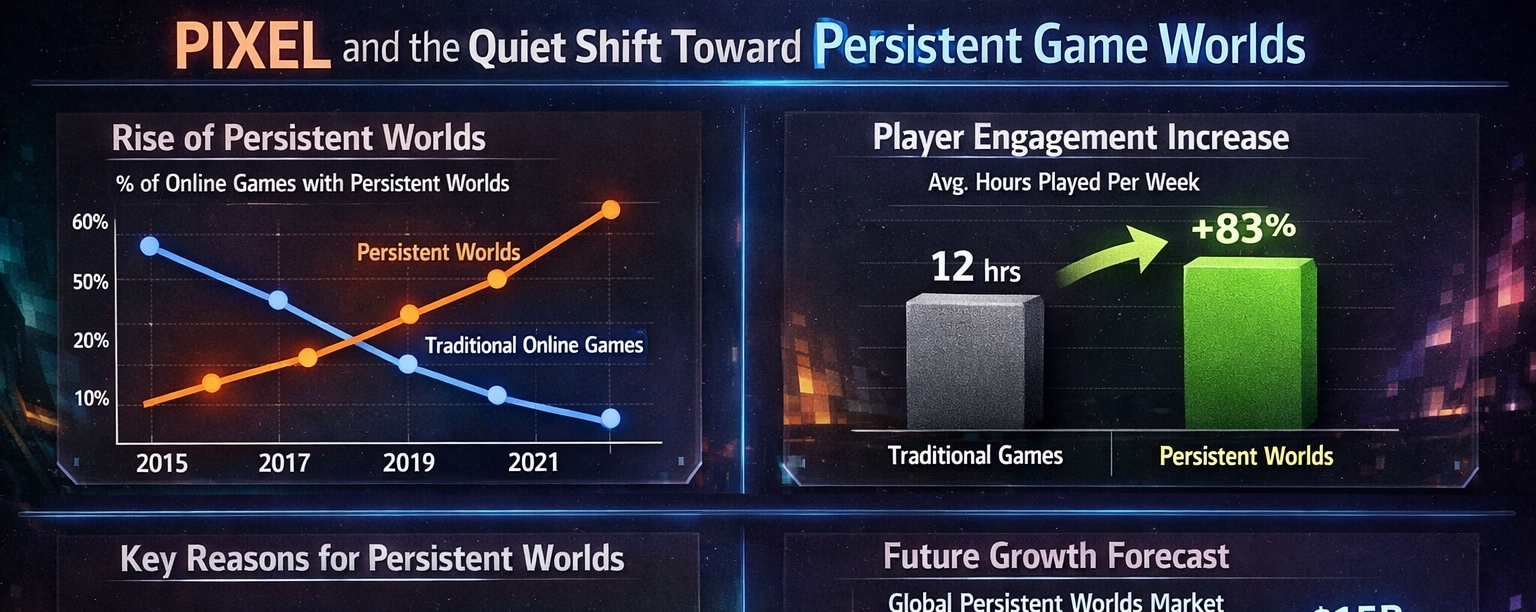
PIXEL is one of those projects that looks simple when you first hear about it—farming, exploring, building, a casual game layered with Web3 ideas underneath. Nothing about it sounds new anymore. That’s the strange part. You’ve seen this pattern enough times now that your first reaction isn’t curiosity, it’s recognition. Another world trying to convince you that repetition can still feel meaningful if it’s tracked properly, recorded somewhere, owned in some way.
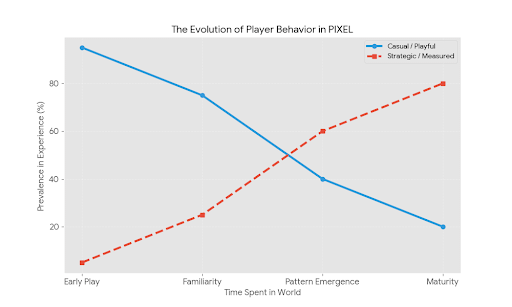
But that’s not really what stays in your mind after you spend time thinking about it. What stays is the question behind it. Why this keeps getting built. Why so many teams keep circling the same structure—small loops of farming, crafting, social interaction—and then attaching ownership systems to it, as if that combination will suddenly solve something that traditional games never fully solved either.
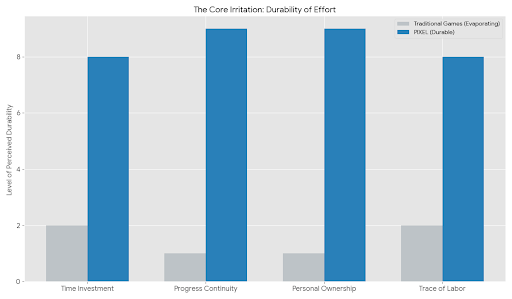
There’s a quiet frustration underneath it all. You can feel it if you’ve watched enough of these cycles. Games where your time disappears the moment you log out have always bothered people, even if they couldn’t quite explain why. You spend hours inside something, and when you leave, it feels like nothing belongs to you except memory. No trace, no continuity that feels personal in a grounded way. Just progress locked inside someone else’s system.
PIXEL seems to come from that irritation. The idea that time should leave a mark. That if you farm, explore, or build, it shouldn’t just evaporate into engagement metrics. There should be something more durable sitting underneath it. At least that’s the promise.
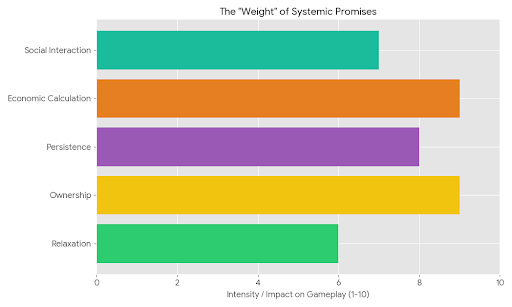
But promises in this space always arrive heavier than they sound. Because once you actually imagine people living inside the system, everything gets complicated. Farming is relaxing until it becomes routine. Exploration feels open until patterns emerge and efficiency takes over. Social spaces feel alive until the same behaviors repeat enough times to become predictable. Nothing breaks loudly. It just slowly loses texture.
That’s usually where the difference shows between a game that survives and a system that only functions.
And then there’s the Web3 layer sitting under it, which adds its own tension without really resolving anything. Ownership sounds meaningful when you say it out loud, but in practice it changes how people behave in subtle ways. They stop just playing and start calculating. Every action gets an extra shadow behind it—what is this worth, what does this lead to, how does this connect to something outside the game. Even people who don’t care about that eventually get pulled into it because the system quietly encourages it.
That shift is hard to ignore once it starts happening. It changes the atmosphere of a world. Not immediately, but steadily. The casual becomes strategic. The playful becomes measured. And once that line is crossed enough times, it’s difficult to go back to innocence, even if the game itself hasn’t changed much.
What makes PIXEL interesting, at least from a distance, is that it sits right on that edge. It’s still dressed like a casual game, still built around familiar loops that are supposed to feel easy and repeatable. But it’s also carrying expectations that casual games usually don’t have to deal with—persistence, ownership, economic behavior layered into everyday actions.
That combination doesn’t settle easily. It creates a kind of internal friction. One part of the system wants you to relax into it. The other part wants your attention to mean something beyond the moment. Those two intentions don’t naturally align, and the result is something slightly unstable, even if it looks polished on the surface.
And maybe that’s the real thing people are watching without saying it directly. Not whether PIXEL becomes “successful” in the usual sense, but whether it can hold that tension without collapsing into one side or the other. Games usually resolve this by choosing. Either they stay pure entertainment, or they lean fully into systems of value and optimization. Trying to sit between those states is where things get difficult.
Because players don’t stay neutral for long. They find a stance. Some will always treat it like a world to inhabit. Others will treat it like a system to work. And those two ways of being inside the same space slowly change the space itself.
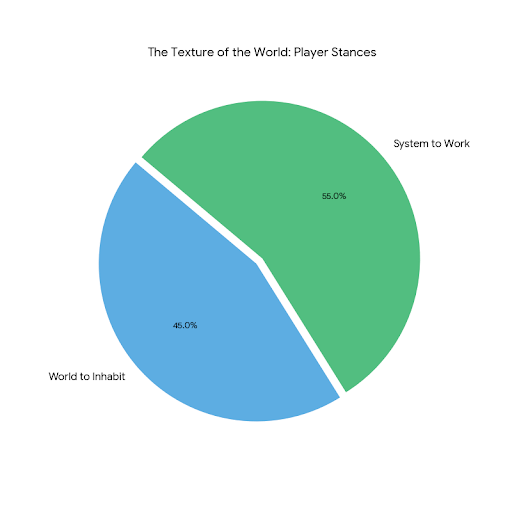
That’s something you only notice after a while. The way a world feels different depending on how people approach it. At first it’s subtle—small optimizations, repeated behaviors, familiar paths forming. Then it becomes the dominant texture of the place. Not what the game offers, but how people are using it.
PIXEL, like a lot of projects in this category, is really testing whether those behaviors can stay balanced long enough for the world to feel like a place rather than a process. Whether repetition can still feel like living inside something instead of just extracting from it.
And underneath all the language about farming and exploration and ownership, that’s the part that actually matters. Not whether it works in theory, but whether it still feels alive after people figure it out.