
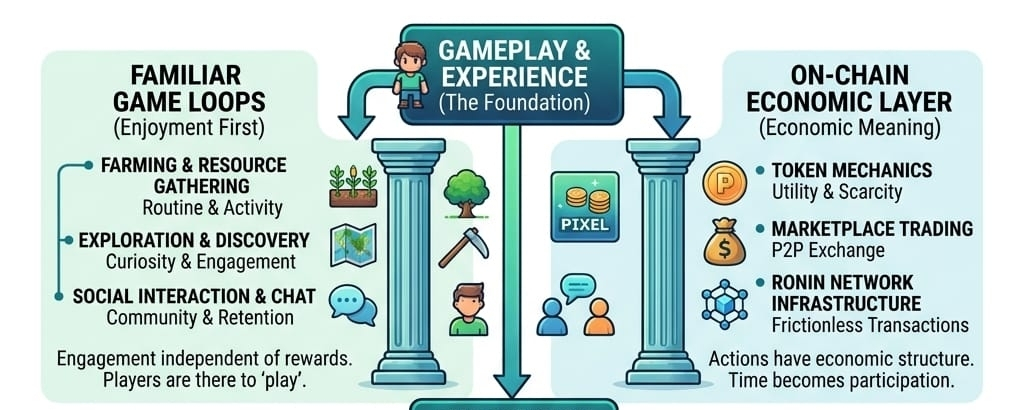
I used to log into Pixels with a simple mindset: use energy, harvest crops, maybe gather a few materials, log out. It felt clean. Almost predictable. The kind of loop you don’t question because it works. But after spending more time inside the game, I started noticing something subtle. The actions were the same, but the weight behind them was changing.
It wasn’t just about what you did anymore. It was about when and why you did it.
Energy, for example, stops being just a daily limit and starts behaving like a lever. Spend it too casually, and you feel inefficient. Hold it too long, and you feel like you’re missing momentum. The balance isn’t obvious. It’s something you learn by playing—and sometimes by getting it wrong. And then there’s land. At first, it feels like a bonus. Later, it feels like an advantage you can’t ignore. Where you operate begins to matter just as much as what you’re doing.
That’s when the shift becomes noticeable.
Pixels starts moving away from a loop-based game into something closer to a positioning system. You’re no longer just repeating actions—you’re deciding how to place yourself within a larger environment. Which resources you focus on, how you manage your time, how you use your space… it all starts to connect. And once it connects, the game becomes harder to play passively.
But here’s the interesting part: it doesn’t feel forced.
There’s no moment where the game tells you to start optimizing. It just happens naturally. You begin comparing outcomes, noticing patterns, adjusting behavior. You see other players doing things differently, sometimes better, and it pushes you to rethink your own approach. The system doesn’t guide you—it reacts to you.
And that reaction is where the experience changes.
Because once you realize that your efficiency depends on how well you understand the system, the game stops being purely relaxing. It becomes engaging in a different way. Slightly more demanding, slightly more rewarding. You’re still farming, still crafting, still exploring—but now you’re also thinking in terms of trade-offs and timing.
This is where the $PIXEL token quietly plays its role.
It’s not shouting for attention, but it connects everything. Your actions, your resources, your decisions—they all start linking through value. Not in a way that overwhelms the gameplay, but in a way that makes every choice feel a bit more deliberate. You’re not just progressing. You’re positioning.
And that changes how the game feels over time.
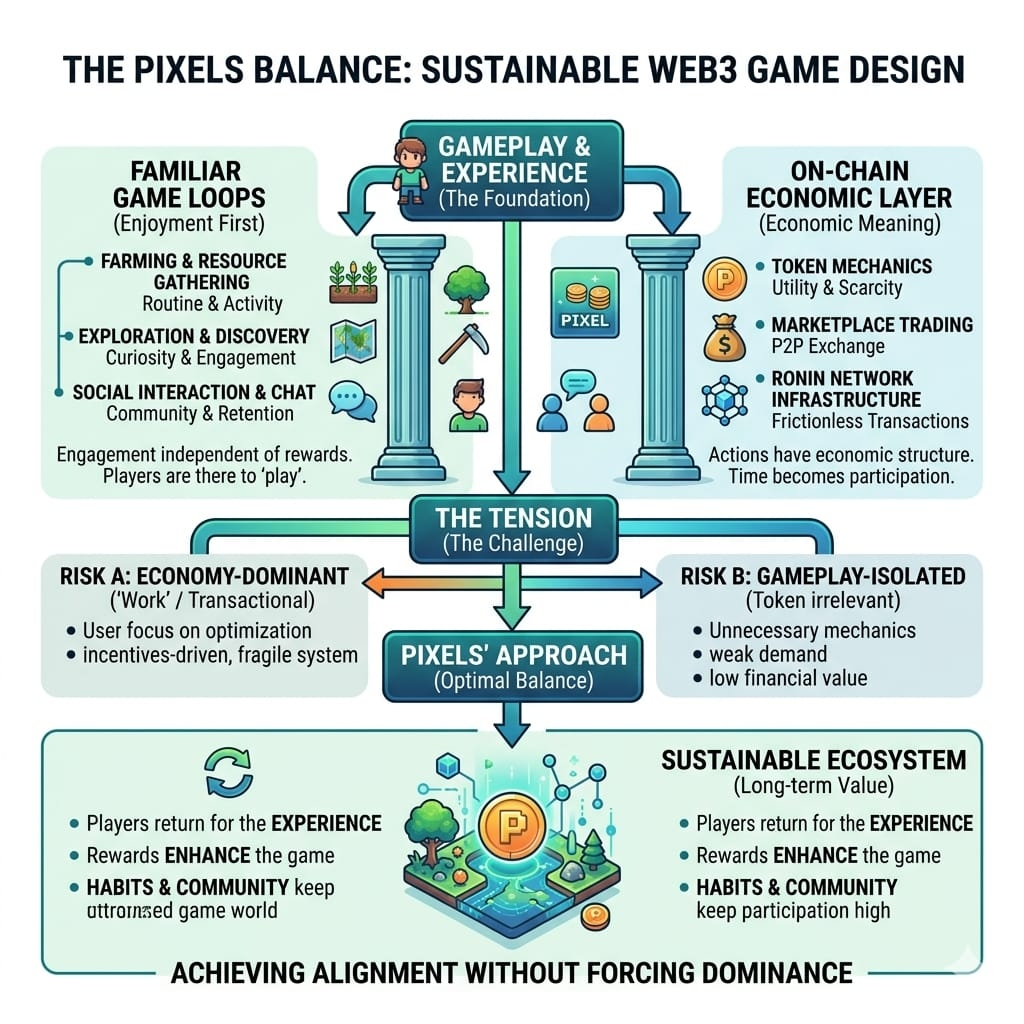
Some players lean into it. They enjoy the depth, the strategy, the evolving nature of the system. Others feel the friction. The game they once played casually now asks for a bit more awareness. Not enough to push them away—but enough to remind them that something has shifted.
Pixels is no longer just a loop you follow.
It’s becoming a space where your decisions shape your experience in a more direct way. And while that transition isn’t perfectly smooth, it’s what gives the game its current edge. It feels alive—not because it’s complex, but because it responds.
And once a game starts responding to players instead of just guiding them, it stops being predictable.
That’s where things start to get interesting.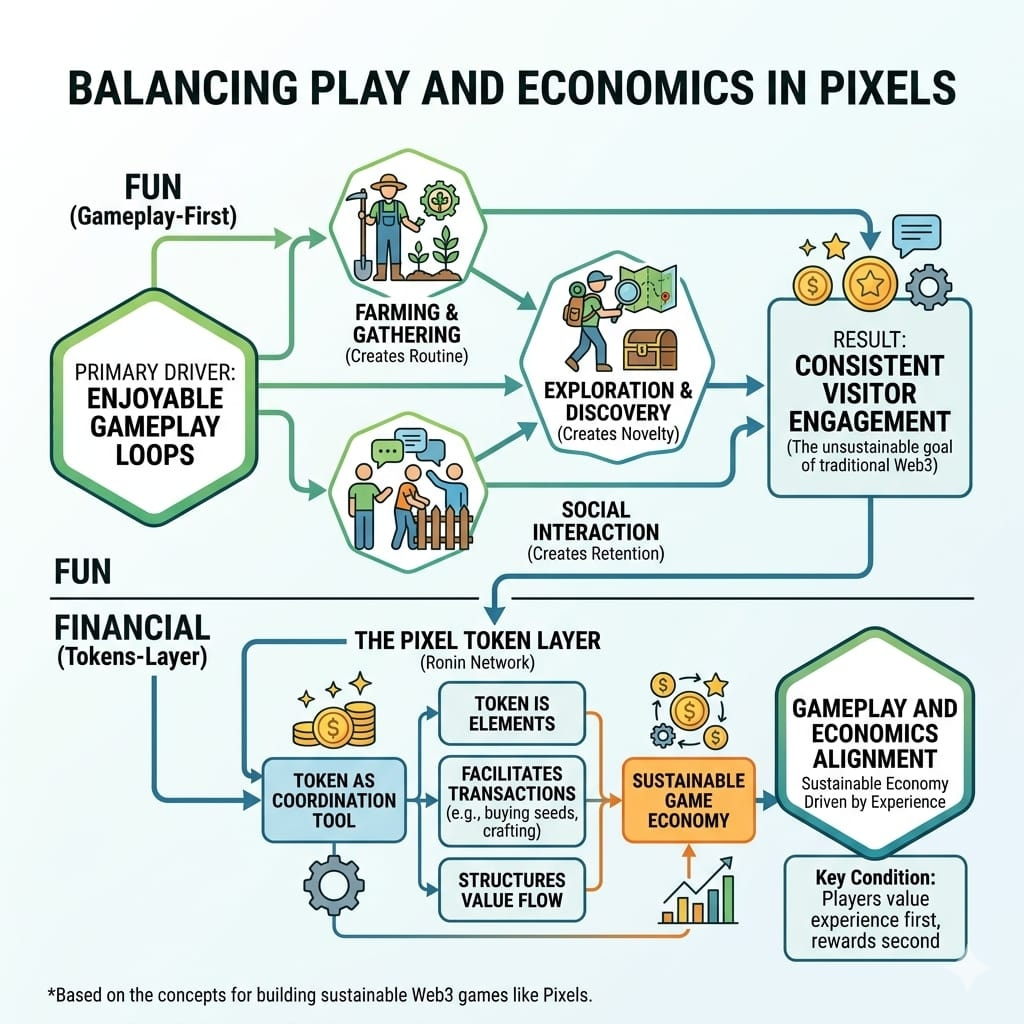
#pixel $PIXEL @Pixels #ranRejectsSecondRoundTalks #AltcoinRecoverySignals? #ARKInvestReducedPositionsinCircleandBullish #CharlesSchwabtoRollOutSpotCryptoTrading