The first time you interact with land in Pixels, it doesn’t feel like a big deal. It’s just another part of the world—tiles, crops, a bit more control over what you grow and where you grow it. For a while, it sits quietly in the background, like a feature you’ll understand later.
But spend enough time around it, and the difference becomes obvious.
Ownership changes how people behave.
At first, everyone plays in roughly the same way. You use shared spaces, follow similar loops, and work within the same limitations. Progress is mostly about time and familiarity. But the moment land enters the equation, that symmetry starts to break.
Pixels begins to separate players not just by effort, but by position.
And that shift is subtle—but powerful.
Because ownership isn’t just about having more space. It’s about having control. Control over production. Control over how efficiently you can operate. Control over how you interact with the rest of the system. Landowners don’t just play the game—they start shaping how the game feels for others.
You see it in small ways first.
Certain areas become more productive. Certain loops become easier to repeat. The friction that slows most players down starts to disappear for a few. And when that happens, behavior adapts around it. Non-owners adjust their routes. They trade differently. They start thinking about access instead of just activity.
That’s when the game quietly turns into something else.
Not unfair.
But layered.
Because now progression isn’t just about what you do—it’s about where you stand in the system.
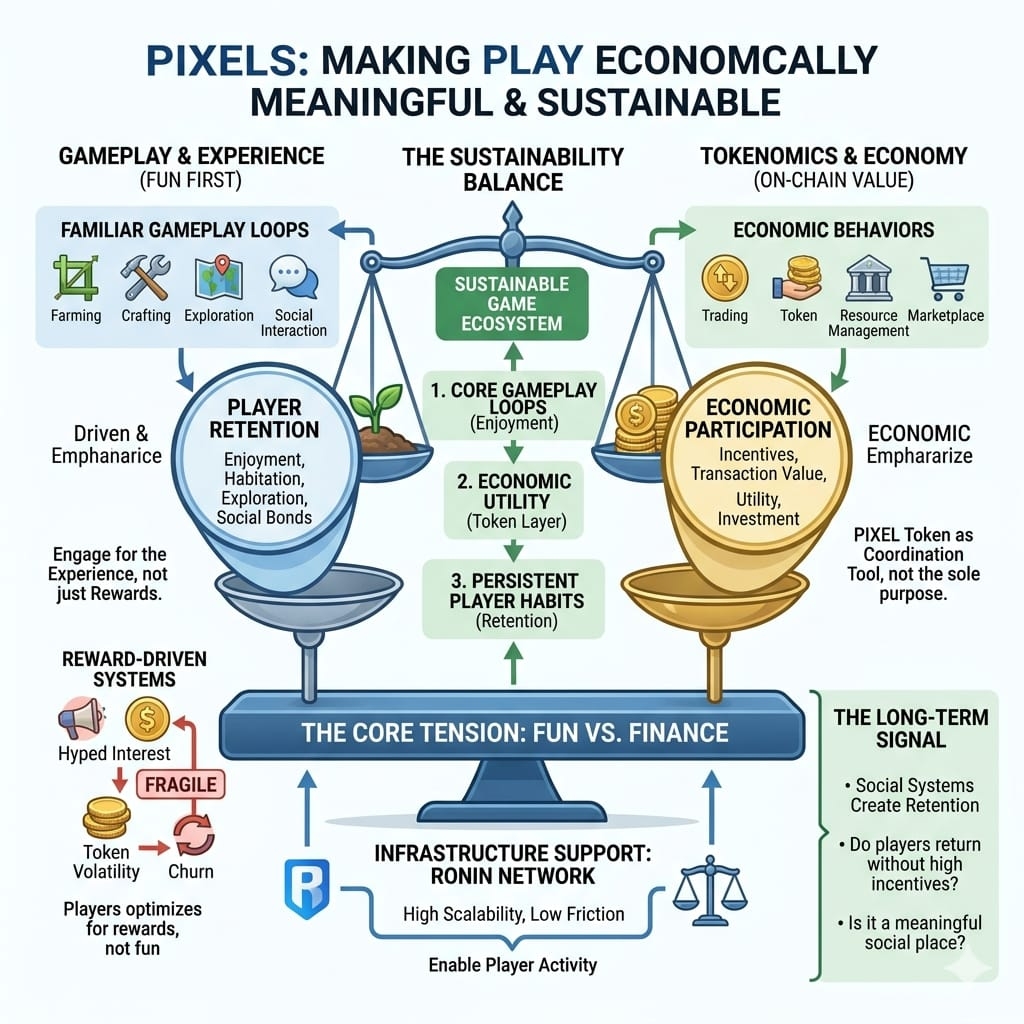
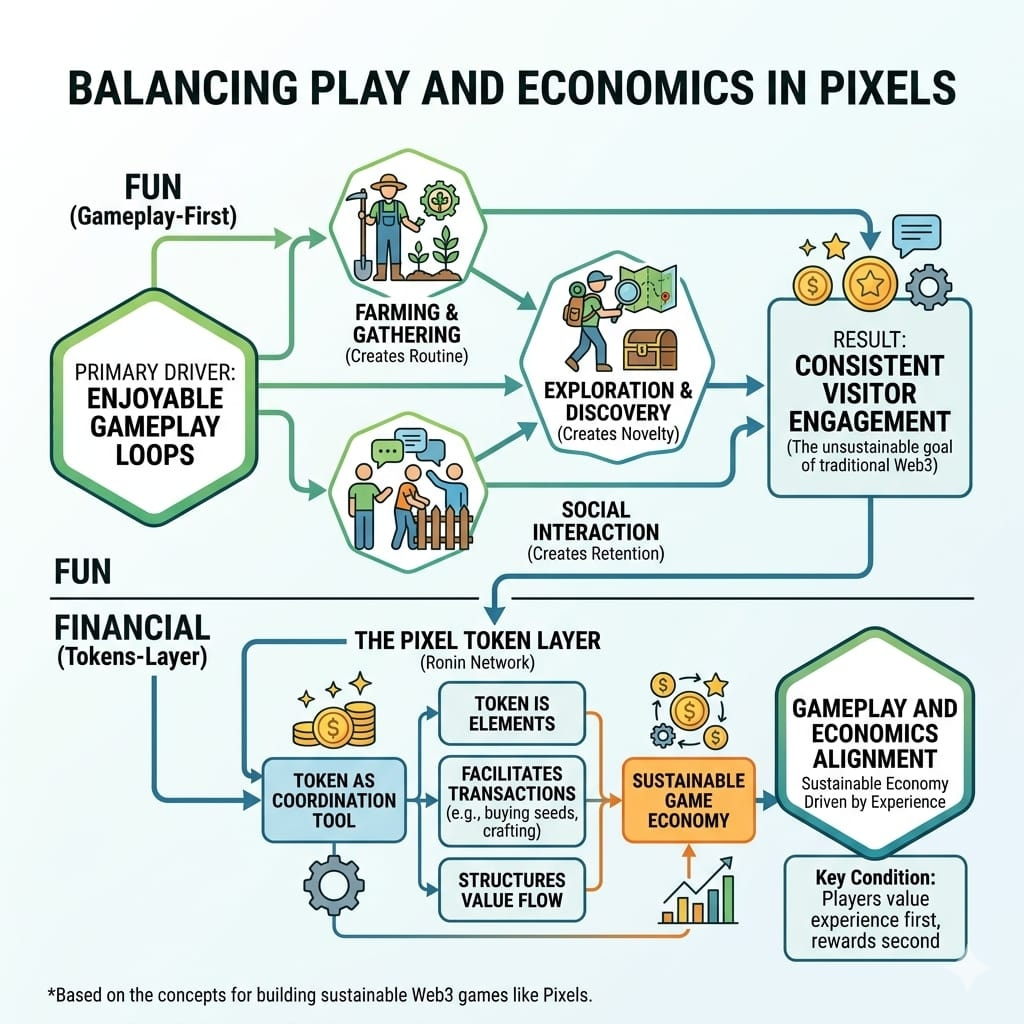
And this is where $PIXEL starts to feel less like a reward and more like a connector. It links ownership, production, and interaction into a single flow. Resources move differently depending on who controls them. Value doesn’t just come from effort—it comes from structure.
That changes the psychology of the game.
Players stop thinking only about “what should I do next?”
They start thinking “what position should I move toward?”
And that’s a different mindset entirely.
The interesting part is that Pixels doesn’t force this on you. You can still play casually. You can still farm, explore, and interact without thinking too deeply about ownership. But once you notice the difference, it’s hard to ignore.
Because the system doesn’t just reward activity.
It rewards positioning.
And positioning is where games start to feel like systems.
That’s the line Pixels is walking right now.
If ownership enhances the experience, the world becomes richer. More layered. More dynamic. If it dominates too much, the game risks feeling structured around advantage instead of discovery.
That balance is still forming.
But the shift is already happening.
Pixels isn’t just about what you do anymore.
It’s about where you stand while doing it.
#ranRejectsSecondRoundTalks #AltcoinRecoverySignals? #Kalshi’sDisputewithNevada #BitcoinPriceTrends