
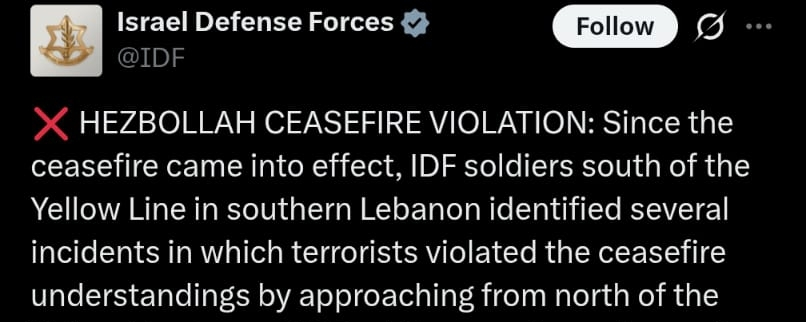

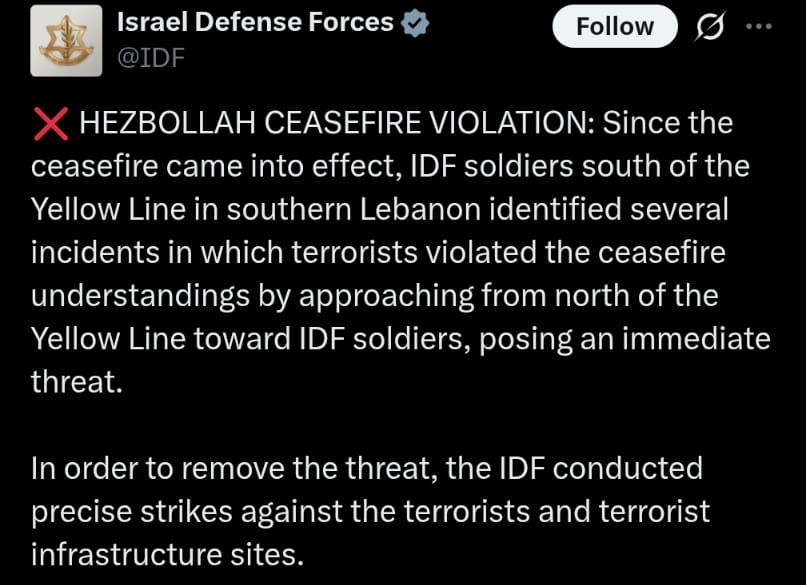
 Over the past few hours, I’ve been watching a situation that feels like it’s unraveling fast. The ceasefire that was supposed to calm tensions has now effectively broken down, with Israel accusing Hezbollah of violating the agreement and launching fresh strikes in Lebanon. At the same time, Iran has reportedly resumed aggressive actions at sea, targeting vessels and once again disrupting activity around the Strait of Hormuz.
From my perspective, this isn’t just a continuation of tension—it’s a clear shift back into escalation. What was briefly seen as a window for stability is now closing, and multiple fronts are heating up at once. When land conflict and maritime disruption happen simultaneously, the risk level increases far beyond what a single flashpoint would create.
What stands out to me is how quickly sentiment has reversed. Just recently, there was optimism around de-escalation, open shipping lanes, and potential diplomatic progress. Now, that narrative has flipped completely. Military action has resumed, and one of the world’s most important energy routes is once again under pressure.
From where I’m standing, the Strait of Hormuz is a key part of this story. Any disruption there has immediate global consequences. It’s not just a regional issue—it directly impacts oil supply, shipping costs, and overall market stability. When that route becomes unstable, the effects ripple across the entire global economy.
Another thing I’m noticing is the speed at which events are unfolding. This doesn’t feel like a slow, controlled escalation—it feels reactive and unpredictable. Each move seems to trigger another, creating a cycle that becomes harder to contain with time.
At the same time, this situation highlights how fragile ceasefires can be in high-tension environments. Agreements may pause conflict temporarily, but without strong enforcement and trust on both sides, they can break down quickly—and when they do, the return to conflict is often even sharper.
From my perspective, the key takeaway is simple:
The region is moving away from stability and back into uncertainty.
And when multiple pressure points ignite at once, the margin for control becomes very thin.
Right now, everything depends on what happens next—
Because moments like this don’t just shape regional dynamics…
They set the tone for global markets and geopolitical direction in the days ahead.
#KelpDAOFacesAttack #ranRejectsSecondRoundTalks #AltcoinRecoverySignals?