
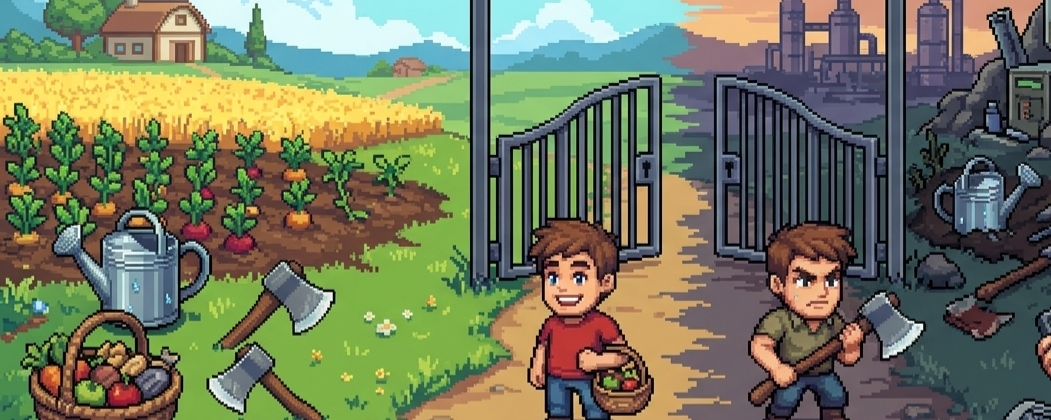

I’ve been sat here watching Pixels for a hot minute now. Not like some twitchy trader glued to a candle chart, but more like a bloke staring at an ant farm—just waiting for the exact moment the ants stop acting like ants and start acting like bloody accountants.
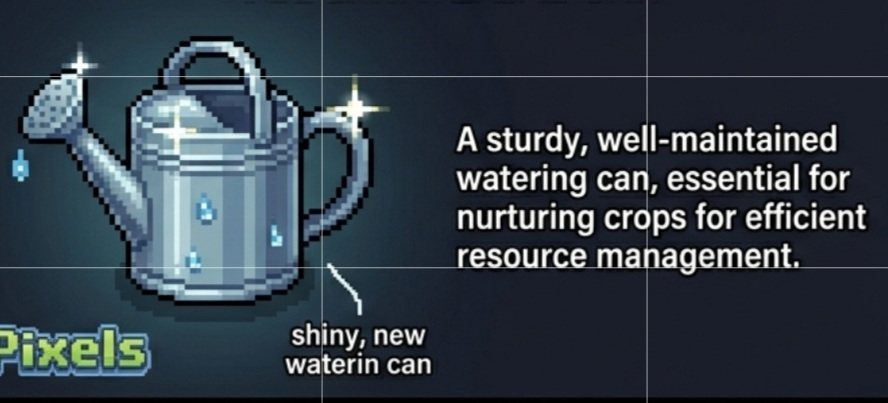
Here’s the score.
Most people jump into this—and I’m talking about the real gears turning under those cute little farming animations—thinking it’s just another clicker. You know the vibe. Tap the banana, get the banana. Rinse and repeat. Easy dopamine, right?
But Pixels isn’t that. And that’s exactly why 80% of players just… ghost.
It’s not 'cause the game’s bugged. It’s not 'cause the rewards dried up. It’s 'cause their heads gave in first.
Let me walk you through the trap.
Phase one: The honeymoon trap
You start out, yeah? You’ve got your patch of land. You’ve got energy. You plant a few berries, harvest 'em, bag a few tokens. Feels mint. You’re thinking, “Piece of cake, this. Bit of a grind, bit of coin. I can do this in my sleep.”
That’s the hook.
The game wants you comfy. It’s not being nice; it’s being clever. It’s lowering your guard, getting you into a rhythm before you realize those habits are about to get real expensive, real fast.
Then, the vibe shifts.
Your tools start looking a bit battered. Your energy bar feels like it’s got a leak. Your inventory is looking like a proper hoarder’s loft. Suddenly, that simple "What now?" turns into something much nastier:
“What’s my best ROI right now?”
That’s the moment the mask slips.
From player to manager
This is what gets me. A fresh player asks, “Is this fun?”
A veteran asks, “Is this efficient?”
They aren’t even playing the same game. Not by a long shot.
The newbie is exploring. The vet is optimizing. And those two worlds clash harder than you’d think. The game doesn't change, but the weight of every single click does.
At Tier 0, you plant a seed. Dead cute.
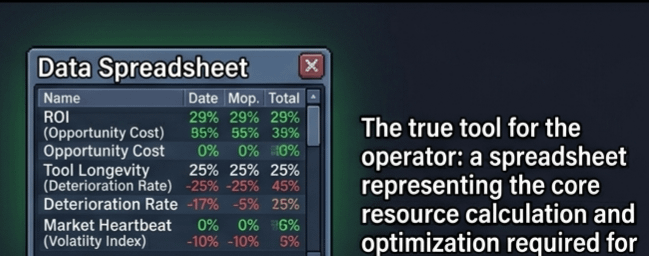
At Tier 5, you plant a seed, but your brain is running a mental spreadsheet:
Tool durability down the drain.
Energy spent.
Opportunity cost—could I have planted something better?
Clock-watching for the harvest.
Market prices swinging.
Decon value if I scrap it later.
That’s not gaming. That’s operations.
And the cold truth? Pixels was built for that. It’s not a game with an economy; it’s an economy wearing a game’s skin. The farming? That’s just the UI. The real product here is scarcity.
What real scarcity feels like
Most Web3 games talk a big game about scarcity. Usually, it just means “we only made 10,000 of this shiny sword.” That’s not scarcity, mate; that’s just a limited edition.
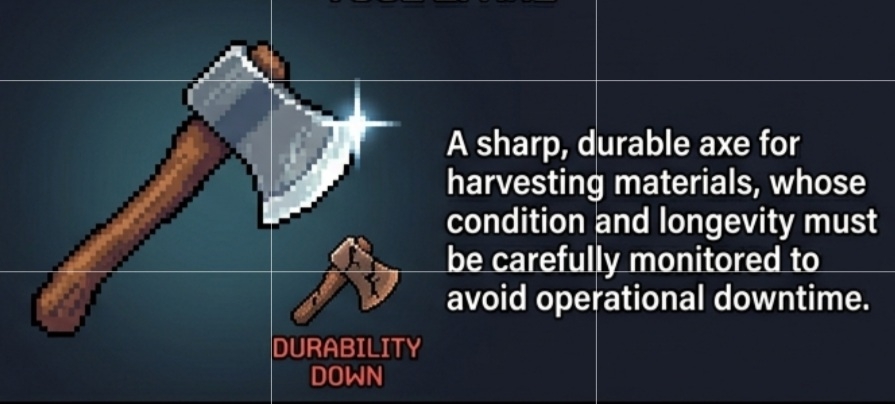
Real scarcity—the stuff that actually bites—is when your gear rots if you don’t look after it. When tools snap. When land needs feed. When your stash spoils 'cause you didn't process it.
That’s Pixels. And it changes the whole chemistry.
Every move has a price. Not some fake "5 gold to fix" price, but a real-world cost: your time, your resources, and your mental energy. If you mess up, you don't just lose progress—you lose value.
That’s what scares people off. Not the grind. The responsibility.
The quiet pressure
I’ve seen it a dozen times. Players hit a wall around week two or three.
They log in. Energy’s sparked. Tools are in the yellow. Inventory’s a shambles. They stare at the screen for thirty seconds... then they just close the tab.
It’s not 'cause they’re lazy. It’s 'cause their brain is screaming, “This isn't a break anymore!”
And they’re right. It’s not relaxing; it’s management.
Every choice has a shadow. You can’t just “play” it; you have to think your way through. For people trying to escape the spreadsheets of their 9-to-5, that’s a dealbreaker.
But there’s a beauty in it, too.
The pressure isn’t loud. It doesn't yell. It just… lingers. Reminding you that your energy bar isn’t a gift; it’s a budget. And budgets need discipline. That’s adult game design. And most people just aren't ready for it.
The grind without a ghost
Here’s the death spiral:
Player finds a loop. Plant X. Harvest X. Sell X. Repeat. Day in, day out. Same clicks, same fields.
At first, you feel busy. Then you feel comfy. Then… you feel empty.
Because the game doesn't care about repetition. It rewards strategy. If you’re just grinding without asking, “Is this still the best move?”, you aren't playing. You’re just burning daylight.
I call it “grinding without a ghost.” You’re moving, but there’s no soul in the machine. Eventually, you just check out. The boredom creeps in, and one day you just don’t bother logging back in. You don’t quit; you just dissolve.
And the sad bit? They blame the game. But the game was just waiting for them to use their head. They just never did.
The reality check
You know the moment I mean.
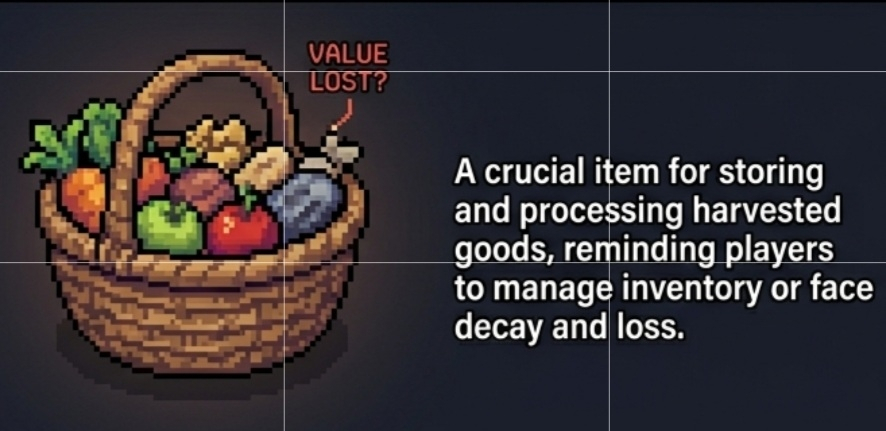
You’re out of energy. Your tools are busted. Your storage is a tip. And it hits you: “I haven’t got a clue what I’m doing.”
That’s the fork in the road.
80% of people walk away. In that moment, it stops being a game and starts being a problem. And problems take effort.
But the 20% who stay? They do something different.
They pause.
They look at the stash. They check the market. They crunch the numbers. They ask, “What’s the smartest move I can make with what I’ve got right now?”
That’s the shift. From “What do I want to do?” to “What should I do?”
That’s what separates the tourists from the operators.
Why the economy hates speed
It kills me when new starters moan.
They say, “I’ve been at it for three days and I’ve got nothing. Game’s broken.”
Nah. The game’s fine. Your timeline’s just wonky.
PIXEL doesn’t pay for hours logged. It pays for understanding. And you can't rush that.
You’ve got to learn the cycles. The decay. The market heartbeat. The difference between what’s worth a quid now and what’s worth a tenner later. You have to live through it.
The person who bails on day three never sees day thirty—when the strategy finally clicks. They never feel that buzz of selling at the peak 'cause they read the room right. They never get that quiet confidence of someone who stopped guessing and started knowing.
They exit just as it’s getting good. And they don’t even realize it.
The philosophy underneath
Here’s what keeps me up at night about Pixels—and GameFi in general.
When every move is a calculation... every resource optimized... every choice weighed for ROI... are we actually playing anymore?
Or are we just participating in a system?
Real play usually has room for being a bit silly. Making mistakes. Doing something just 'cause it feels right, not 'cause it’s efficient. But here, inefficiency feels like failure. And failure is expensive.
So we optimize. We manage. And the joy of "let’s see what happens if I do this weird thing" dies, replaced by "let me check the spreadsheet first."
That’s not a dig. It’s just how it is. Pixels didn’t invent this tension, but it made it visible. It looks like a cozy farm, but underneath the pixel art, it’s a machine designed to turn players into operators.
And the wild thing? Some people absolutely live for that. They want the pressure. They find the optimization fun. Not "ha-ha" fun, but the fun of solving a puzzle. The satisfaction of a machine humming perfectly 'cause you tuned it yourself.
It’s a different kind of joy. Harder to sell, but for those who get it? It’s unbeatable.
Two games, one server
So, here’s my take.
Pixels isn’t one game. It’s two games running at the same time.
Game A is for the tourists. Plant, harvest, sell, repeat. Chill vibes. No stress. That game is fine. It’s pleasant.
Game B is for the operators. Tracking durability, timing markets, weighing opportunity costs. That game is brutal. But that’s where the real juice is.
Most people start in Game A and quit when they accidentally stumble into Game B. It starts asking questions they didn’t come to answer.
But the ones who stay? They don’t just play Pixels. They run it. Like owners. Like an engine they’re learning to master.
That’s the real innovation here. Not the tokens, not the tech. The shift.
From entertainment to system. From playing to managing.
Final thought
I don’t think Pixels is for everyone. I don't think it's trying to be.
It’s for the person who looks at a farm and sees a dashboard. Who sees a tool bar and sees a maintenance log.
If that’s you? You’ll love it. Deeply. For a long time.
If it’s not? You’ll be gone by week two. And that’s cool. Not every game has to fit every player.
But don't walk away saying the game is broken.
Just say: “This game asks questions I’m not bothered to answer.”
That’s honest. And a lot more useful than blaming the pixels.
The pixels are just sitting there, mate. Waiting.
The question is: are you a player? Or are you an operator?
Don't answer me. Just answer yourself before you hit "harvest" one more time.
