
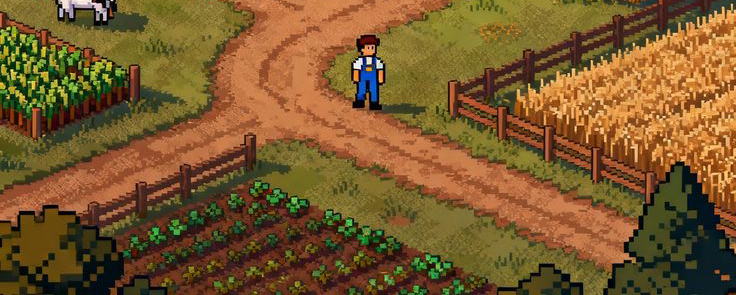
Pixels has the most accessible onboarding flow in web3 gaming. Easy sign up. No wallet, no gas fees, no crypto knowledge required. The tutorial is gentle. Terra Villa is welcoming. Public Specks provide immediate farming activity. Within minutes of signing up, you are doing the things the game does.
This accessibility is genuine and has been credited, rightly, as one of the factors behind Pixels' growth to 1 million daily active users. Every friction point that requires crypto knowledge is a barrier that excludes a population of potential players. Pixels removed those barriers at the entry.
What it did not remove, and in some ways intensified, is the friction at the point where the game's economic value becomes accessible. The result is a paradox: maximum accessibility at entry, maximum friction at value, with very little visible signal to the player entering the easy door that a harder door exists further in.
Mapping the Friction Points
The friction in Pixels is not randomly distributed. It clusters at specific gates that correspond to economic transitions.
Gate one: marketplace access. Basic trading requires 700 reputation points. Selling on the marketplace requires 900. The free path to these thresholds takes weeks through quest completion and social connections. The paid path (VIP at 1,500 points) costs $PIXEL. A player who entered through the email signup screen and wants to participate in the player marketplace will hit this gate and need to understand what reputation is, how to build it, and what it costs.
Gate two: meaningful earning. The task board offers that provide meaningful $PIXEL rewards are calibrated to favor higher-reputation accounts. A fresh account sees lower-quality offers. The improvement curve is real but slow.
Gate three: guild access. Free-to-play players can join guilds. But guilds with access to high-tier resources require guild leaders to stake $PIXEL. The quality of guild access is determined by the financial commitment of guild leadership, not by the free player's own commitment.
Gate four: land economics. NFT land ownership is the highest tier of economic participation. The economic return from land, through resource taxes and guild management, is qualitatively different from what Speck farming provides. Land costs real money at current NFT prices.
These gates are not hidden. They're documented in the FAQ and discussed extensively in the community. But they're completely invisible to the person on the email signup screen, and the gap between "easy entry" and "meaningful economic participation" is substantially wider than the entry experience suggests.
Why Accessibility-to-Friction Gaps Are Particularly Costly in P2E Contexts
In a pure entertainment game, an accessibility-to-friction gap is annoying but not catastrophic. Players who find the friction excessive leave. Players who find the depth rewarding stay. The game keeps whoever it keeps.
In a play-to-earn context, the dynamic is different because the accessibility promise is tied to an economic promise. When a player signs up because they heard there were token rewards, the frictionless entry implies that the rewards are accessible to people like them. The friction they encounter later doesn't just feel like game design. It feels like broken contract.
This is where the Pixels community's recurring frustration with the reputation system comes from. Players who came for economic access and found an economic gate feel that the gate was concealed from them. From the design team's perspective, the gate was documented and rational. From the player's perspective, the email signup screen advertised one thing and the reputation wall delivered another.
Both readings are accurate. The paradox is structural.
What Honest Onboarding Would Look Like
Honest onboarding for Pixels would give new players a clear map of the progression from easy entry to meaningful economic participation. Not buried in the FAQ. On the screen that follows the email signup. Something like: "You're starting on free land. Here's what you can do now, here's what opens up at each level, and here's what it takes to get there."
The counter-argument from a growth perspective is that showing new players the full friction map at the entry reduces conversion. Players who see "weeks to marketplace access" might not start.
This is a real trade-off. Pixels' current onboarding converts at a high rate because the entry is frictionless and the friction is deferred. Whether the players who convert but churn after hitting the reputation wall are more or less valuable than the players who would not start if they knew the full picture is a retention math question.
My intuition is that players who understand the full game and choose to start are more likely to stay than players who start without understanding and feel deceived. But that intuition is hard to validate without the A/B test data.
The Asymmetry That Persists
The deepest issue with Pixels' onboarding paradox is not that friction exists. Every game has friction. The issue is the asymmetry between the promise at entry and the reality at value.
"Free to play" with an email and no wallet is a genuine technological achievement in web3 gaming. It represents real design work to abstract the blockchain complexity away from the entry experience. This achievement is real and worth celebrating.
But it's paired with an economic system that, for most players, provides meaningful token access only after significant time investment or financial commitment. The technological accessibility and the economic accessibility are on completely different timelines.
This asymmetry will continue to generate community friction as long as the entry experience does not communicate the economic progression timeline. Pixels has the most accessible door in web3 gaming. What it needs now is a map that tells people what's behind the next doors, so the players who are willing to walk through them can plan for the journey instead of discovering it mid-stride.