


This isn’t just an analysis of a game or a token; it’s a post-mortem of a digital ecosystem trying to outrun its own gravity. I’ve been watching the trajectory of Pixels (PIXEL) lately—not just the price action, which is the shallowest way to look at this—but the underlying tectonic shifts in its "social-economic" fabric.
What follows is a deep dive into the philosophy of digital survival. It’s an exploration of how a project moves from the "hyper-growth" phase—where everyone is drunk on rewards—to the "sobering reality" of sustainability.
The Mirage of the Vertical Line
I’ve always been wary of "hockey stick" growth in Web3. When I look at the early explosion of Pixels, I don't just see success; I see a stress test. The article touches on a profound truth: Rapid growth is often a mask. In the beginning, everyone is a "user." The numbers look phenomenal. But if you look closer, as I tend to do, you see that systems don't break with a bang. They erode. When you push a digital economy too fast, you don't get a sudden crash; you get "micro-leaks." A slight imbalance in the token sink here, a minor exploit there. It’s a slow stretching of the fabric until the threads start to snap.
My Take: We need to stop equating "more users" with "better health." A system with 10,000 loyal inhabitants is infinitely more resilient than one with a million tourists looking for the exit.

The Parasite vs. The Producer: The PIXEL Dilemma
This is where it gets philosophical. In any crypto-economic game, you have two distinct species:
The Producer: They play because they value the world. They reinvest. They are the bedrock.
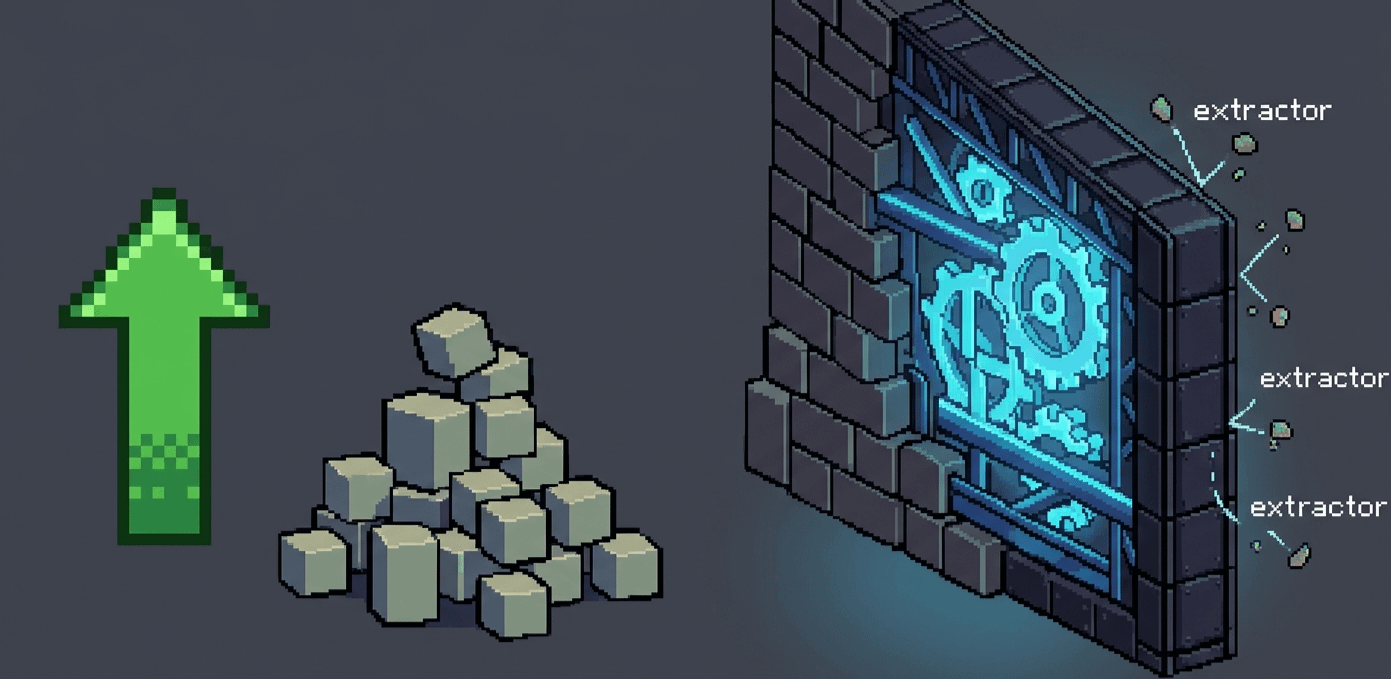
The Extractor: They are digital locusts. They enter, optimize for maximum reward, and liquidate immediately.
The tragedy of the PIXEL ecosystem—and many like it—is that on a spreadsheet, these two look identical. Both generate transactions. Both drive volume. But one builds the house while the other strips the copper from the walls.
I am fascinated by the struggle to distinguish between them. If you tighten the screws too much (withdrawal fees, lock-ups), you hurt the Producers who want liquidity. If you leave it open, the Extractors bleed you dry. It’s a tightrope walk over an abyss.

The Illusion of Choice and the "Attention Gravity"
We often brag about the "freedom" of the blockchain. Thousands of tokens, endless networks. But let’s be real: most of that freedom is ceremonial.
I’ve noticed a shift from freedom of choice to constriction by attention. Even within a massive world like Pixels, or the broader Ronin network, users don't actually explore the "long tail" of options. We are governed by Attention Gravity.
We follow the liquidity.
We follow the narrative.
We follow the 2–3 assets that everyone else is talking about.
The rest? It’s just digital noise. The "important" assets aren't necessarily the most technically superior; they are the ones that have captured the collective imagination. In crypto, belief is the only real collateral.

The Pivot: From "Numbers Go Up" to "System Hardening"
There is a painful transition happening right now. It’s the move from quantitative growth to qualitative stability.
I respect when a project is willing to let its "vanity metrics" drop in exchange for a harder, more sustainable core. For Pixels, this means redesigning rewards and perhaps introducing friction. It’s counter-intuitive in a world that demands 100x returns every week, but it’s the only way to survive the "Entropy of the Extractors."
When I look at the UI/UX of modern wallets and exchanges, I see how they subtly guide us. They highlight the "winners" and hide the "distractions." We think we are making independent choices, but we are being funneled into a shared behavioral loop. This "invisible hand" of the interface is what ultimately decides which projects live and which vanish into the sea of forgotten smart contracts.
The Final Reflection: Identity vs. Control
The most haunting question the article leaves us with—and one I find myself pondering late at night—is about Identity.
If you fix a decentralized, open system by adding more controls, more gatekeeping, and more centralized "nudges" to ensure stability... is it still the same system? Or have you turned a wild, digital frontier into a sanitized, corporate theme park?
I’m watching PIXEL closely because it’s a microcosm of this exact struggle. It’s a battle between the chaos of true decentralization and the necessity of economic order. Whether it thrives or fails isn't just about code; it's about whether we, as a community, can value depth over noise.
I’m not just observing a game; I’m observing the birth of a new kind of social contract. And frankly, I’m concerned—but captivated.
