
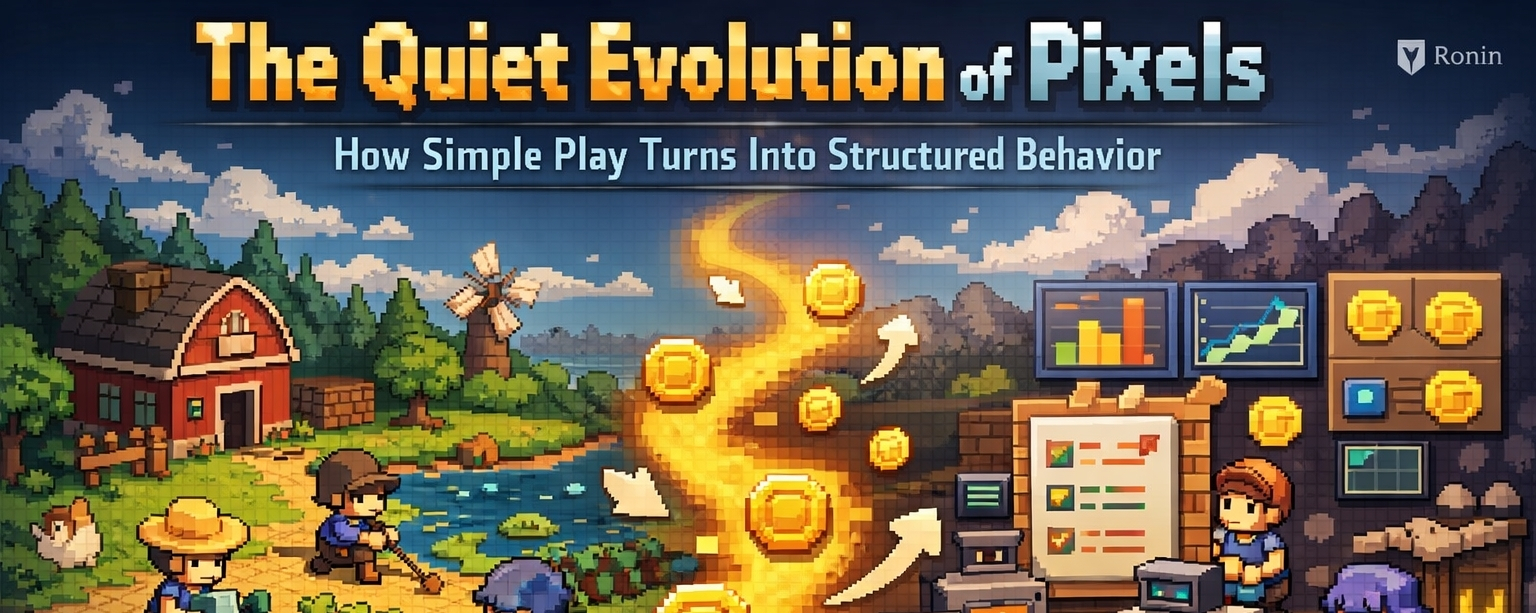
I’ve noticed a small but steady shift in the way I understand games like Pixels, and it didn’t really come from a single moment. It came from watching long enough that patterns started to feel less like coincidence and more like structure.
At the beginning, it still looks like a simple open world experience. Farming, exploration, creation, all blended into something that feels light and social. Players move around with curiosity, trying things, interacting with the environment without overthinking it. But what stood out to me over time is how quickly that kind of behavior starts to reorganize itself once rewards enter the center of attention.
The shift was subtle. Nobody really announces it. Players don’t suddenly stop having fun or decide to change how they play. Instead, they slowly begin to notice what actually “matters” inside the system. And once that line appears, even faintly, it starts guiding everything. Actions that feel natural in the beginning start getting evaluated differently. Not emotionally, but practically.
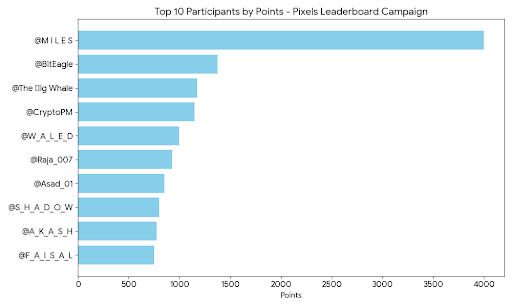
It started to feel like people weren’t just playing the world anymore. They were moving through it with a kind of quiet calculation running in the background. Not in an obvious or aggressive way, but in small decisions that repeat over time. What to farm, when to move, where to spend time, what to ignore. The game doesn’t force it, but the structure rewards it enough that it slowly becomes the default behavior.
What I kept noticing was how easily curiosity gets replaced by routine. At first, exploration feels open-ended. You go somewhere because you want to see what is there. But over time, that same movement begins to carry expectation. If it doesn’t produce value or progress, it slowly stops feeling worth it. That change is not loud, but it is consistent.
The more I watched, the more I realized how rewards don’t just motivate action, they reshape meaning. Farming is no longer just farming. It becomes maintenance of a loop. Exploration is no longer just exploration. It becomes route optimization. Even creativity, when it exists inside the system, starts getting measured by how well it feeds back into progression.
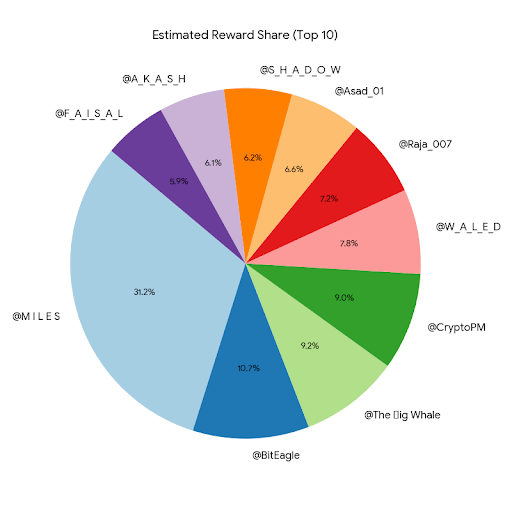
What makes it harder to notice is that everything still looks active. The world is still full of movement, players are still online, things are still happening. But activity alone doesn’t tell the full story. Beneath that surface, the reasons behind actions slowly narrow. People are still doing things, but the range of why they do them becomes smaller.
It also became clear how quickly behavior spreads between players. Once a certain approach proves efficient, it doesn’t stay personal for long. Others pick it up, adapt it, refine it. Not because they are told to, but because the system quietly confirms it as the better path. Over time, that creates a shared rhythm that most people naturally fall into without even realizing it.
And when that happens, alternative ways of playing don’t really disappear, but they lose weight. They start to feel less practical compared to the dominant flow. Even if they are more interesting or more playful, they don’t survive the same pressure of efficiency. That tension is always there in the background, shaping choices in ways that are easy to overlook in the moment.
What I find most interesting is that nothing needs to break for this to happen. There is no collapse, no obvious failure. Everything continues working as designed. But the experience itself quietly shifts from something open-ended into something more directed by invisible incentives. It doesn’t feel forced, it just feels… guided.
And the longer I observed it, the more I started thinking about how systems like this don’t just host play, they slowly train it. Not through instructions, but through repetition and reward alignment. Players don’t change because they are told to change. They change because certain patterns keep getting reinforced until they feel natural.
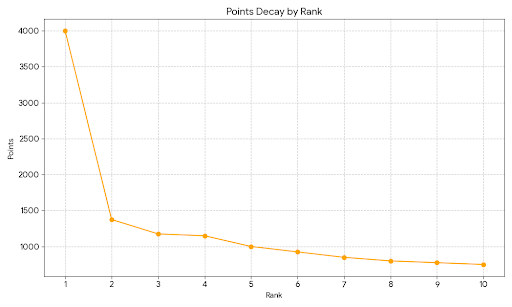
At some point, it becomes hard to tell where the game ends and the optimization begins. The world is still there, still interactive, still full of possibilities, but the way it is used becomes more predictable than it first appears. And that predictability is what quietly defines the experience.
What stays with me is not a conclusion, but a feeling that things shift without announcing themselves. You only really notice it after enough time has passed, when you look back and realize that the way people engage with the same space is not quite the same as it was at the start.