The early hours in Pixels can be misleading.
Everyone looks the same.
You’re planting the same crops, walking the same paths, spending the same energy. Progress feels even. Fair, almost. It gives the impression that everyone is moving forward together, separated only by time spent in the game.
But that equality doesn’t last.
Not because the mechanics change.
Because the players do.
Pixels doesn’t create a skill gap through mechanics—it creates it through interpretation.
And that’s a much quieter divide.
Two players can perform the exact same actions and end up with completely different outcomes. Not because one clicked faster or played longer, but because one understood something the other didn’t.
You start to notice it in subtle ways.
Some players seem to always have the right resources at the right time. They move through tasks with less hesitation. Their decisions look simple—but they’re rarely random. There’s a kind of clarity behind what they choose to do next.
Others move just as much, but with less direction.
Same effort.
Different results.
That’s not a mechanical gap.
That’s an informational one.
Pixels doesn’t explicitly teach you how to play efficiently. It gives you systems, and then it lets you figure out how those systems connect. The relationships between resources, timing, and actions aren’t handed to you—they’re discovered.
And discovery creates asymmetry.
Because not everyone notices the same things at the same time.
Some players recognize patterns early. They see how certain actions influence others. They begin to anticipate outcomes instead of reacting to them. Their gameplay starts to feel intentional.
Others stay in reactive mode longer.
They respond to what’s in front of them without connecting it to the broader system.
That difference compounds.
Not through upgrades.
Through understanding.
This is where the game quietly separates its players.
Not into beginners and experts.
But into observers and interpreters.
Observers see what is happening.
Interpreters understand why it’s happening.
That second layer is where the advantage forms.
And it’s not obvious.
There’s no stat that measures it.
No level that reflects it.
But you can feel it in the way players move.
In how quickly they decide.
In how rarely they waste effort.
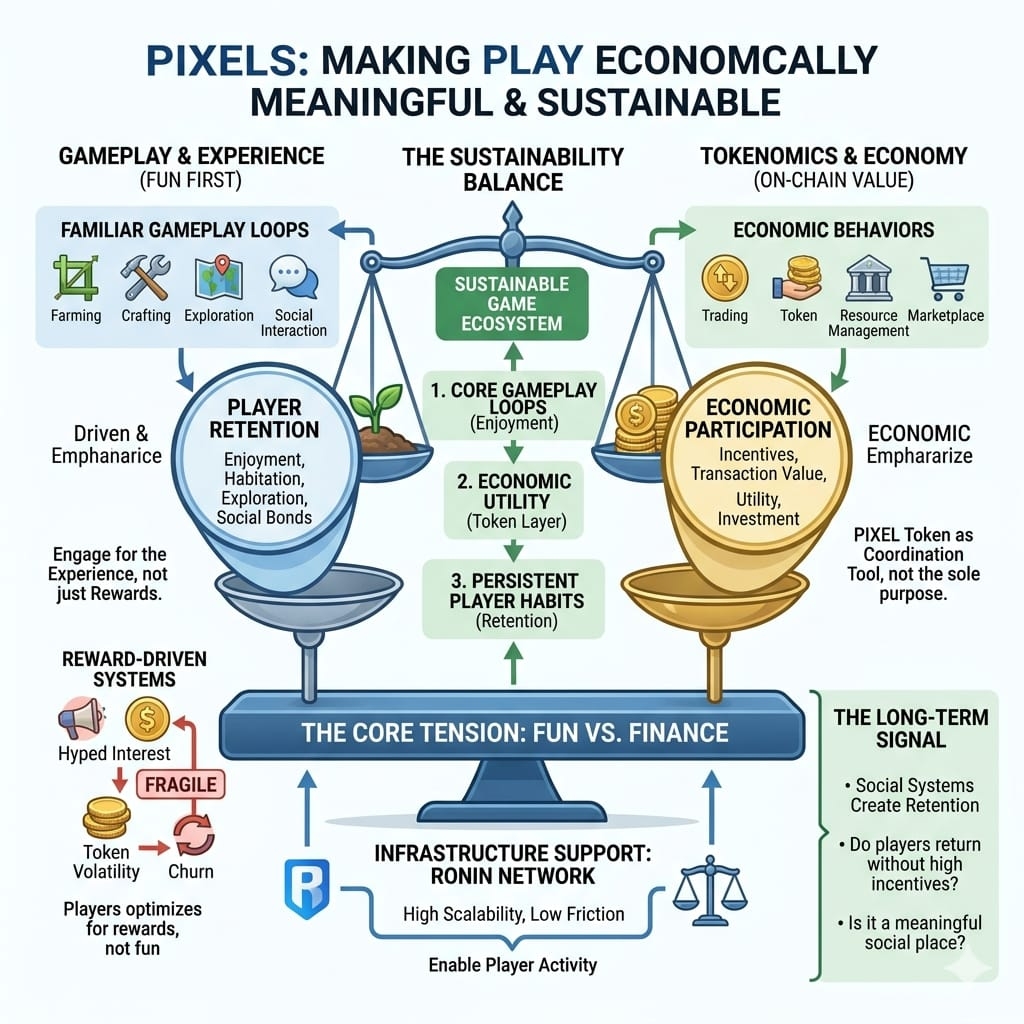
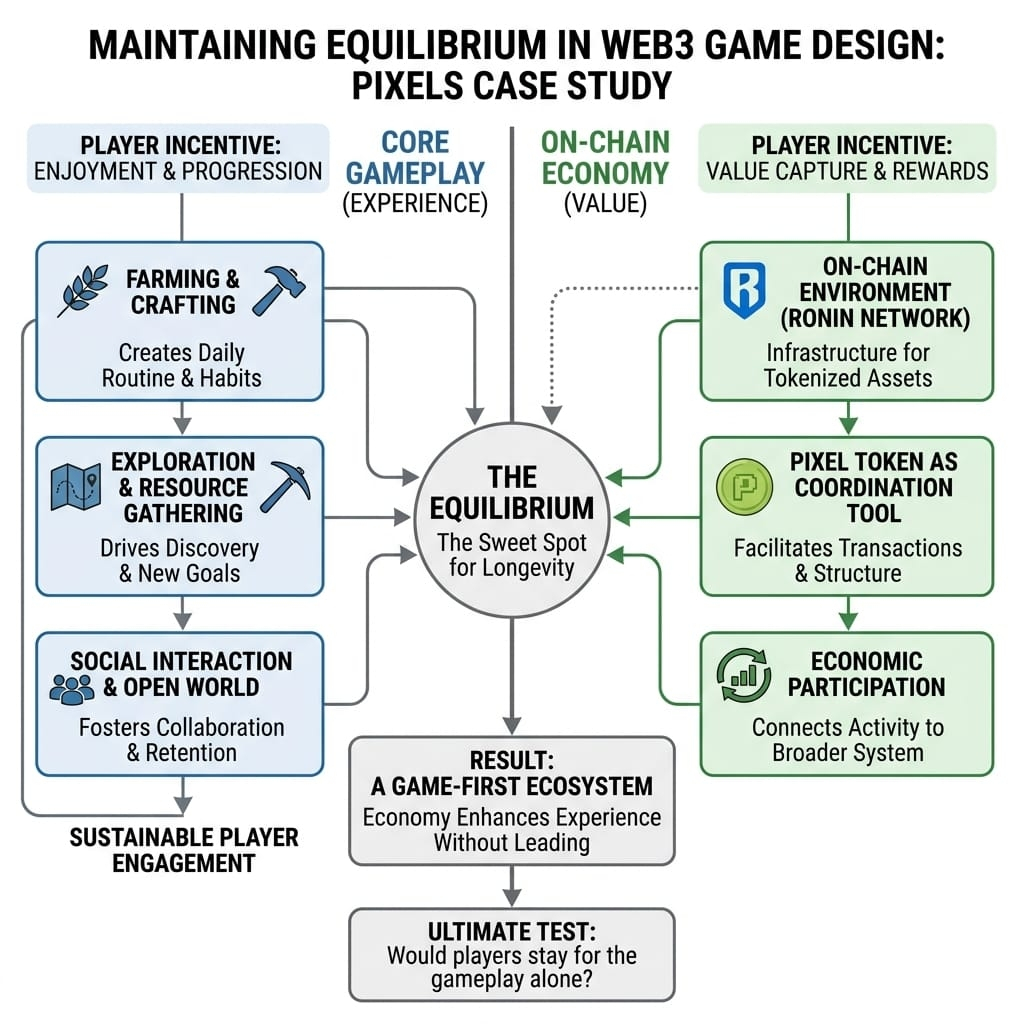
$PIXEL plays a role here, but not in the way most expect.
It doesn’t create the gap.
It reveals it.
Because once value is attached to actions, the difference between understanding and guessing becomes visible. The players who interpret the system interact with it more effectively. The ones who don’t are still learning through trial.
Both are part of the same environment.
But they are not experiencing the same game.
That’s what makes this dynamic interesting.
Pixels doesn’t gate progress behind skill checks.
It gates efficiency behind awareness.
And awareness is not something the system distributes evenly.
It develops unevenly, quietly, over time.
Which means the real progression in Pixels isn’t just about what you unlock.
It’s about what you begin to notice.
Because once you see how the system works…
you stop playing the same way again.




#StrategyBTCPurchase #WhatNextForUSIranConflict #RAVEWildMoves #KelpDAOFacesAttack