
Evoluția jocurilor play-to-earn s-a confruntat adesea cu o problemă centrală: sustenabilitatea. Multe modele timpurii s-au concentrat intens pe recompense fără a construi o bază economică solidă, conducând la inflație, dezechilibru și eventual la abandonul jucătorilor. Aici intervine Stacked, o nouă inovație din partea echipei Pixels, care introduce o abordare fundamental mai inteligentă pentru recompense și angajament.
În esența sa, Stacked nu este doar o altă platformă de recompense—funcționează ca un motor LiveOps recompensat, proiectat să îmbunătățească dinamic experiențele jucătorilor în diverse jocuri. Sistemele tradiționale LiveOps se bazează pe evenimente statice, oferte limitate în timp sau ajustări manuale de către dezvoltatori. Stacked transformă acest model prin introducerea unui economist de jocuri alimentat de AI, capabil să analizeze comportamentul jucătorilor în timp real și să distribuie recompense cu precizie.
Aceasta înseamnă că recompensele nu mai sunt aleatorii sau generice. În schimb, acestea sunt livrate jucătorului potrivit, la momentul potrivit, pentru motivul potrivit. De exemplu, un jucător în pericol de a abandona jocul ar putea primi un stimulent țintit pentru a se reangaja, în timp ce un utilizator foarte activ ar putea fi recompensat într-un mod care să-i adâncească angajamentul pe termen lung. Această personalizare transformă recompensele într-un instrument strategic, mai degrabă decât într-un instrument brut.
Una dintre cele mai puternice caracteristici ale Stacked este capacitatea sa de a susține atât recompense în bani reali, cât și stimulente în joc, fără cusur. Această flexibilitate permite dezvoltatorilor să creeze economii care par semnificative fără a se baza excesiv pe emisiile de tokenuri. Prin echilibrarea creării de valoare cu distribuția controlată, Stacked ajută la menținerea stabilității economice—ceva care a fost istoric un punct slab în ecosistemele play-to-earn.
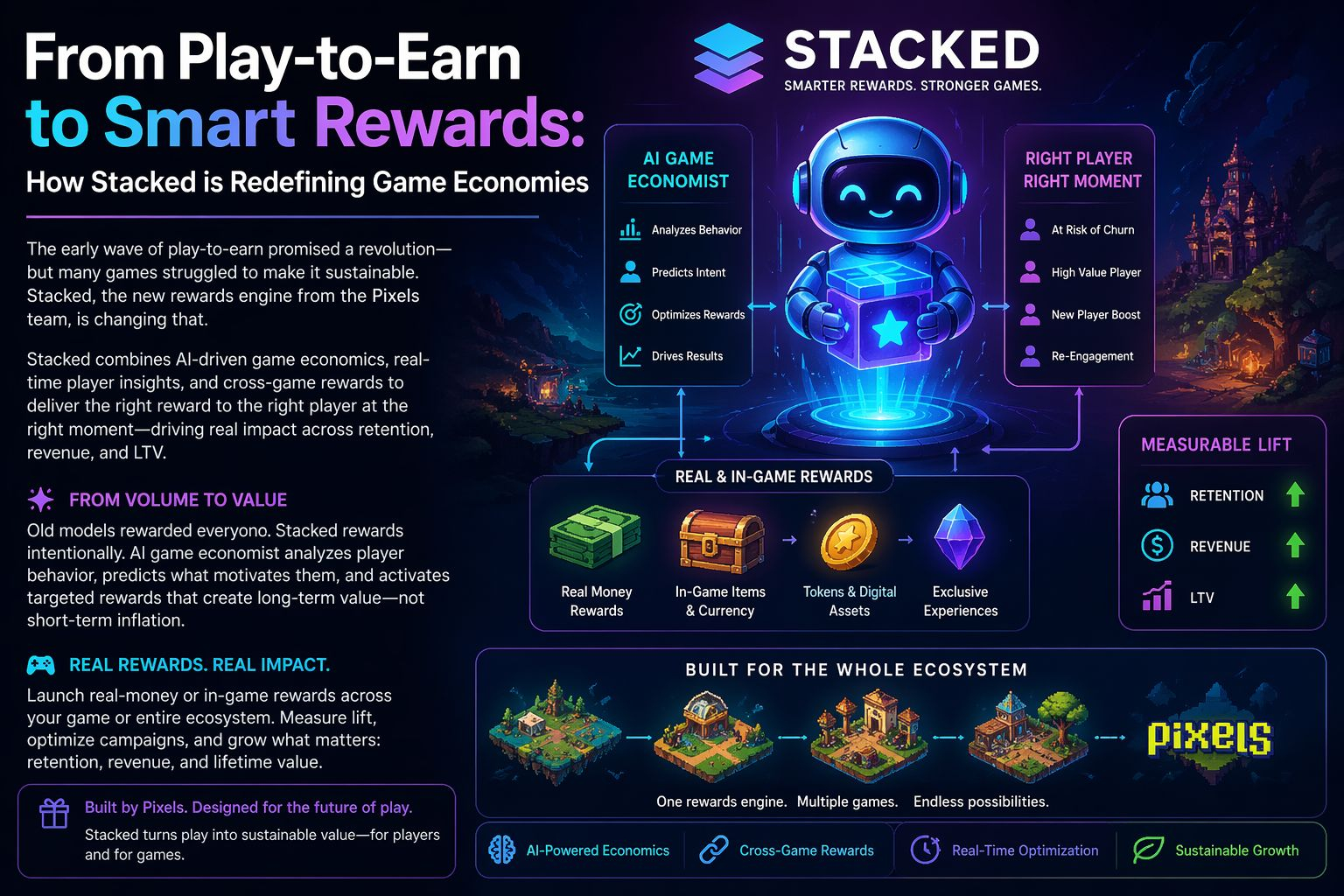
Dincolo de distribuția recompenselor, Stacked pune un accent puternic pe rezultate măsurabile. Dezvoltatorii de jocuri pot urmări impactul direct al campaniilor de recompense asupra indicatorilor cheie de performanță, cum ar fi retenția, venitul și valoarea pe termen lung (LTV). În loc să ghicească ce funcționează, echipele se pot baza pe informații bazate pe date pentru a-și rafina strategiile. Acest ciclu de feedback creează un proces continuu de optimizare în care fiecare eveniment de recompensă contribuie la un sistem mai inteligent.
O altă inovație cheie este modul în care Stacked se extinde dincolo de un singur joc. Ca o aplicație de recompense trans-joc, permite jucătorilor să câștige valoare reală în multiple experiențe. Această abordare interconectată întărește ecosistemul general prin încurajarea mobilității jucătorilor, menținând în același timp un angajament constant. Jucătorii nu mai sunt limitați la economii izolate—devin parte dintr-o rețea mai amplă în care timpul și efortul lor au o valoare persistentă.
Important, Stacked se bazează pe lecțiile învățate din ecosistemul Pixels. Pixels a demonstrat deja cum agricultura, tranzacționarea și stakingul pot interacționa pentru a crea o economie circulară, bazată pe utilitate. Stacked ia această fundație și o scalează într-un sistem universal pe care alte jocuri îl pot adopta, transformând efectiv play-to-earn durabil într-un serviciu, mai degrabă decât într-un experiment.
În esență, Stacked reprezintă o schimbare de la designul axat pe recompense la economii bazate pe inteligență. Prin combinarea luării de decizii prin AI, analize în timp real și sisteme de recompense flexibile, se aliniază stimulentele jucătorilor cu sănătatea pe termen lung a ecosistemului. În loc de impulsuri scurte de angajament urmate de declin, jocurile pot acum construi o creștere constantă, compusă.
Pe măsură ce gamingul Web3 continuă să evolueze, soluții precum Stacked ar putea defini următoarea fază—unde recompensele nu sunt doar atrăgătoare, ci și durabile, măsurabile și profund integrate în gameplay-ul în sine.