
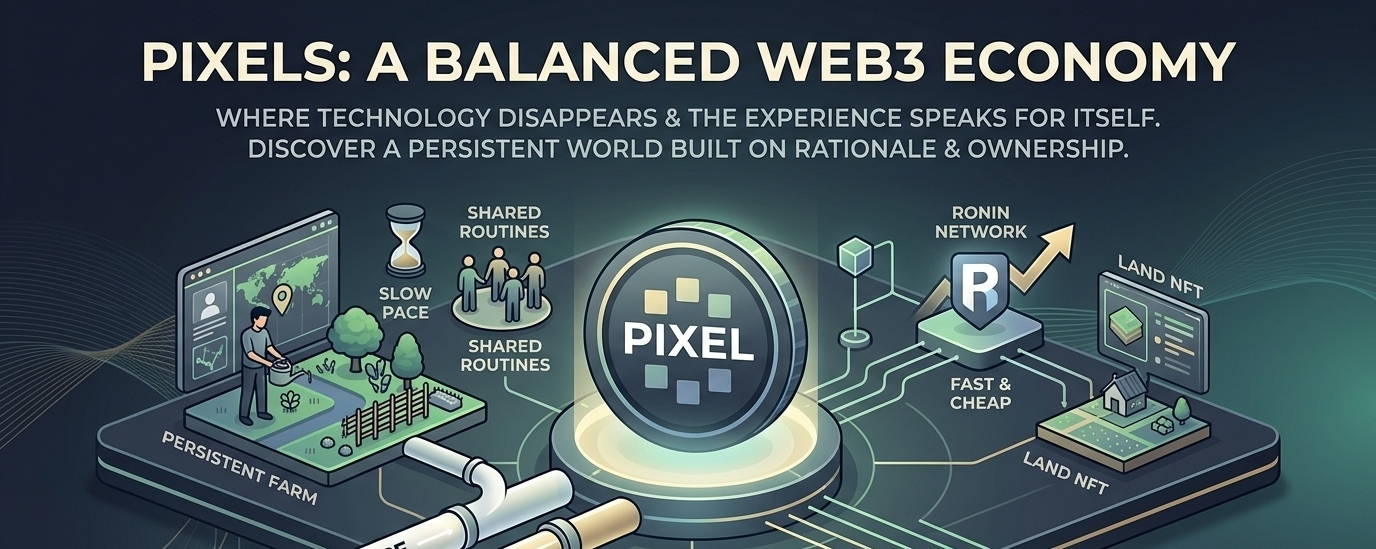
Most Web3 games feel like they’re asking you to optimize before you even understand them. Pixels doesn’t do that. It slows you down. You plant something, check back later, wander a bit, maybe trade with someone. It feels simple at first but that simplicity is doing a lot of heavy lifting.
Underneath, it runs on the Ronin Network, which basically keeps everything fast and cheap so the game doesn’t interrupt itself. That’s important, because Pixels is built on small, repeated actions. If every move felt like a transaction, it would fall apart. Instead, most of the complexity stays hidden. You only notice the blockchain when it actually matters like ownership or trading otherwise it just feels like a normal game.
The PIXEL token isn’t thrown at you like a reward button. It moves through the game quietly used for upgrades, crafting, land, and trading. Think of it less like “earnings” and more like energy moving through a system. The tricky part, like every GameFi project, is keeping that system stable. Too many rewards and things lose value. Too few, and people lose interest. Pixels is still figuring that balance out in real time, adjusting how resources flow and how players interact with them.
Ownership here feels more real than usual. Land NFTs aren’t just something you hold they’re something you use. You can shape them, build on them, and make them productive. Over time, that changes how you think about playing. You’re not just completing tasks you’re building a small piece of a world that keeps running even when you log off.
There’s also a quiet shift happening in how the game connects to everything around it. Being part of the Ronin ecosystem means it’s not isolated. Assets, players, and economies can start to overlap across different experiences. If that keeps growing, Pixels won’t just be a game people visit it’ll be part of a larger digital space people move through.
What makes it stand out, though, isn’t just the tech or the economy. It’s the feeling. The pixel art, the slower pace, the shared routines it all taps into something familiar. It reminds people of older games, but with a new layer where your time can actually carry value. Not in a loud, get rich way, but in a quieter sense of ownership.
The future of Pixels probably won’t depend on hype. It’ll depend on whether it can grow without losing that calm, lived-in feeling. More features, more players, more systems those will come. The real question is whether it still feels like a place, not just a platform.
Because if it keeps that feeling, then it’s doing something most Web3 games haven’t managed yetit’s making the technology disappear, and letting the experience speak for itself.