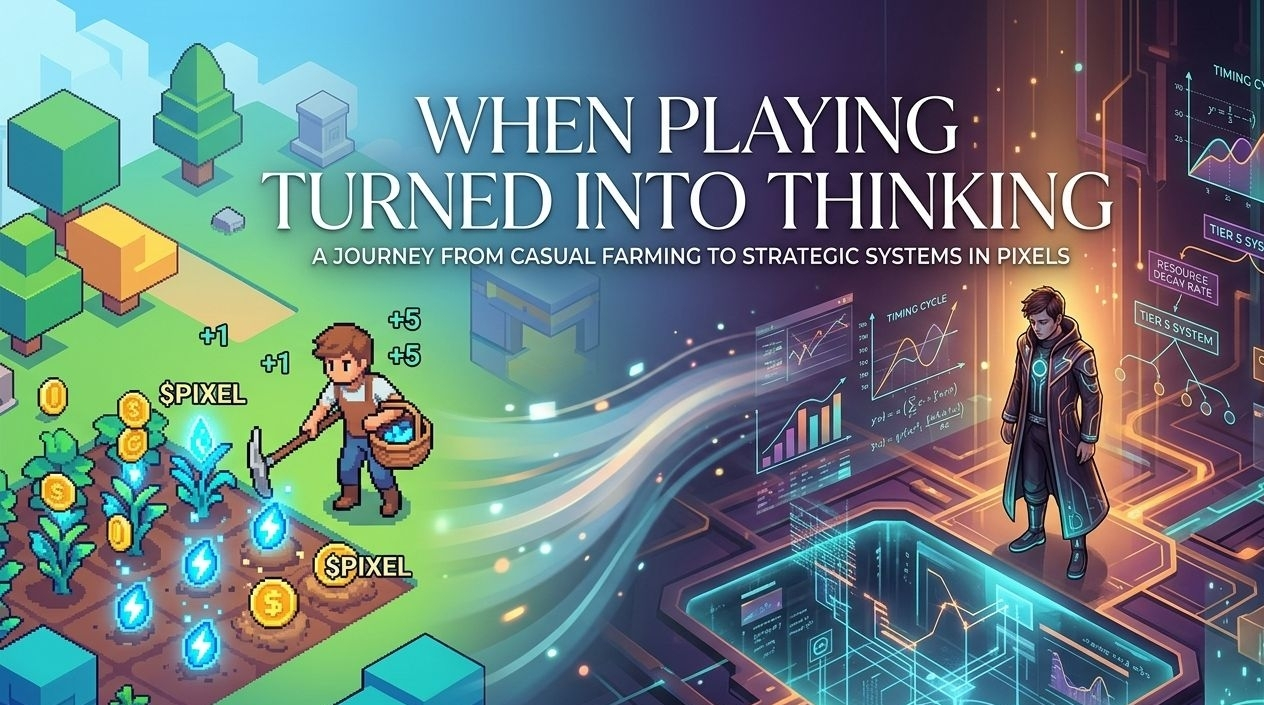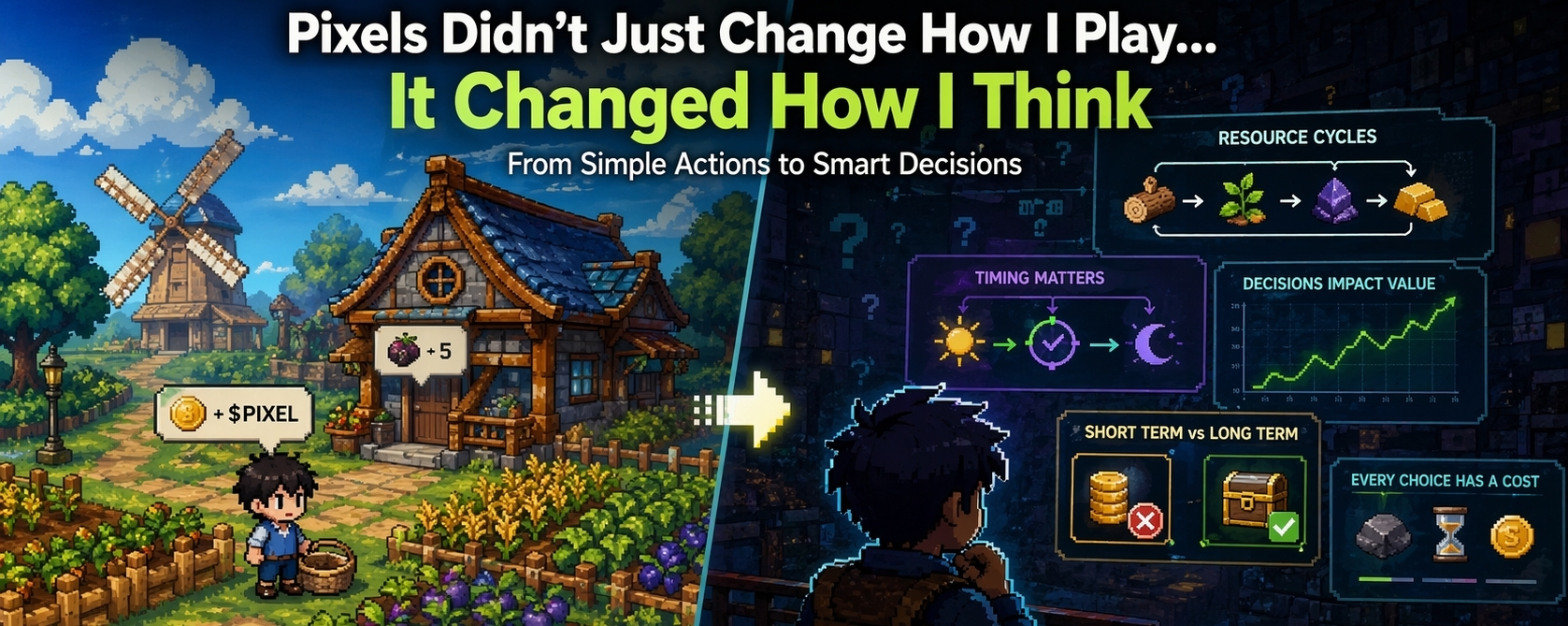
@Pixels l didn’t realize when my relationship with Pixels started to change, but looking back, it wasn’t sudden at all. It began in the simplest way possible. I would log in, complete a few tasks, farm what I could, collect my $PIXEL, and leave. There was no pressure in it, no deeper intention. It felt like something light, almost automatic, like a routine I didn’t have to think about. I wasn’t trying to understand anything beyond what was visible. It was just a game I played to pass time, nothing more. But somewhere along the way, something shifted quietly, without any clear signal.
I started noticing small pauses in my own behavior. Actions that once felt instant began to slow down. I would look at my resources and hesitate, not because I was unsure, but because I had this growing sense that timing mattered more than I first believed. It felt like doing the same thing at a different moment could lead to a completely different outcome. That idea stayed with me longer than I expected. It wasn’t something the game directly told me, but it was something I started feeling on my own. And once that feeling settled in, I couldn’t ignore it anymore.
As I moved deeper, especially when I reached higher systems like Tier 5, the structure of Pixels started revealing itself in a different way. It stopped feeling like simple progression and started feeling like a system that required awareness. Resources didn’t feel static anymore. They behaved like something alive, moving through phases. Some would lose value over time, some would transform into something else, and some only made sense if used at the right moment. At first, I thought this layer just added complexity, but the more I paid attention, the more I understood that it was shaping how I think rather than just how I play.
What really made it clearer was watching how different players interact with the same system. New players move with a kind of freedom that feels natural. They complete everything they see, use everything they have, and chase every visible reward because that’s what the surface encourages. But experienced players don’t move like that anymore. They slow down. They hold back. They question whether something that looks beneficial right now is actually worth doing. Sometimes they even skip actions completely, not because they can’t do them, but because they understand the cost behind them. That contrast made me realize that Pixels doesn’t simply reward activity. It rewards understanding, patience, and awareness.
What makes this even more interesting is that the game never fully explains these ideas directly. It doesn’t guide you step by step into optimization. Instead, it leaves space for you to notice patterns on your own. Over time, you begin to see how value shifts depending on timing, how cycles affect outcomes, and how some decisions quietly reduce efficiency instead of improving it. Players naturally start adapting. They test different approaches, compare results, and adjust their strategies. The experience slowly shifts from doing things to understanding how things work. It starts to feel less like a game of actions and more like a system of decisions.
That shift is where it becomes complicated for me. On one side, this is what gives Pixels its depth. It avoids feeling shallow or repetitive. Every decision carries weight, even if that weight is not obvious at first. Scarcity, timing, and resource flow create a kind of quiet pressure that forces you to think. You can’t just repeat actions without consequence. The system responds, even if it does so silently. But at the same time, it changes how the experience feels. You’re no longer moving freely in the same way. You begin to think before every step. Sometimes you even stop yourself from playing because the timing doesn’t feel right. That’s not something I expected from a game, and yet it became part of how I interact with it.
In a way, it feels similar to something outside of gaming. At first, everything is flexible and spontaneous. But once you start recognizing patterns, your behavior changes. You begin to plan, to delay certain actions, to avoid others, not because you are forced to, but because it feels like the smarter choice. Pixels creates that same shift in mindset. It pulls you from a place of simple interaction into a space where you are constantly thinking about value, timing, and long-term outcomes. Even mechanics like decay or transformation are not just features, they influence how you approach every decision.
It feels like two different experiences existing at the same time. New players are still exploring, reacting, and enjoying the surface. Meanwhile, more experienced players are operating inside a deeper layer where every move is calculated and intentional. One is playing in the moment, the other is thinking ahead. And maybe that’s not accidental. Maybe Pixels is designed to guide players from one state into the other, slowly and quietly. From doing things without thinking to understanding why those things matter.
And that’s the thought I keep coming back to. When a game starts encouraging you to slow down, to think carefully, to make fewer but better decisions, it begins to feel different. It stops being just something you play and starts becoming something you try to understand. And without even realizing it, you’re no longer just part of the game. You’re part of the system behind it.