
From the Shadows to the Mainstream
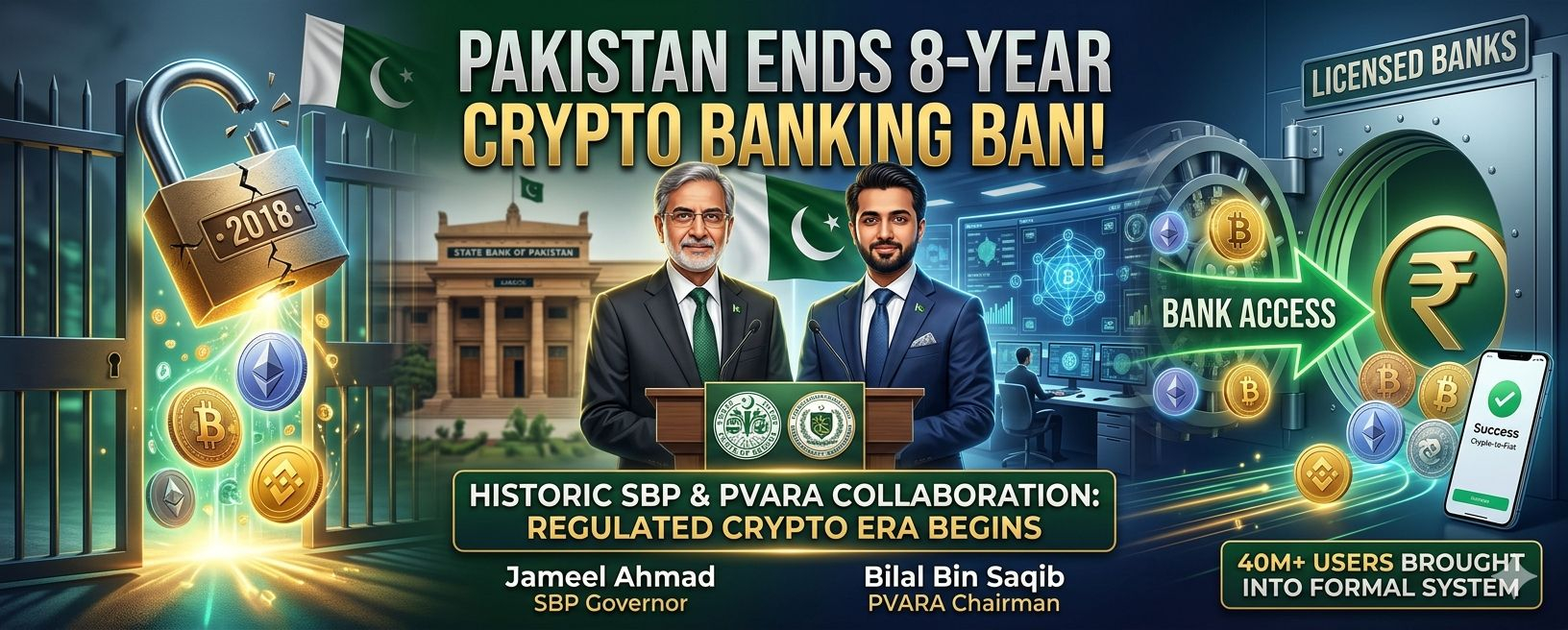
For nearly a decade, Pakistan’s booming cryptocurrency sector—boasting an estimated 40 million active retail users—#PakistanCrypto to operate in the financial shadows. Thriving largely on peer-to-peer (P2P) exchanges, traders faced daily hurdles, frozen bank accounts, and lingering regulatory uncertainty. Not anymore. In a landmark decision, the State Bank of Pakistan (SBP) has officially reversed its 2018 banking ban, paving the way for licensed crypto companies to seamlessly integrate with the traditional banking system.
The End of the 2018 Restrictions
Back in 2018, the SBP issued a sweeping directive prohibiting all financial institutions from dealing in virtual currencies. While the intention was to curb illicit financial flows, the reality was that it stifled innovation and pushed a multi-billion dollar market underground. Despite these restrictions, Pakistan consistently ranked among the top countries globally for grassroots crypto adoption. The central bank's reversal is a powerful acknowledgment of an undeniable reality: you cannot ban the future; you must regulate it.
A Historic Policy Shift
This breakthrough follows the enactment of the Virtual Assets Act of 2026, which established the Pakistan Virtual Assets Regulatory Authority (PVARA). Under the leadership of PVARA Chairman Bilal Bin Saqib, the government is making a definitive push toward compliance and innovation.
According to the new SBP circular, commercial banks and financial institutions are now authorized to open accounts for Virtual Asset Service Providers (VASPs) that hold a legitimate PVARA license. This crucial step bridges the gap between traditional fiat and digital currencies.
What Does This Mean for the Market?
Direct On-Ramps and Off-Ramps:
The days of relying exclusively on P2P networks are numbered. Licensed exchanges will soon be able to offer direct bank deposits and withdrawals, drastically reducing transaction friction and counterparty risk.
Institutional Confidence:
By implementing strict Anti-Money Laundering (AML) and Know Your Customer (KYC) compliance frameworks, the SBP is inviting institutional capital to safely explore the Pakistani crypto ecosystem.
Consumer Protection:
The mandate for segregated client money accounts means user funds will be heavily protected, keeping operational capital strictly separate from retail investments.
Calculated, Secure Adoption
While the ban has been lifted for crypto businesses, it is essential to note the strategic guardrails in place. Banks themselves remain strictly barred from directly investing in, trading, or holding digital assets using their own capital or customer deposits. The objective is to facilitate the ecosystem for the public, not to expose the national banking infrastructure to digital asset volatility. It is a calculated step that balances rapid technological innovation with macroeconomic stability.
The Road Ahead
Chairman Bilal Bin Saqib has accurately described this policy shift as a "foundational step" for Pakistan’s economic evolution. With plans already in motion to explore tokenized assets and national stablecoin frameworks, Pakistan is no longer just a high-volume retail market; it is actively positioning itself as a regulated hub for blockchain technology. For investors, builders, and everyday traders, the message is loud and clear: the regulatory winter is over, and a new era of
digital finance has begun.