
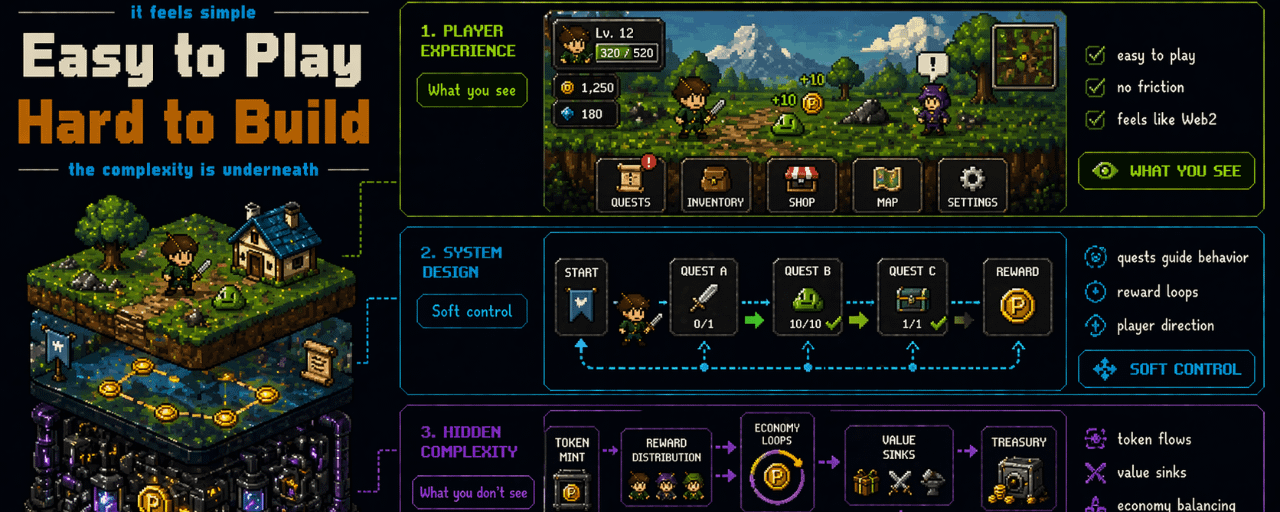
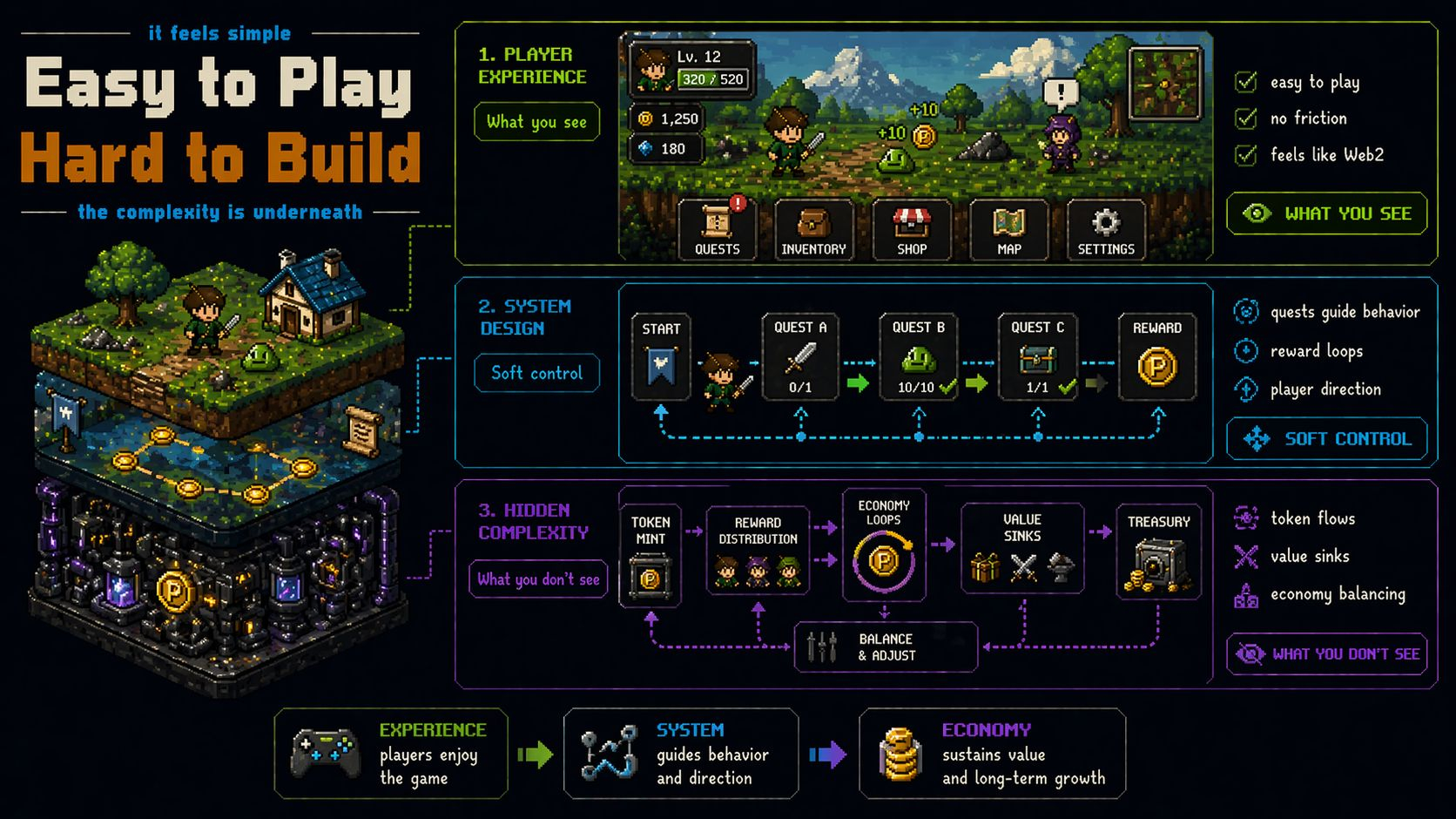
Honestly, I’ve been sitting with how Pixels approaches GameFi, and the more I think about it, the more I feel like people underestimate where the real difficulty is.
It’s easy to say “just make the game fun” and everything else follows. But when you actually try these systems, the friction shows up everywhere. Wallets, tokens, confusing economies, even just switching devices. That stuff kills momentum way faster than bad gameplay sometimes.
What Pixels seems to do, at least from how I’m experiencing it, is hide most of that. You log in, you play, things feel simple. But underneath, it’s not simple at all. There are layers, quests guiding behavior, rewards feeding into loops, sinks pulling value back out. It’s like the complexity is there, just… pushed out of your way.
And I think that’s where sustainability starts to matter.
Older GameFi projects didn’t really balance this. They focused too much on emissions. Rewards kept flowing out, but not enough went back in. Eventually everything just inflated and collapsed. Pixels feels more controlled. Not in a strict way, but more like it’s constantly trying to keep things in equilibrium.
Still, I don’t think that removes the main problem.
Because any system with a token will eventually face volatility. Prices move, incentives shift, players react. What I find interesting is that Pixels doesn’t seem to pretend it can avoid that. It looks more like it’s trying to absorb it, adjusting rewards, balancing flows, keeping things from swinging too hard in one direction.
I’m not fully sure how effective that is yet, but at least it feels acknowledged.
Then there’s the scaling side, which I keep thinking about more than I expected. It’s not just about getting more players in. It’s about whether the experience stays consistent when that happens. Across devices, across regions, across different types of players.
The hybrid setup helps. Keeping gameplay off-chain, using traditional infrastructure, that’s probably why it feels smooth right now. But at the same time, that introduces its own challenges. Synchronization, latency, making sure everything stays aligned even when systems are split across layers.
And honestly, that part feels fragile if not handled carefully.
Something else I didn’t think about at first is how much infrastructure matters. Not just servers, but redundancy, failover, caching, all the invisible systems that keep things running when activity spikes. When thousands of players are online at the same time, it’s not just about capacity, it’s about coordination between all these moving parts.
Which brings me back to the bigger question.
Can Pixels actually become a fully player-driven economy without slowly pulling things back into centralized control?
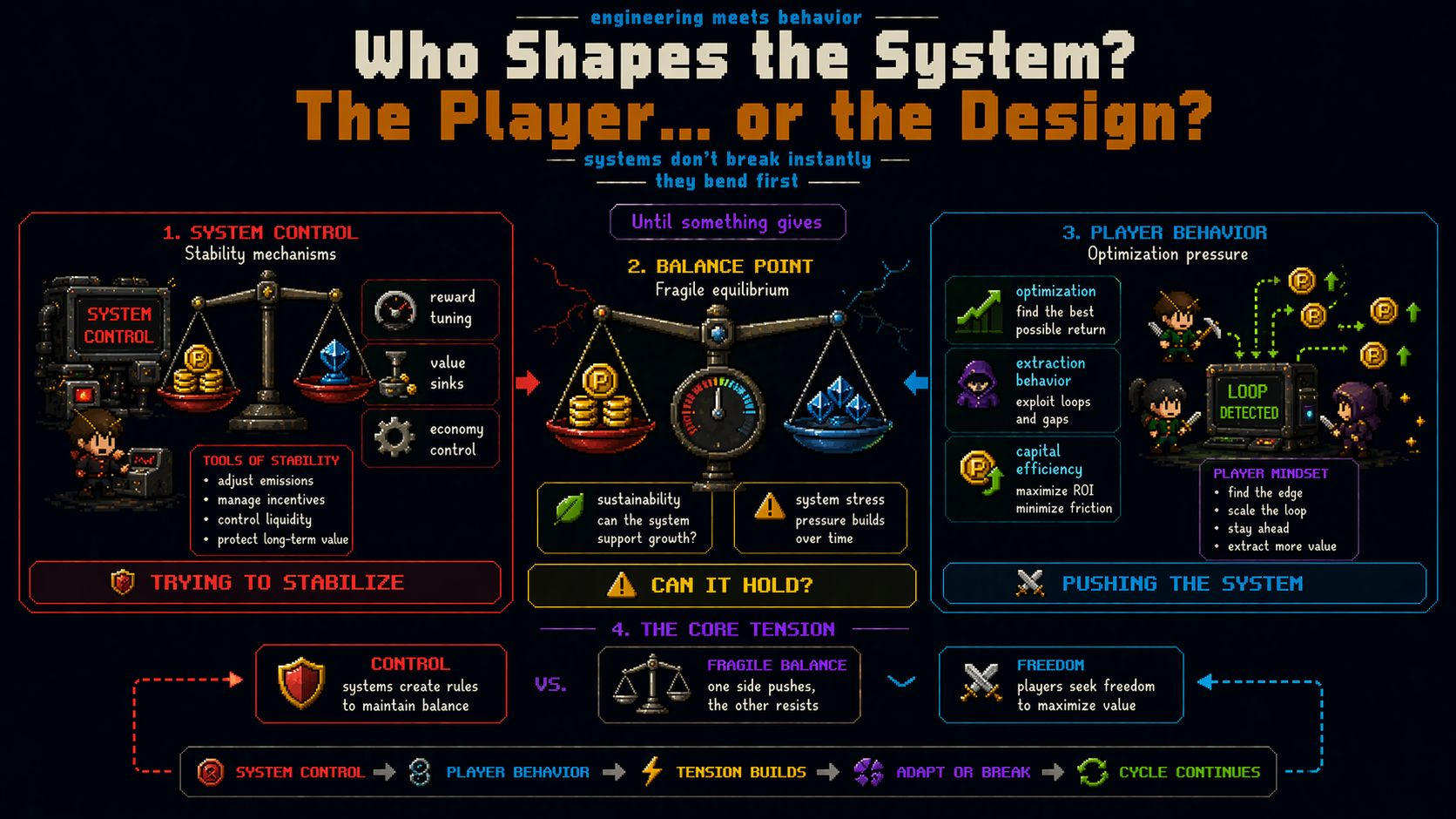
Because right now, it feels like a balance. Players shape the economy, but the system still guides, adjusts, stabilizes. And maybe that’s necessary. But it also means it’s not purely open.
And that tension doesn’t really go away.
The more open it becomes, the more risk of exploitation. The more controlled it is, the less “player-driven” it actually feels.
I guess what I keep circling back to is this: sustainability here isn’t just about good code or solid architecture. It’s about how people behave inside the system. How they optimize, how they react, how they push things to the edge.
Pixels feels more engineered than most GameFi I’ve seen. That’s clear.
But engineering can only contain behavior for so long.
At some point, the real test is what happens when incentives get stressed. When speculation grows, when players start squeezing every edge they can find.
Does the system hold its shape?
Or does it slowly bend toward extraction like everything else?
I don’t have an answer yet.
Just feels like that’s the question that matters more than anything else right now.