
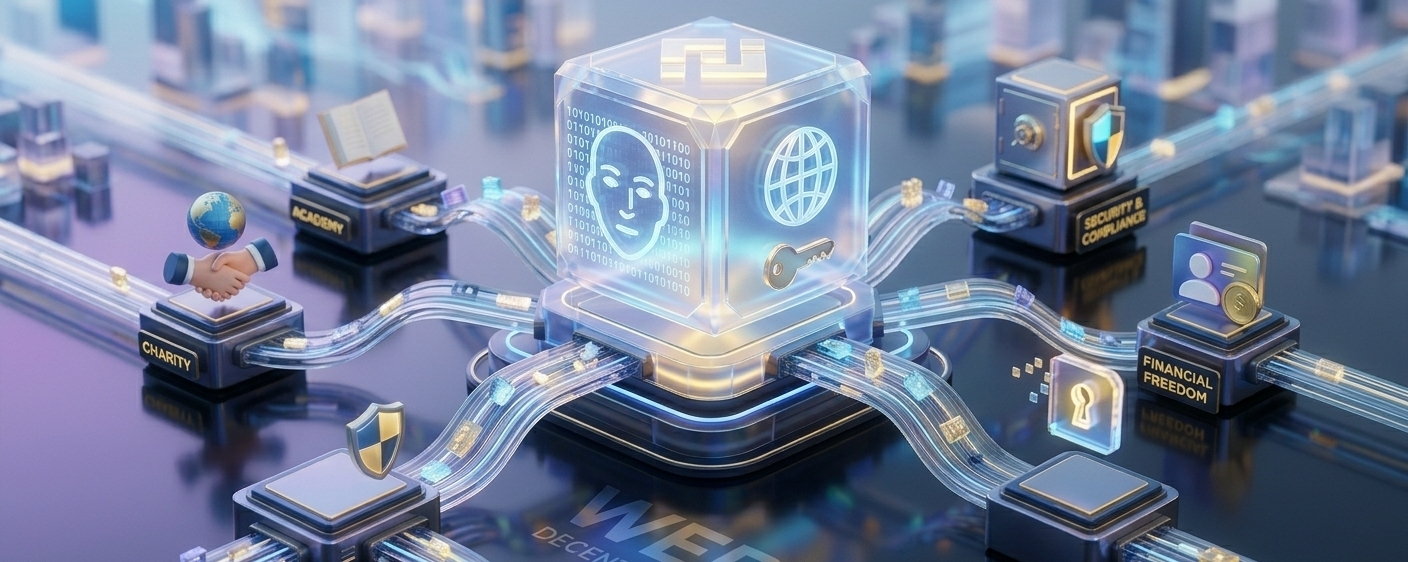
For years, the conversation around blockchain was dominated by price charts and trading volumes. However, as we move deeper into 2026, the focus has shifted toward the foundational layer of the new internet: Web3 and Decentralized Identity (DID).
The End of the "Login with Tech Giant" Era
In the traditional Web2 world, our digital identities are owned by a handful of corporations. We "borrow" our profiles from social media platforms or search engines. Web3 flips this script. By using blockchain-based identity protocols, users can now own their data, carrying a single, secure digital passport across different platforms without needing a middleman.
Key Pillars of the New Digital Self
Self-Sovereignty: Users decide exactly what data to share. You can prove you are over 18 without revealing your actual birthdate or address.
Interoperability: Your digital reputation—achievements, badges, and history—can move with you from a decentralized finance (DeFi) app to a gaming metaverse.
Security: By removing centralized databases, the risk of massive, single-point-of-failure data breaches is significantly reduced.
Real-World Impact
We are already seeing this technology transform industries beyond finance. In healthcare, patients are using decentralized IDs to manage their medical records securely. In the creator economy, artists use verified identities to ensure they receive royalties every time their work is resold, regardless of the marketplace.
The Path Ahead
The transition to a fully decentralized web won't happen overnight. It requires intuitive user interfaces and global regulatory frameworks. However, the momentum is undeniable. As we stop being "products" of the internet and start being "owners" of it, the true potential of blockchain is finally being$BTC realized.$USDC #Binance #cryptouniverseofficial