Pixels (PIXEL) is one of those games that doesn’t fully reveal itself in the first hour, or even the first few sessions. At first glance, it looks almost too simple. Bright visuals, farming mechanics, a bit of wandering around. You might even think, “That’s it?” But then you stick with it a little longer, and something shifts. Not dramatically. Just enough to make you curious.
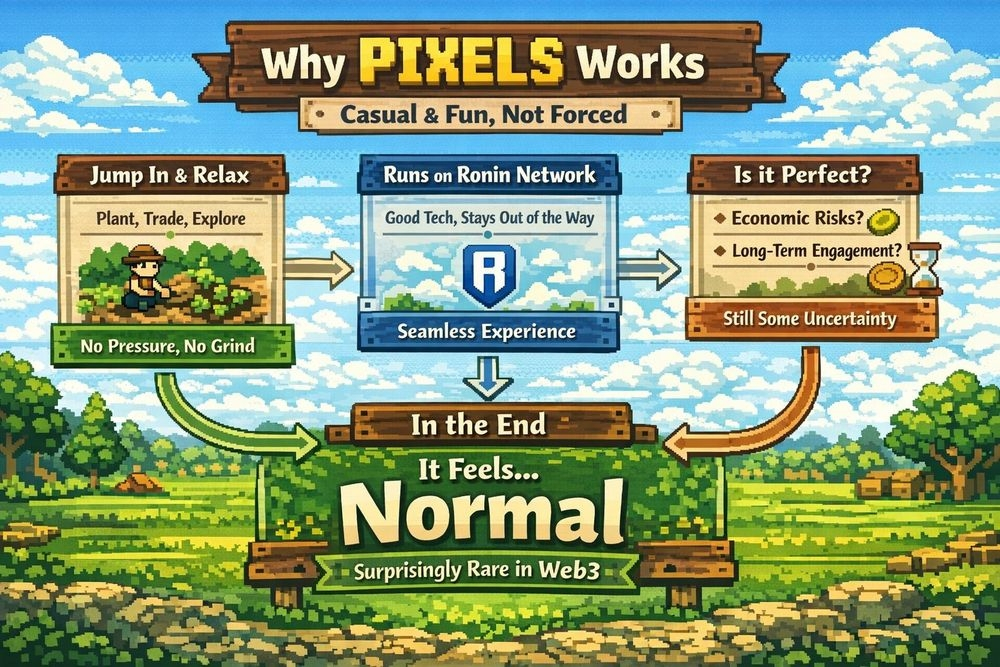
It runs on the Ronin Network, which already places it in that crowded, slightly chaotic world of Web3 gaming. And let’s be honest, that space has a reputation. A lot of promises, not always backed by real gameplay. So going in, there’s skepticism. There should be. The real question isn’t whether Pixels uses blockchain it’s whether it actually feels like a game worth playing.
And surprisingly, it does. At least, most of the time.
You start small. A patch of land. A few seeds. Basic tools. Nothing impressive. But that’s kind of the point. The game doesn’t rush you, which is refreshing, but also a bit deceptive. Because while you’re casually planting crops and figuring out how things work, the systems underneath are already pulling you in. It’s that slow build. That creeping investment.
Farming is the backbone, no doubt about it. You plant, you wait, you harvest, you repeat. Sounds dull when you say it like that. But in practice, it taps into something very familiar. That incremental progress loop. You always feel like you’re one step away from something better more land, better crops, higher efficiency. It’s not groundbreaking. It doesn’t need to be.
Then there’s exploration. And this is where things get a bit more interesting. The world isn’t just there for decoration. It has purpose, even if that purpose isn’t always obvious right away. You wander, you gather, you bump into other players doing their own thing. Sometimes you find something useful. Sometimes you don’t. That unpredictability helps. It breaks the monotony, just enough.
But I keep coming back to the same thought: is it enough?
Because games like this live and die by their loops. If the core loop gets stale, everything else starts to feel like filler. And Pixels walks a fine line here. There are moments where it feels genuinely engaging, where you’re planning your next move, thinking about how to optimize your farm or what to focus on next. And then there are moments where it feels like you’re just… going through the motions.
That’s the risk. Always has been.
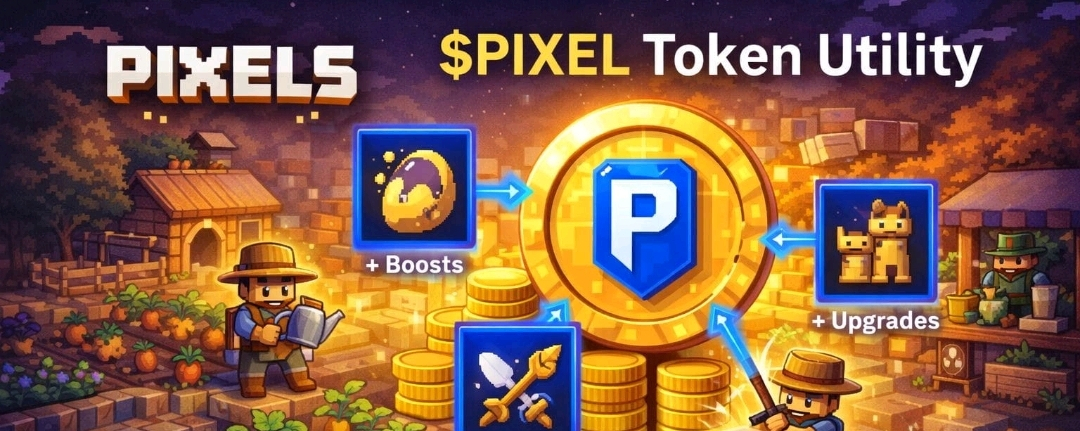
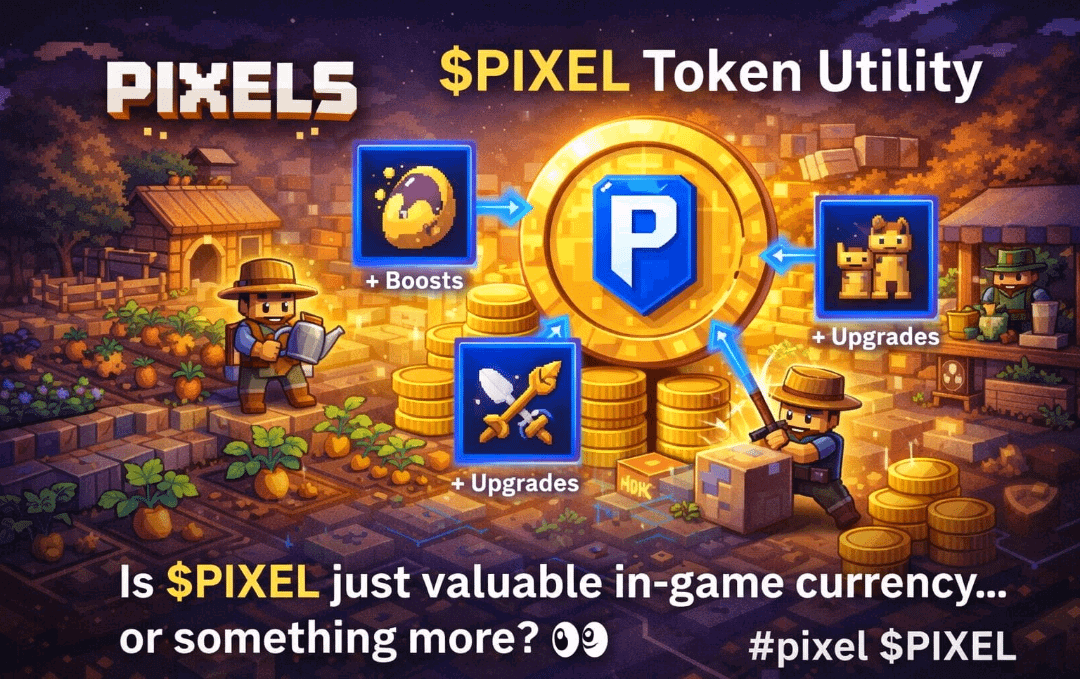
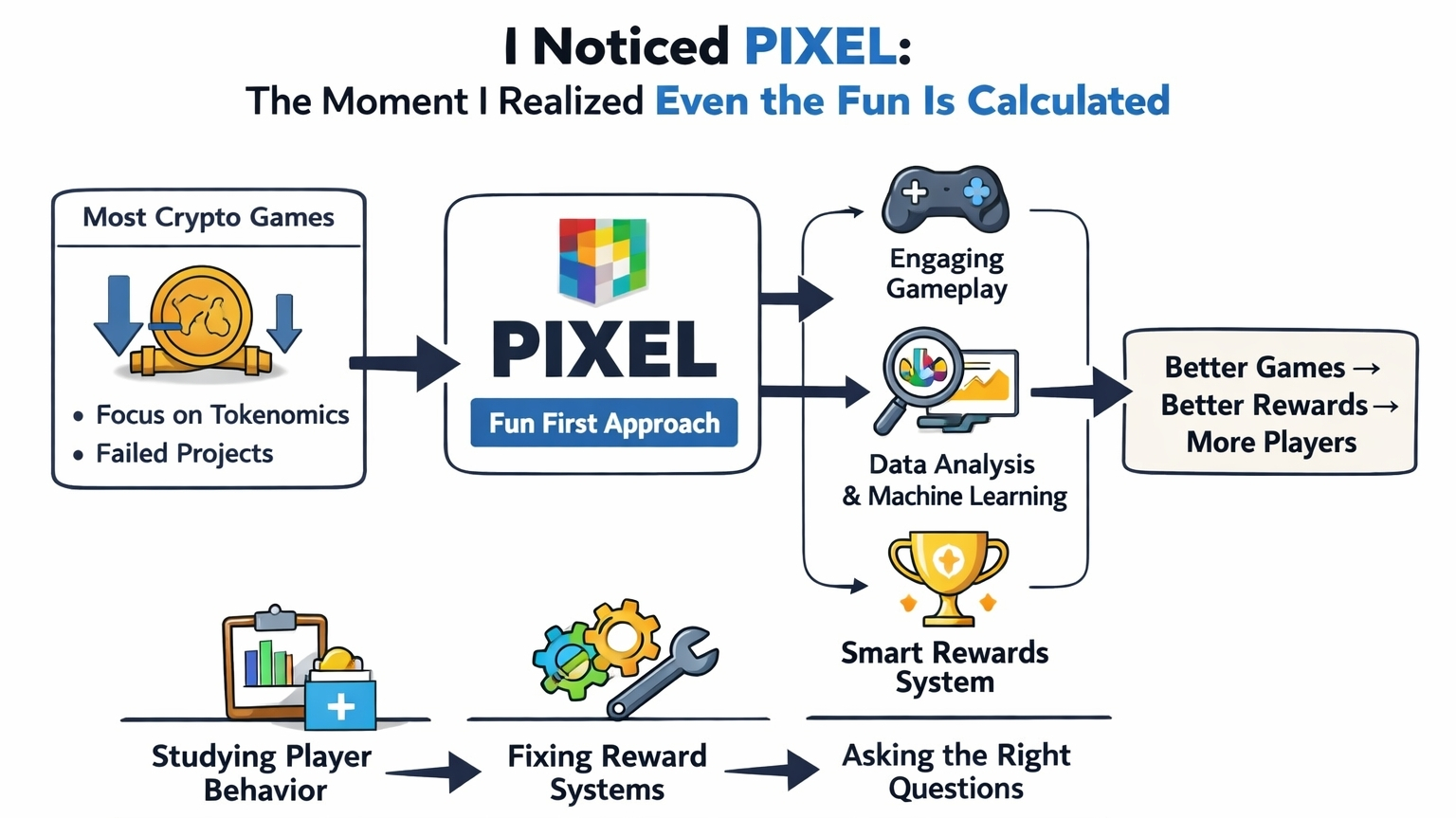
Now layer in the Web3 side of things, and it gets even more complicated. The in-game economy revolves around the PIXEL token, which means your actions aren’t just about progression they’re tied to value, at least in theory. You’re not just farming for fun. You’re farming for something that could matter outside the game.
That idea is powerful. Also dangerous.
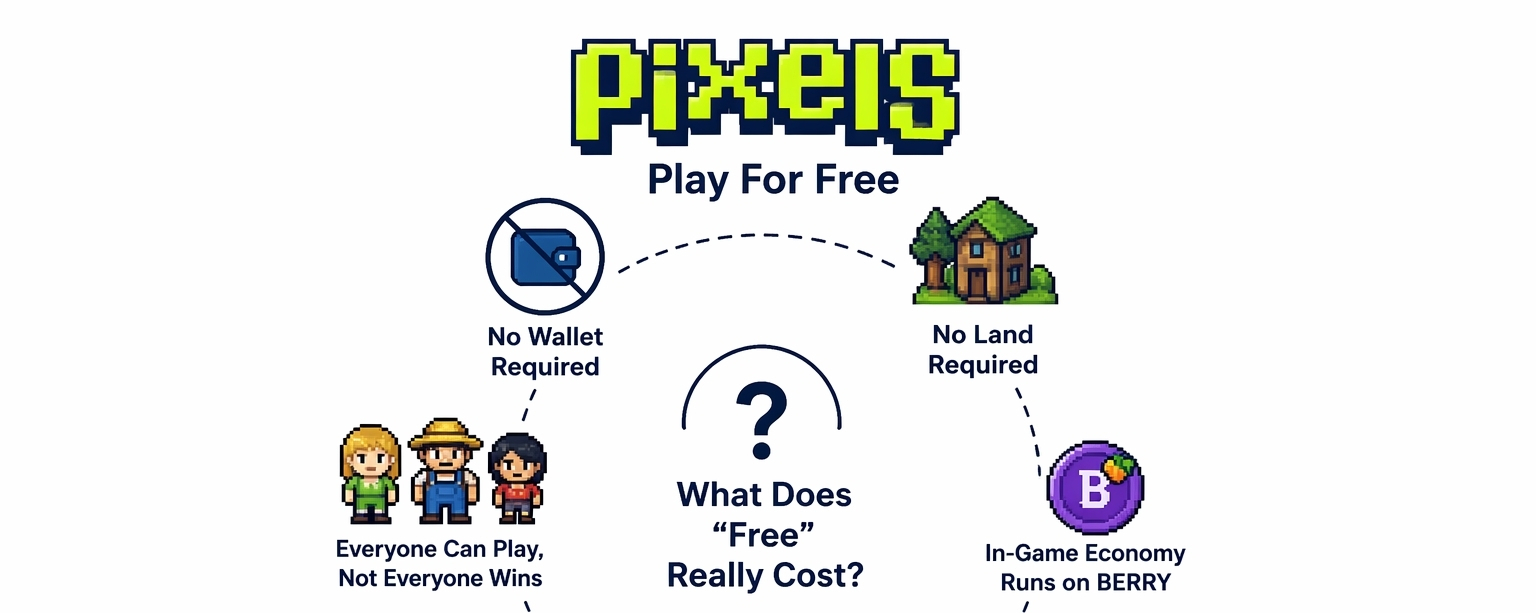
Because once real value enters the picture, behavior changes. Players stop playing purely for enjoyment and start thinking in terms of efficiency, profit, optimization. It shifts the entire tone of the game. Sometimes subtly, sometimes not. And suddenly, that relaxing farming loop starts to feel a bit like work.
Not always. But enough to notice.
And then there’s the bigger question hanging over all of this: sustainability. It’s easy to build hype. Much harder to maintain a stable, functioning economy over time. Too many rewards, and the system floods. Too few, and players lose interest. There’s no perfect balance, just constant adjustment. And every adjustment affects the player experience.
You can feel that tension if you pay attention.
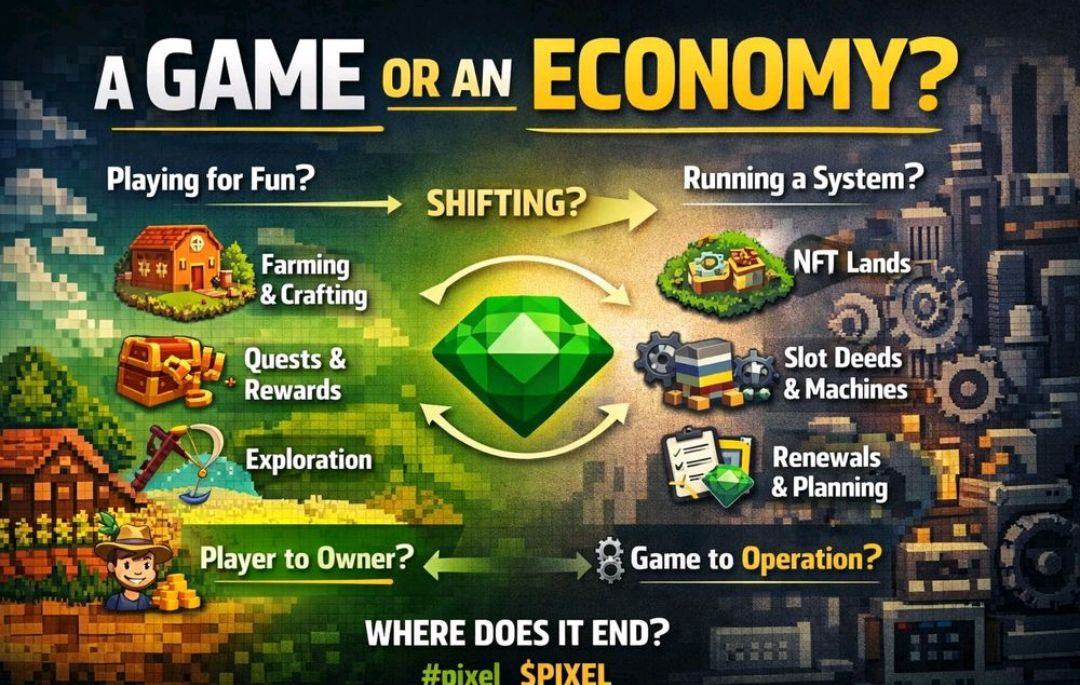
Still, I don’t think Pixels is trying to trick anyone. If anything, it feels like it’s trying to find a middle ground between being a game and being an economic system. Sometimes it leans too far one way. Sometimes the other. But that struggle is part of what makes it interesting.
The social aspect adds another layer, though it’s not always front and center. You see other players moving around, working on their own plots, trading, interacting in small ways. It’s not chaotic or overwhelming. It’s quieter than that. More like a shared space than a competitive arena. And that works in its favor.
There’s something oddly comforting about it.
But comfort can turn into complacency. And that’s where things get tricky again. If the game doesn’t evolve, if it doesn’t introduce new systems or deeper mechanics, that initial charm can wear off. Players start to drift. It happens slowly, then all at once.
I’ve seen it before. Everyone has.
So where does that leave Pixels? Honestly, somewhere uncertain. And I don’t mean that in a negative way. It just hasn’t fully settled into what it wants to be yet. Is it a casual farming game with a social layer? Is it a player-driven economy wrapped in game mechanics? Is it both?
Maybe that’s the point. Maybe it doesn’t have to choose.
What I do know is this: when you’re in it, when the loop clicks and the world feels alive and your little farm is growing in a way that feels personal, it works. It really does. You stop thinking about tokens and networks and all the underlying systems. You just play.
And then, eventually, those thoughts come back.
Not in a disruptive way. More like a quiet reminder that this isn’t just a game in the traditional sense. It’s something else, something still being figured out in real time. And whether that’s exciting or concerning probably depends on what you’re looking for.
For some people, that uncertainty is a dealbreaker. For others, it’s the whole appeal.
I’m still not entirely sure where I land. And maybe that’s why I keep coming back to it.
@Pixels #pixel $PIXEL