
OpenLedger: Building the Future of Decentralized Artificial Intelligence
Artificial intelligence is transforming the digital world at an incredible pace. From content creation and automation to advanced analytics and virtual assistants, AI is becoming part of everyday life. However, the current AI industry is largely dominated by centralized corporations that control data, infrastructure, and model development. In many cases, individuals who contribute valuable data or ideas receive little recognition or compensation. OpenLedger was created to challenge this system by introducing a decentralized ecosystem where AI development becomes transparent, community-driven, and reward-based.
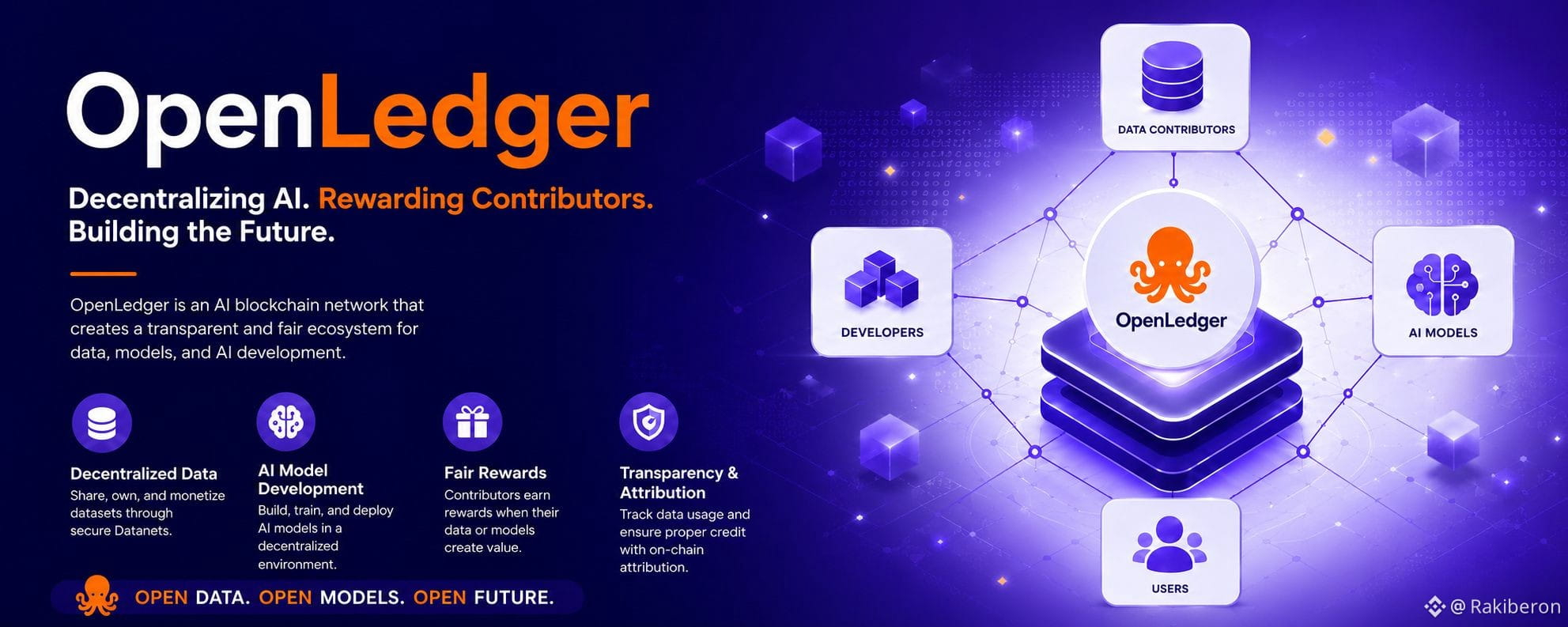
OpenLedger is an AI-focused blockchain network designed to connect artificial intelligence with Web3 technology. Instead of relying on centralized servers and closed systems, the platform uses blockchain infrastructure to make AI operations more open and verifiable. Its primary mission is to create a fair digital economy where contributors, developers, and users can all benefit from the growth of AI technology.
One of the most important concepts behind OpenLedger is transparent attribution. Traditional AI companies often gather large amounts of public or community-generated data to train their models without properly rewarding the original creators. OpenLedger introduces a system that tracks how datasets contribute to AI-generated outputs. This allows contributors to receive rewards whenever their data helps power an AI model or application. By doing this, OpenLedger aims to create a more balanced and sustainable AI economy.
The platform operates through decentralized data networks known as Datanets. These networks allow users to upload, organize, and manage datasets securely on-chain. Contributors maintain ownership of their information while making it available for AI training and development. This structure not only improves transparency but also encourages people to participate in the ecosystem because they can directly benefit from their contributions.
Another major feature of OpenLedger is its AI model infrastructure. Developers can build, train, and deploy AI models in a decentralized environment rather than depending entirely on large technology companies. This creates opportunities for smaller teams, startups, and independent developers to innovate without needing massive centralized resources. OpenLedger’s ecosystem is designed to reduce barriers in AI development and encourage open collaboration among global communities.
Scalability and efficiency are also key priorities for the project. OpenLedger uses advanced blockchain architecture to support fast transactions and lower operational costs. The network is built to handle AI-related workloads while remaining compatible with existing blockchain ecosystems. This compatibility helps developers integrate decentralized AI tools into broader Web3 applications more easily.
The OPEN token plays a central role within the ecosystem. It is used for governance, staking, transaction fees, and contributor incentives. Token holders can participate in decisions related to the future growth of the platform, making the ecosystem more community-oriented. The token also helps create economic incentives that encourage users to provide quality datasets and valuable AI services.
One reason OpenLedger has attracted attention in the crypto industry is because it combines two of the most powerful emerging technologies: blockchain and artificial intelligence. Both sectors are growing rapidly, and many investors believe decentralized AI could become a major trend in the coming years. OpenLedger positions itself as a project focused not only on AI innovation but also on fairness, transparency, and long-term sustainability.
The platform’s vision extends beyond simple AI development. OpenLedger aims to create an environment where AI systems become accountable and traceable. As concerns grow worldwide regarding data privacy, misinformation, and AI ethics, decentralized systems may offer solutions that centralized platforms struggle to provide. OpenLedger’s approach could help improve trust in AI-generated content by making the origins of data and model outputs more transparent.
Community participation is another major strength of the project. The ecosystem encourages collaboration between developers, researchers, creators, and data providers. This community-driven approach helps accelerate innovation while distributing value more fairly across participants. Instead of concentrating profits within a few corporations, OpenLedger seeks to create a shared economy powered by decentralized intelligence.
Despite its ambitious goals, OpenLedger still faces challenges common in the blockchain industry. Competition in both AI and Web3 sectors remains extremely intense. The project must continue improving its technology, attracting developers, and maintaining strong adoption to achieve long-term success. Market volatility and changing regulations could also influence the platform’s future growth.
Even with these challenges, OpenLedger represents an important step toward a more open AI ecosystem. By combining blockchain transparency with artificial intelligence infrastructure, the project introduces a new model for digital collaboration and value sharing. If decentralized AI continues gaining momentum, OpenLedger could become one of the key platforms helping shape the future of intelligent technologies.
In the years ahead, the relationship between AI and blockchain is expected to grow even stronger. OpenLedger is positioning itself at the center of this transformation by building tools that support transparency, fairness, and decentralization. As the demand for ethical and accountable AI increases, platforms like OpenLedger may play a crucial role in defining how future AI systems are developed and governed.