
Most yield systems in crypto only look diversified while markets are calm.
That’s the uncomfortable part.
A vault spreads capital across lending, LPs, staking, maybe a delta-neutral strategy or two, and suddenly everybody starts calling it “risk-managed yield.” Then volatility hits, liquidity shifts fast, spreads widen, and half the positions start reacting to the same stress underneath.
Different wrappers. Same pressure.
Honestly, I think a lot of DeFi still underestimates hidden correlation risk.
That’s why the @OpenLedger architecture stood out to me.
The interesting part is not the AI label itself. The market already throws “AI-powered yield” on top of everything now. What matters is how the system coordinates capital underneath the surface.
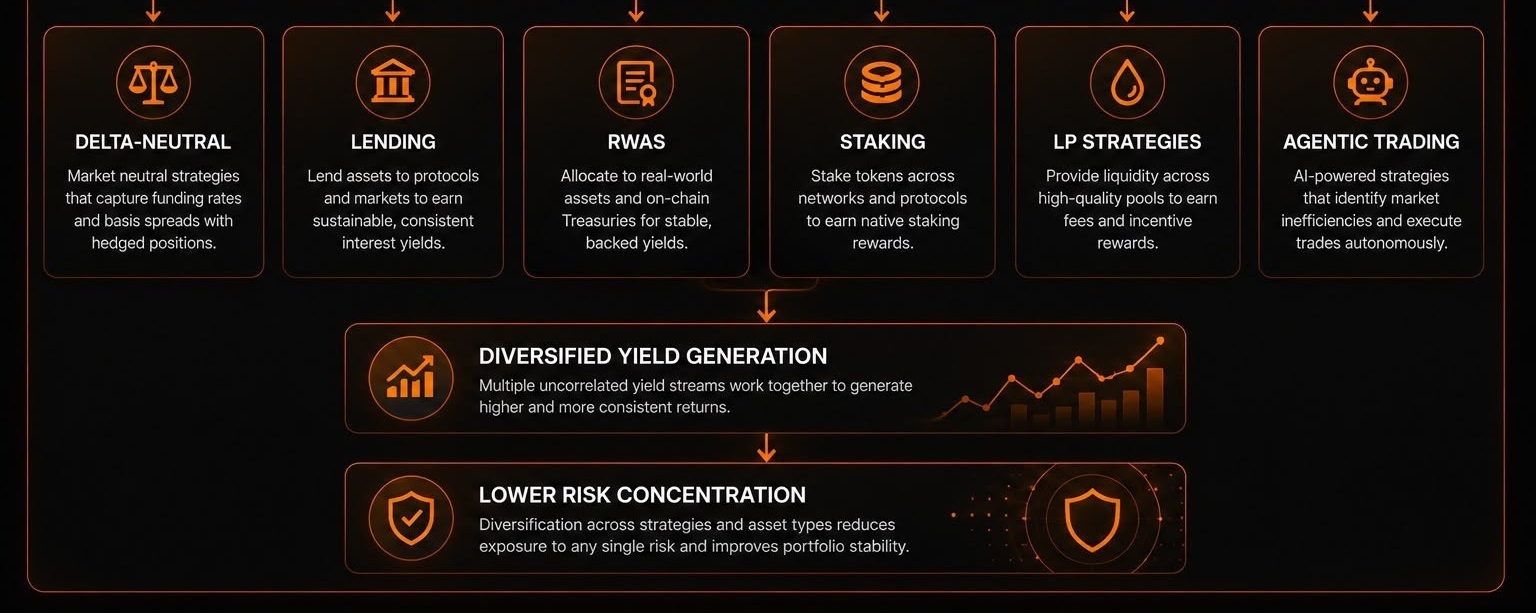
Inside OpenLedger, a single deposit doesn’t behave like static liquidity parked inside one strategy bucket. The capital gets dynamically distributed across uncorrelated environments:
* delta-neutral structures
* lending markets
* RWAs
* staking
* LP systems
* agentic trading flows
But the real mechanism sits deeper than simple diversification.
The AI layer is continuously monitoring how those strategies begin interacting with each other while market conditions change in real time.
That’s the important shift.
Most vaults optimize for yield first and only react to concentration after risk already appears. OpenLedger behaves more like an adaptive coordination layer where capital is constantly being repositioned before exposure clusters too heavily in one direction.
Small difference on paper.
Massive difference during volatility.
Because correlation drift happens quietly in crypto. A delta-neutral strategy suddenly stops behaving neutral after liquidity conditions tighten. Lending exposure starts reacting to the same pressure hitting LP positions. What looked diversified during expansion cycles suddenly moves together once stress enters the system.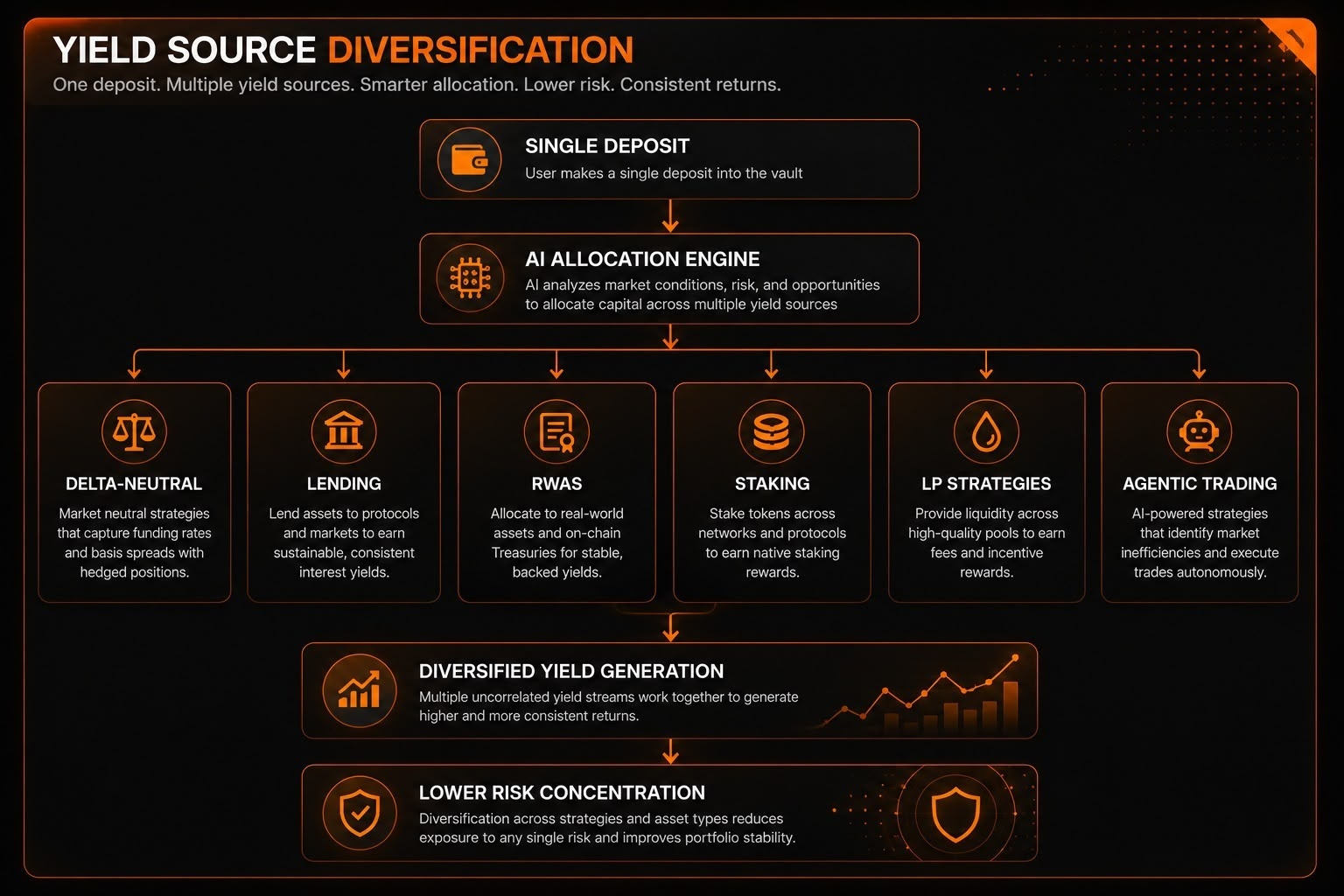
Bull markets hide concentration extremely well.
That’s why I think “yield diversification” is actually underselling what OpenLedger is doing underneath.
This feels closer to dynamic risk orchestration.
The AI layer is not simply searching for higher APY. It’s continuously evaluating:
* liquidity depth
* utilization pressure
* volatility changes
* spread compression
* cross-strategy exposure
* capital efficiency
And then reallocating while conditions are actively shifting.
That continuous feedback loop matters more than another static yield product promising fixed optimization.
Honestly, the deposit itself starts behaving less like passive liquidity and more like a living execution engine.
If lending conditions weaken, exposure rotates.
If delta-neutral inefficiencies compress, allocation changes.
If agentic trading environments suddenly produce asymmetric opportunities, capital moves there while weaker strategies lose weight.
The important part is that the system keeps adapting while the market is moving underneath it instead of waiting for manual repositioning after the damage already happened.
That architecture feels very different from older DeFi coordination models.
Most systems still separate:
* allocation
* execution
* monitoring
* adaptation
OpenLedger compresses those into one continuous loop where AI agents are constantly balancing opportunity against structural risk across the network itself.
And honestly, I think this becomes much more important once autonomous finance scales further.
Because AI-native markets move differently.
The old DeFi model assumed slower human reaction cycles. Traders monitor manually. Governance adjusts slowly. Capital rotation depends heavily on visible inefficiencies before liquidity shifts.
Autonomous coordination compresses all of that.
Now systems can rebalance continuously while liquidity, volatility, and execution conditions change in real time.
That changes where the edge actually comes from.
Not from offering one aggressive strategy.
From coordinating liquidity intelligently across changing market structures faster than static systems can react.
That’s the deeper shift I see inside OpenLedger.
Not AI-generated yield.
Adaptive capital coordination where execution, rebalancing, correlation management, and liquidity orchestration all operate inside one evolving system instead of fragmented products stitched together afterward.
And honestly, if onchain finance keeps moving toward autonomous coordination, static vaults may eventually look the same way static order books started looking once algorithmic trading took over traditional markets.
