When I first looked at the current wave of AI agents, what struck me was how familiar the pattern felt. We keep introducing them as if they are smarter chat windows, only to discover the real work still happens elsewhere. The agent answers the question, then the human opens another tab, calls another API, checks another dashboard, copies another result. The conversation ends, but the workflow keeps going.
That gap matters more than many people admit.
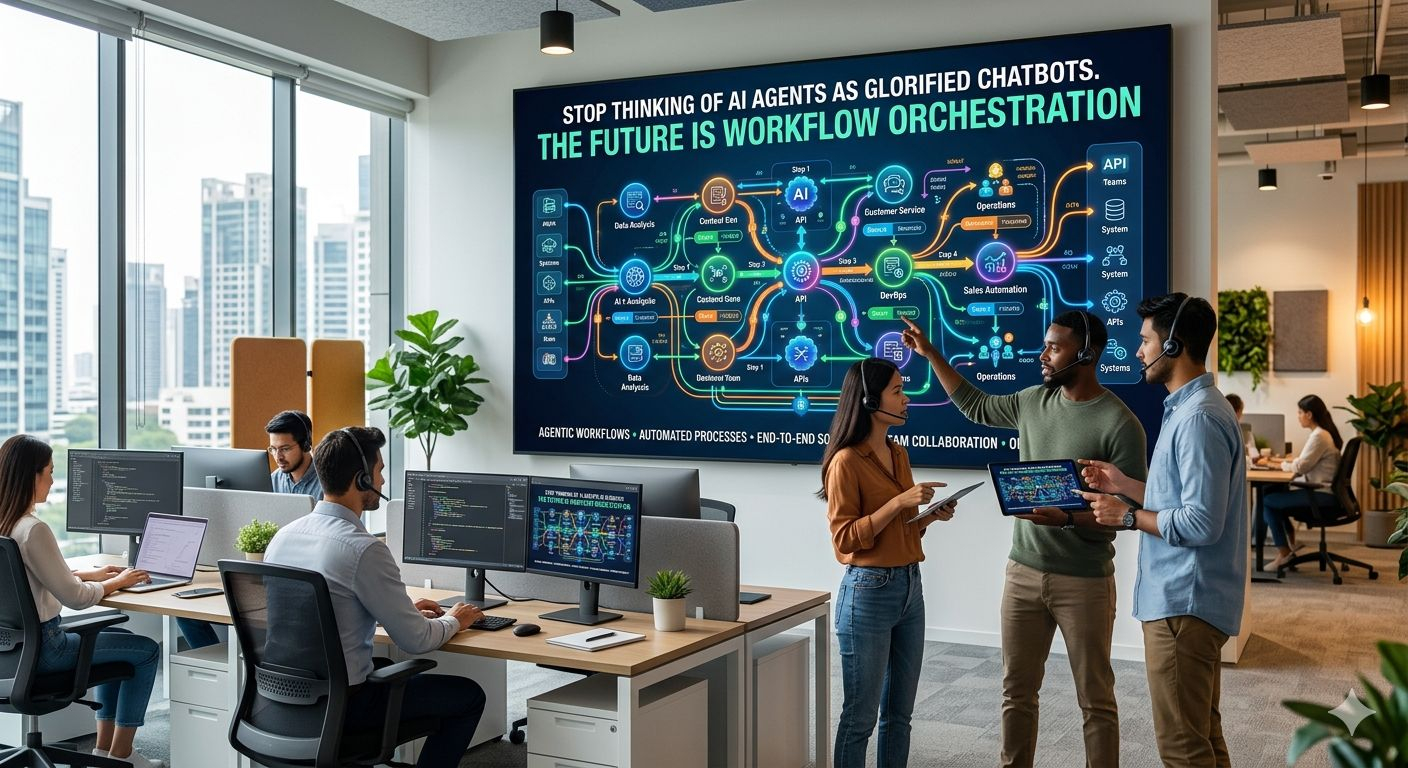
The next stage of AI is not really about making agents sound more human. It is about orchestration. Quiet work underneath the interface. The steady coordination of research, retrieval, execution, and decision flow into one connected process.
This is where OctoClaw becomes interesting.
Instead of treating the agent as a text generator sitting at the edge of a workflow, OctoClaw treats it as the workflow itself. Research is not detached from action. Data retrieval is not separated from execution. On-chain operations are not waiting for another tool chain to wake up. The system pulls these parts into a single automated pipeline.
That sounds technical, but the impact is surprisingly practical.
For developers, the older model created friction that often stayed hidden until implementation started. One API handled search. Another managed structured retrieval. A different layer handled execution. Blockchain interaction sat somewhere else entirely. Each system had its own authentication model, response structure, error handling pattern, and state logic.
The result was not complexity in one place. It was complexity spread everywhere.
What struck me is that orchestration changes the texture of the work itself.
Instead of writing glue code between disconnected services, developers can focus on sequence and intent. The question shifts from "Which tool do I call next?" to "What outcome should happen next?"
That sounds subtle, but it changes design thinking.
Consider a simple agent pipeline. A user asks for market intelligence, relevant data is gathered in real time, insights are filtered, a decision rule is applied, and an on-chain action executes. Previously, this might involve 4 separate service layers with different integration points and monitoring logic. The agent generated text, but orchestration remained manual.
OctoClaw pulls those steps closer together.
The value is not that each capability exists individually. Search systems already exist. Retrieval systems exist. Execution layers exist. Blockchain interfaces exist. The difference is the foundation beneath them. Coordination becomes native rather than assembled.
Before OctoClaw:
Research performed in one environment, execution triggered elsewhere
Developers switching between multiple decoupled tooling APIs
Separate handling for retrieval, validation, and action layers
Glue code acting as the quiet maintenance burden underneath
Human intervention required between workflow stages
After OctoClaw:
Real-time research feeds directly into automated pipelines
Data retrieval and execution operate as connected stages
On-chain actions become part of the same orchestration flow
Less context switching across external tool stacks
Multi-step automation handled as one continuous process
There is still uncertainty here. Orchestration systems create new questions around observability, control boundaries, and trust in automated execution. Coordination becoming easier does not automatically make governance easier.
But that is precisely why this moment feels important.
We may be leaving the era where AI agents were judged by how well they replied and entering one where they are judged by how well they coordinate.
If you want to understand where this direction is heading, exploring OctoClaw’s multi-step automation is worthwhile because the interesting part is not the conversation layer - it is the quiet orchestration underneath.
The future agent may not be the one that talks the best. It may be the one that removes the most invisible work.