


Right now, AI companies train models on massive amounts of data but the people who actually contribute that data rarely get rewarded. Attribution is messy, profits are centralized and transparency is limited. That’s the gap @OpenLedger wants to fix.
At its core, OpenLedger is an AI-focused blockchain designed to make datasets, models and AI agents traceable, monetizable and openly governed. Instead of treating data like a disposable resource, the protocol turns it into an asset that contributors can actually earn from.
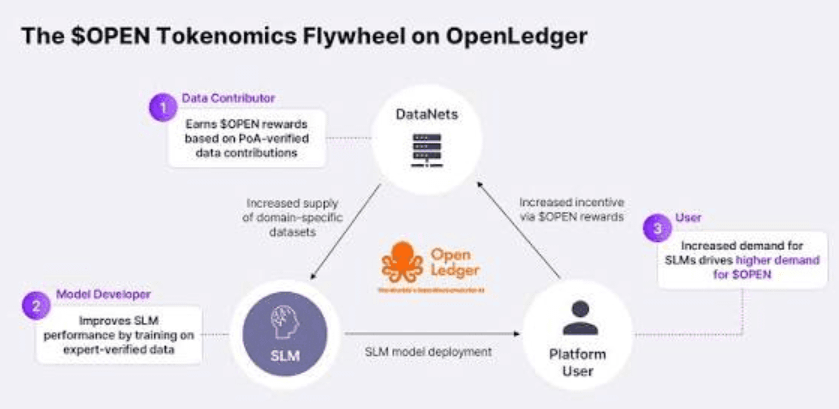
One of the most interesting parts of the project is its Proof of Attribution system. The idea is simple but powerful if your data helps improve a model or influences an output you should be rewarded for it. In theory, this creates a much fairer AI economy than the current model dominated by centralized labs.
The infrastructure itself is built as an Ethereum Layer-2 using the OP Stack, so developers can integrate with existing Ethereum tools without starting from scratch. Every major action from dataset uploads to model usage and inference payments can be tracked on chain.
OpenLedger also introduces “Datanets,” which are community owned datasets with verifiable provenance. That could become especially important as AI regulation and data licensing become bigger global conversations.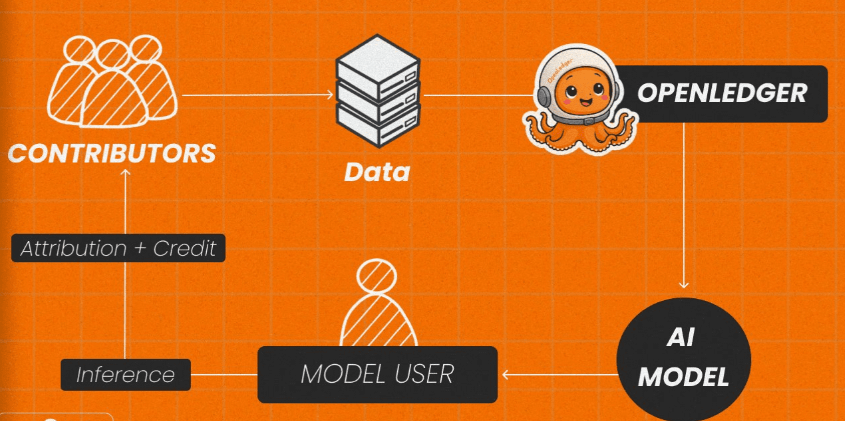
The ecosystem runs on the OPEN token. It’s used for transaction fees, governance, staking and rewarding contributors across the network. A large part of the token supply is allocated toward ecosystem growth and community incentives rather than purely investor allocation which aligns with the project’s decentralization narrative.
The project has already raised around $8 million from investors including Polychain Capital, Borderless Capital, HashKey Capital, Balaji Srinivasan and Sandeep Nailwal. That backing gave OpenLedger immediate visibility in both the AI and crypto sectors.
What makes the project interesting is that it goes beyond the usual “AI + blockchain” marketing narrative. A lot of AI crypto projects simply attach tokens to existing AI services. OpenLedger is attempting to build infrastructure around attribution itself which is a much harder problem to solve.
There are still major challenges ahead. Data quality remains a huge issue. If low quality or manipulated datasets flood the system, the value of attribution drops quickly. Privacy and regulation will also matter especially with global frameworks like GDPR becoming stricter around data ownership and usage.
Scalability is another question. AI workloads are expensive and keeping costs manageable while maintaining on chain transparency won’t be easy. Token unlock schedules could also create volatility if not managed carefully. Still, the core idea behind OpenLedger feels more substantive than many speculative AI tokens currently in the market.
If the team can execute properly, OpenLedger could become one of the few projects genuinely building infrastructure for the AI economy instead of just riding the trend.
