

Most people still talk about artificial intelligence like it’s a race.
Who has the smartest model.
Who can process information faster.
Which company will dominate the next cycle.
But the deeper AI becomes integrated into everyday systems, the less this feels like a competition about intelligence alone. Increasingly, it feels like a conversation about infrastructure, ownership, and trust.
That shift is part of why projects like @OpenLedger are starting to attract attention.
For years, the internet operated on an invisible exchange. People created content, uploaded ideas, shared conversations, wrote tutorials, posted research, generated images, answered questions, and contributed endless streams of information online. That collective activity became the raw material powering modern AI systems.
Yet most contributors never remained connected to the value their data helped create.
The relationship was simple: platforms collected information, centralized systems absorbed it, and AI companies transformed it into products, revenue, and commercial infrastructure. Meanwhile, the people behind the underlying data largely disappeared from the equation.
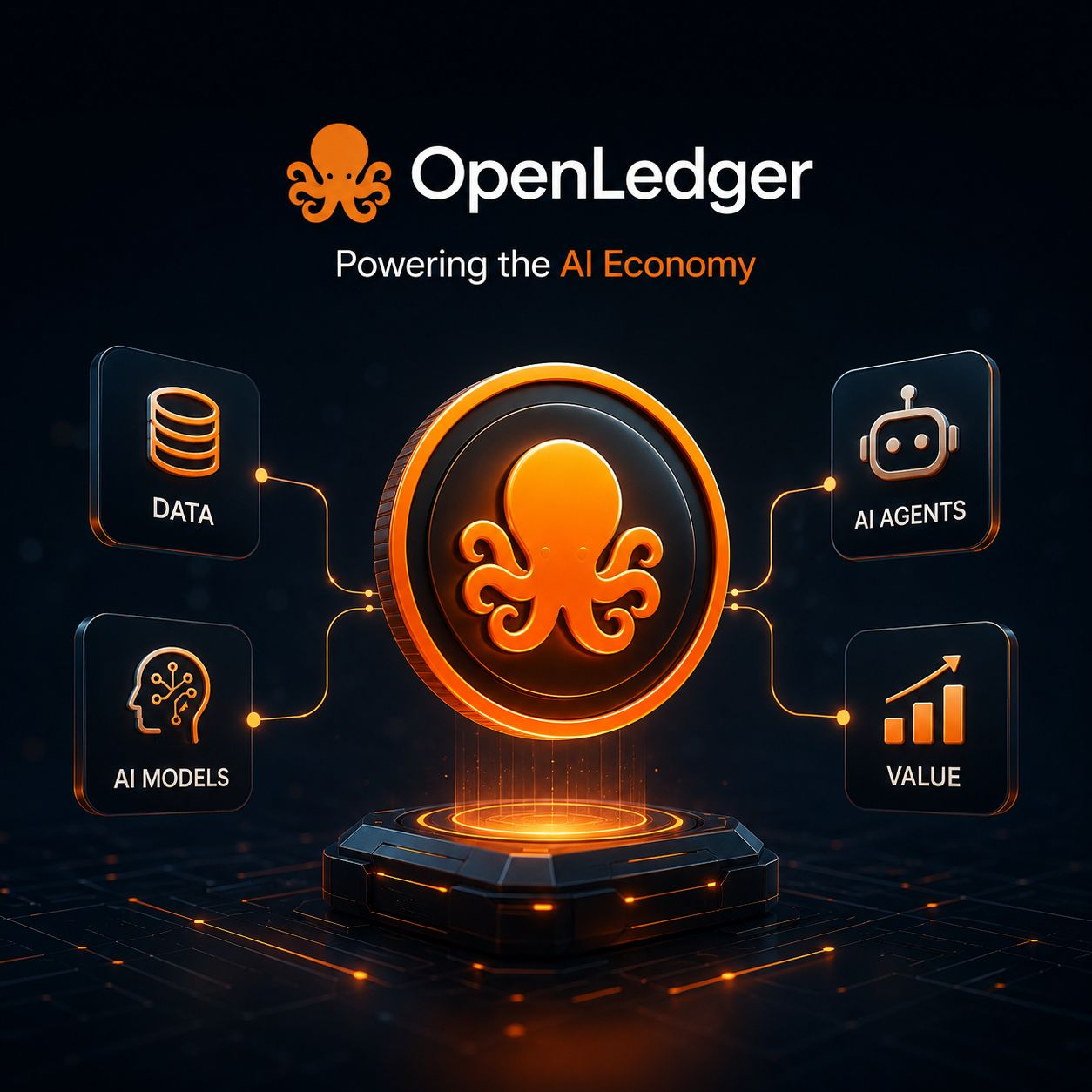
OpenLedger seems built around questioning that structure.
Instead of treating AI development as something controlled entirely behind closed systems, the project explores whether blockchain infrastructure can create more visibility around how datasets, models, and AI agents interact over time. The idea is not only about decentralization for its own sake. It is about accountability inside systems that are becoming increasingly influential.
That distinction matters more now than it did even a year ago.
Early AI conversations focused almost entirely on capability. Faster models attracted attention. Bigger parameter counts dominated headlines. Every launch became another benchmark comparison. But as AI systems move closer to finance, healthcare, governance, education, and business operations, the discussion is becoming broader.
People want transparency.
Businesses want auditability.
Regulators want accountability.
Creators want ownership clarity.
And institutions are beginning to realize that efficiency without oversight can become dangerous surprisingly quickly.
That lesson already exists across blockchain infrastructure itself.
The industry spent years prioritizing throughput and execution speed as if performance alone could solve adoption problems. But operational failures rarely happen because a chain settles too slowly. More often, they begin with permissions nobody reviewed, wallet approvals left active for too long, governance authority spread too loosely, or systems designed around the assumption that every interaction remains trustworthy forever.
The uncomfortable reality is that most catastrophic failures begin quietly.
Not through dramatic outages.
Not through visible collapse.
But through small layers of unchecked authority accumulating over time.
That is where OpenLedger’s architecture becomes interesting beyond the AI narrative alone.
The project appears to treat permissions, delegation, and traceability as infrastructure concerns rather than optional security features added afterward. Concepts like scoped delegation and time-bound permissions suggest a model where authority exists with limits, expiration, and context instead of remaining permanently active after a single approval.
That may sound technical, but the philosophy underneath it is simple:
Systems should understand not only what users can do, but also what they should no longer be allowed to do later.
That approach changes the tone of the conversation entirely.
Suddenly blockchain stops sounding like a race for maximum speed and starts looking more like institutional infrastructure designed around operational resilience. Execution matters, but accountability matters too. A fast system that cannot contain risk simply accelerates mistakes.
OpenLedger’s broader positioning reflects something larger happening across technology right now. The future AI economy may depend less on who gathers the most data and more on who creates trusted environments around data ownership, attribution, permissions, and transparency.
Whether OpenLedger ultimately succeeds remains uncertain. Decentralized AI ecosystems are still early, highly experimental, and filled with difficult challenges around adoption, scalability, interoperability, and governance.
But the questions the project raises are becoming harder for the industry to ignore.
Who owns AI-generated value?
Who benefits when data becomes economically useful?
Can transparency scale alongside automation?
And as artificial intelligence becomes part of critical infrastructure, what kind of systems deserve trust in the first place?
Those questions are no longer theoretical.
They are becoming part of the foundation of the next digital economy.