
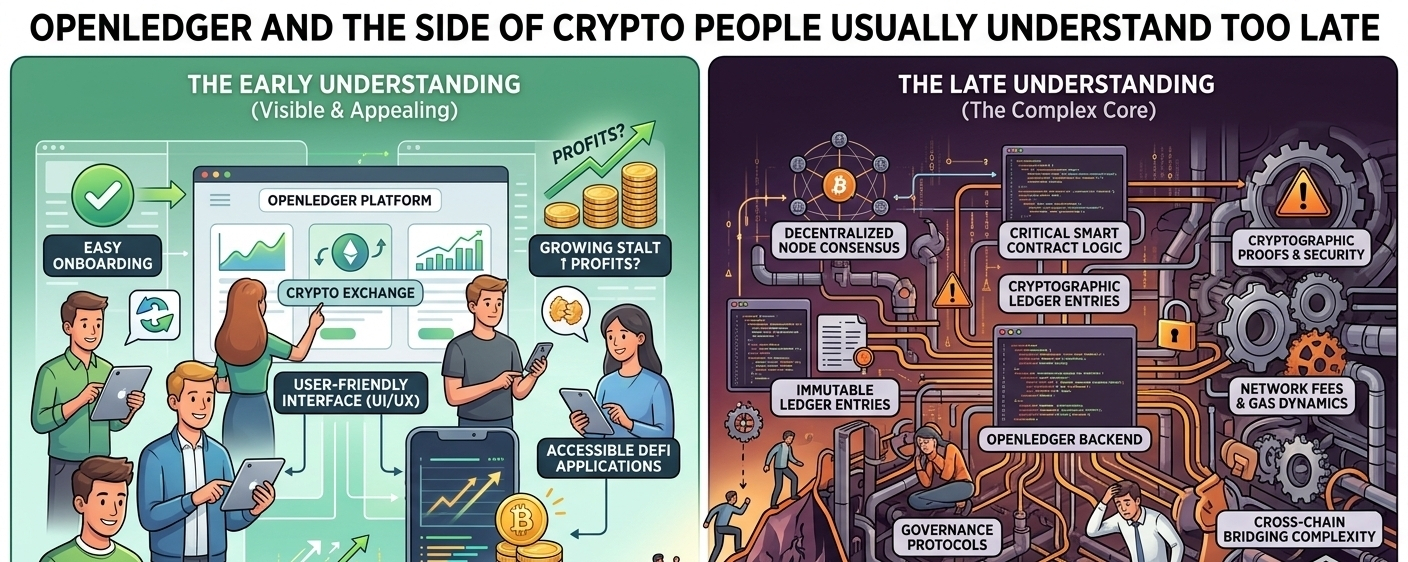
I used to think the best blockchain would simply be the fastest one.
Back then, everything in crypto felt like a race. Every new chain claimed it was quicker, cheaper, more scalable, more efficient. Higher TPS numbers became the entire conversation. And honestly, I bought into that mindset for a long time because speed sounds convincing when the industry keeps repeating it every day.
But after being around crypto long enough, after watching enough cycles, enough collapses, enough panic on timelines at 2 a.m., I slowly realized something uncomfortable.
Most of the damage I’ve seen in this space never came from chains being too slow.
It came from people trusting systems too easily.
A wallet approval someone forgot about months ago. A bridge everyone assumed was secure. A governance setup nobody questioned while prices were going up. Permissions left open because convenience felt easier than caution.
That’s the part of crypto people rarely think about when markets are green and everything feels unstoppable.
Nobody worries about risk when money is moving fast.
But eventually something breaks, and suddenly everyone starts asking questions they should have asked from the beginning.
That’s probably why OpenLedger started feeling different to me the deeper I looked into it.
At first glance, it sounds like what you would expect from modern infrastructure. High-performance Layer-1. SVM-based architecture. AI-focused ecosystem. Scalable execution. All the usual phrases the industry likes using right now.
But honestly, the thing that stayed in my mind was not the speed.
It was the restraint.
And that surprised me.
Because crypto usually rewards systems that say “yes” to everything.
Approve instantly. Connect instantly. Execute instantly. Scale instantly.
The entire culture of this industry became built around removing friction from every interaction possible. And while some of that genuinely improved usability, it also quietly created a dangerous habit where people stopped slowing down enough to think carefully about what they were actually approving.
After enough repetition, everything becomes automatic.
You open a wallet. You sign. You confirm. You move on.
Most users don’t even read half the permissions they give anymore because the process has become so normal.
And honestly, I don’t think that’s because people are careless by nature. I think it’s because crypto systems trained users to prioritize speed over awareness.
That’s why OpenLedger Sessions caught my attention.
The idea of having delegation that is time-bound and scope-bound feels simple on the surface, but psychologically I think it changes a lot. Instead of giving endless access forever, permissions become limited to specific actions and specific time windows.
That may sound like a small technical adjustment to some people.
To me, it feels like infrastructure finally acknowledging that humans are imperfect.
And I think that matters more than the industry admits.
Because most crypto failures are not caused by impossible technical problems. They happen because human beings eventually become comfortable, repetitive, distracted, emotional, or tired.
That’s real life.
People are not going to operate with perfect attention every single day forever. So systems designed for long-term survival should account for that reality instead of pretending ideal behavior will always exist.
That’s probably the biggest shift in how I think about infrastructure now.
A few years ago, I mostly cared about performance metrics.
How fast is the chain? How cheap are the transactions? How many users can it handle?
Now I think about completely different things.
What happens during pressure? What assumptions exist underneath the system? How exposed are permissions? How much damage can one mistake create? What happens when people panic instead of behaving rationally?
Because pressure reveals the truth about architecture far better than marketing ever does.
Bull markets make almost every project look intelligent.
Everything seems safe when liquidity is flowing and optimism is everywhere. But real infrastructure is tested during instability, confusion, fear, and operational stress. That’s when hidden weaknesses suddenly become visible.
And honestly, the longer I watch crypto evolve, the more I realize mature infrastructure is usually boring in the best possible way.
It does not constantly scream for attention. It quietly reduces problems. It minimizes risk. It keeps functioning when emotions disappear from the market.
That’s also why OpenLedger’s modular structure feels practical to me instead of flashy.
Fast execution where speed matters. More stable coordination underneath where reliability matters.
That balance feels thoughtful.
Not every part of a blockchain should optimize for maximum speed equally. Some layers need flexibility and throughput. Others need predictability, security, and stability under stress.
I think a lot of crypto projects spent years trying to optimize everything for excitement instead of durability.
And eventually that creates fragile systems.
The same thing applies to ecosystem compatibility too.
OpenLedger being EVM-compatible honestly feels less like a marketing strategy and more like a realistic understanding of how developers actually work today. Most builders already move across multiple ecosystems constantly. Nobody operates inside one isolated environment anymore.
Developers care about reducing friction. They care about continuity. They care about tools integrating smoothly into workflows they already understand.
That’s why compatibility matters.
Not because one ecosystem needs to “win” completely, but because real adoption usually happens through gradual integration, not forced migration.
And honestly, I think the strongest infrastructure eventually becomes invisible anyway.
Nobody thinks about roads every time they drive somewhere. Nobody talks about internet protocols while sending messages online. The systems that become truly important usually disappear into daily life because they work consistently enough that people stop noticing them.
I think blockchain is slowly moving toward that stage too.
The projects that survive long term probably will not be the loudest ones promising to change the world every week. They’ll be the systems quietly reducing enough friction, enough instability, and enough operational risk that people continue building on them naturally over time.
That’s why OpenLedger feels interesting to me.
Not because it promises perfection.
Nothing in crypto is perfect.
But because the design philosophy feels more grounded in reality than a lot of infrastructure narratives I’ve seen recently.
Especially the understanding that trust inside these systems is incredibly fragile.
And trust rarely disappears slowly.
It snaps.
One exploit. One bad assumption. One validator issue. One governance failure. One permission nobody thought twice about.
Then suddenly confidence evaporates overnight.
That’s why I’ve stopped looking at blockchains only through speed charts and TPS rankings. Those numbers matter, but they are not the whole story anymore.
I pay more attention to how systems handle human behavior. How they reduce unnecessary exposure. How they behave during stress. How much responsibility is placed on users versus architecture itself.
Because security is no longer just a technical feature to me.
It’s psychology. It’s operational design. It’s understanding how real people behave when markets become emotional and chaotic.
And honestly, I think that’s where OpenLedger feels more mature than a lot of projects chasing attention right now.
Anyone can build a blockchain that says “yes” quickly.
The harder challenge is building one disciplined enough to recognize when saying “no” might save the system later.
