
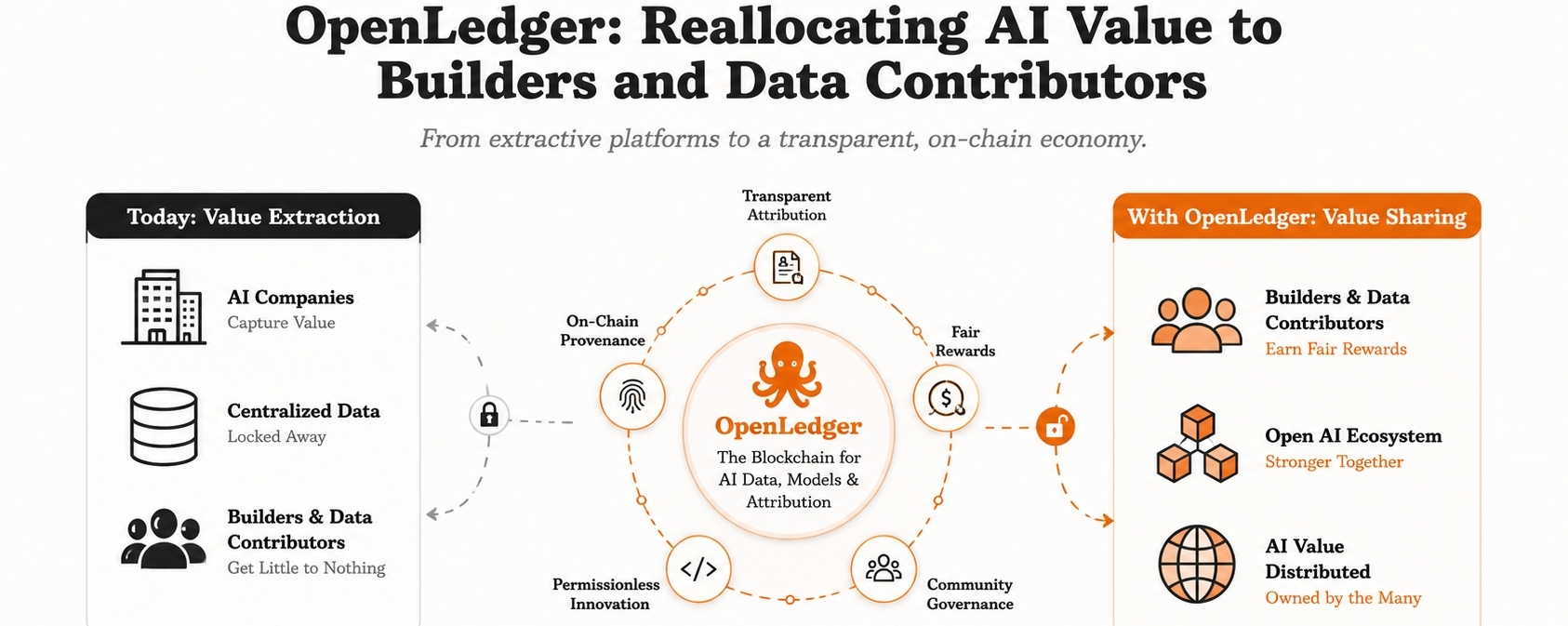

The first thing that caught my attention about OpenLedger wasn’t even the blockchain side of it. It was the way they kept talking about data like it actually matters beyond just feeding AI models. Most projects in this space talk nonstop about smarter models, faster inference, bigger ecosystems. OpenLedger felt a little different. The focus seemed to be on the people and datasets underneath the system the part nobody usually thinks about once an AI product starts working.
I kept coming back to their idea of Proof of Attribution because, honestly, it stayed in my head longer than I expected. The basic idea sounds reasonable: if your data helps train or improve AI, there should be a way to recognize that contribution. But the more I thought about it, the less simple it felt. AI models blur information together constantly, so actually tracing value back to individual contributions sounds incredibly difficult. Still, I like that they’re at least trying to approach that problem instead of pretending it doesn’t exist.
What also stood out to me was how OpenLedger feels more focused on infrastructure than attention. A lot of AI crypto projects feel built around momentum first and utility later. Here, the structure seems more deliberate DataNets, attribution systems, AI agents, verifiable outputs. It feels like they’re trying to build an environment where AI activity can actually be tracked and connected back to the people contributing to it. Whether that works at scale is something I genuinely don’t know yet.
The whole idea of making data “liquid” kept sitting in the back of my mind too. Not because it sounds futuristic, but because it almost feels overdue. AI companies absorb massive amounts of information every day, while the people generating that information usually remain invisible. OpenLedger seems to be asking whether data itself can become an asset people actively participate in rather than something silently extracted in the background. I don’t know if the internet is fully ready for that shift, but I understand why the idea matters.
I also noticed that the project talks a lot about trust and provenance instead of only talking about intelligence. That difference feels important to me. Most conversations around AI still revolve around making systems more capable. OpenLedger seems more interested in making systems traceable and accountable. The longer I thought about that, the more it started feeling like a deeper issue than model performance itself, especially once AI agents begin interacting with real systems and real people.
At the same time, I still have a lot of unanswered questions. AI and blockchain together can become extremely abstract very quickly, where everything sounds meaningful but very little gets tested in the real world. I still want to see how developers actually use these systems, whether attribution remains reliable at scale, and whether contributors genuinely feel rewarded in a meaningful way. A good idea on paper and a sustainable network are very different things.
Right now, I think what keeps my attention on OpenLedger is less about certainty and more about the direction they’re looking toward. It feels like they’re trying to address a part of AI infrastructure that most people quietly accept without questioning — where the value comes from in the first place. I’m still not fully convinced by the category as a whole, but I can’t really ignore the fact that this particular angle keeps pulling me back into thinking about it.