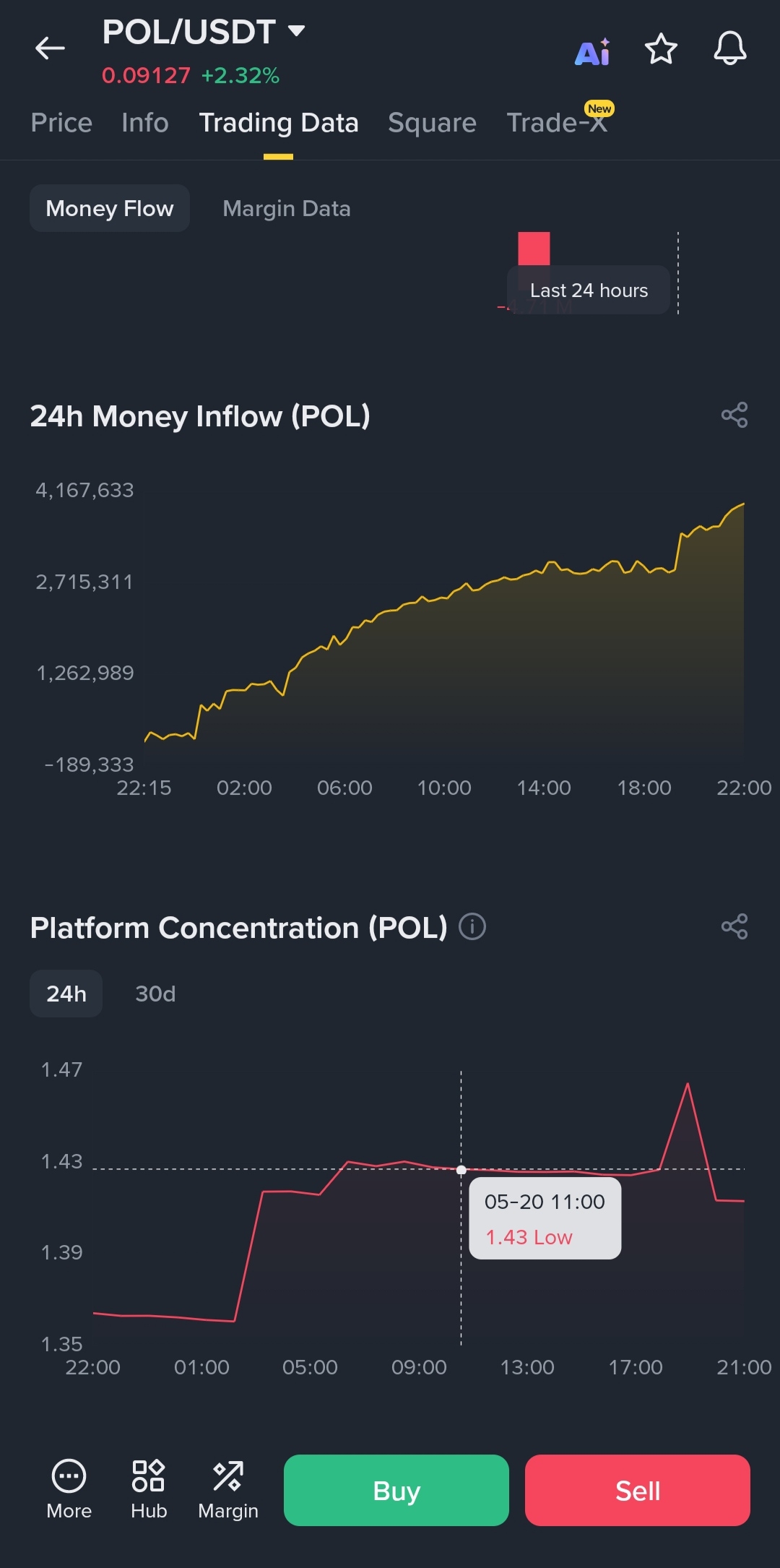
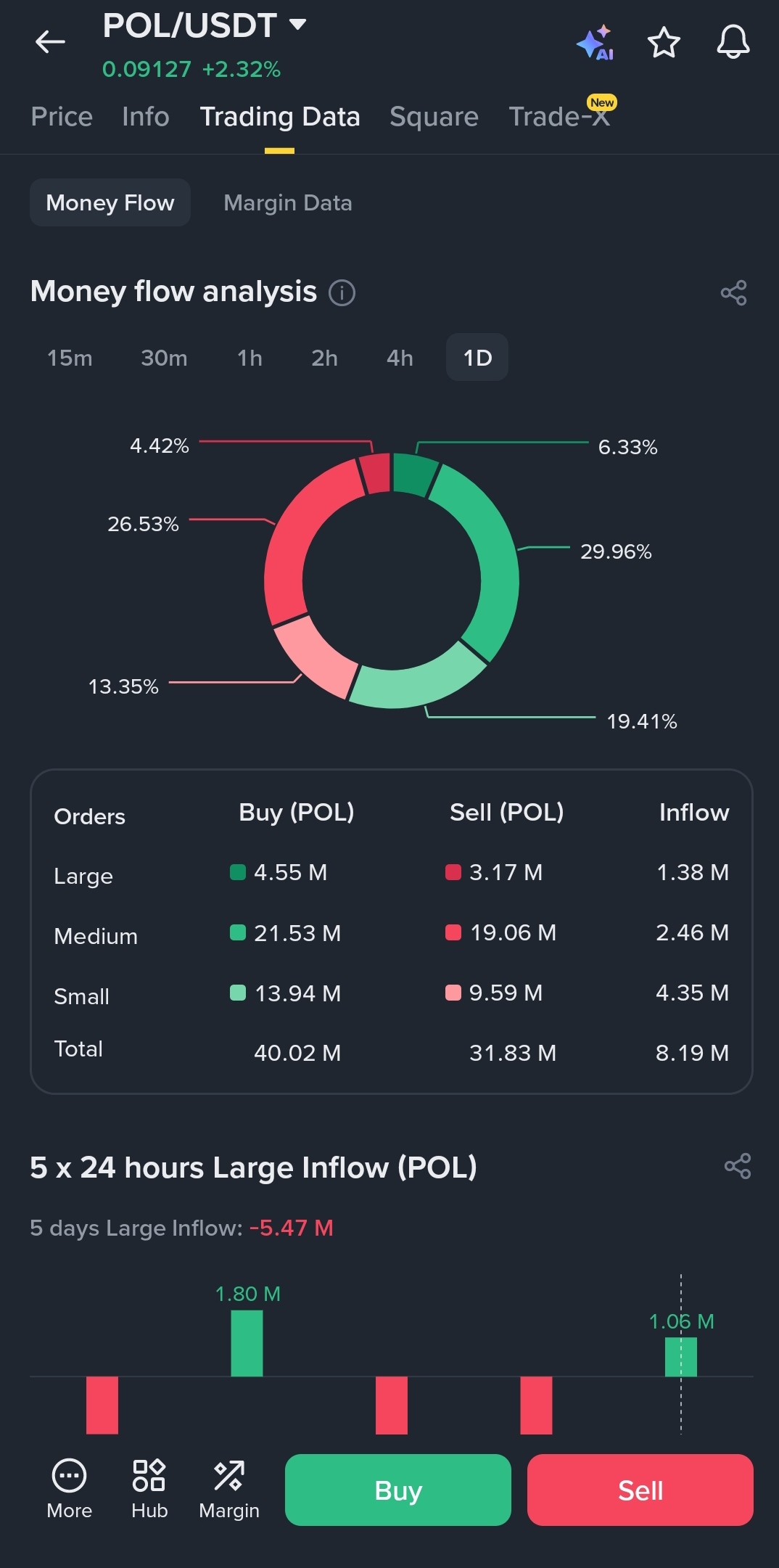
$POL (previously MATIC) is still one of the biggest Ethereum scaling ecosystems, but the chart remains in a long-term recovery phase after a heavy bear market.
Technical Analysis
Current Structure
$POL is trading around the psychological $0.09–$0.10 zone.
The market structure is still weak on higher timeframes, but short-term momentum has improved.
RSI indicators are mostly neutral, showing the coin is not extremely overbought or oversold right now.
Important Support Levels
Strong support: $0.08
Major accumulation zone: $0.05–$0.07
If these levels break, panic selling could appear.
Important Resistance Levels
First resistance: $0.12
Major breakout zone: $0.20
Long-term resistance: $0.50+
If POL breaks above $0.20 with strong volume, the trend could shift bullish again.
Bullish Factors
Polygon still has strong fundamentals:
Massive Ethereum ecosystem presence
zkEVM and AggLayer development
Partnerships with companies like Visa and Meta
Focus on stablecoin payments and scaling infrastructure
Community discussions also mention rising transaction activity and growing ecosystem usage.
Bearish Risks
Very strong competition from Arbitrum, Optimism, Base, and other Layer-2 chains
Token inflation concerns
POL price still far below previous ATH
Market sentiment around the token remains divided
Future Price Prediction
Short Term (2026)
Bearish scenario: $0.05–$0.08
Neutral scenario: $0.12–$0.20
Bullish scenario: $0.30–$0.50
Long Term (2027–2030)
If Polygon successfully becomes a major payment and scaling infrastructure:
Conservative target: $0.50–$1
Strong bull market target: $2–$3
Extreme moonshot targets above that would require massive adoption and crypto-wide bullish conditions.
Final View
POL is currently more of a high-risk recovery play than a guaranteed moon coin. The technology and partnerships are strong, but price performance depends heavily on:
Real network adoption
Ethereum ecosystem growth
Overall crypto market cycle
Tokenomics improvements
For traders, volatility can create opportunities. For long-term investors, patience and risk management are essential.