
I’ve tested enough crypto tools at this point to know the pattern.
A new product launches, everyone calls it “game-changing,” screenshots start flying around X, and within a week the excitement fades because the actual experience rarely matches the narrative. Especially with AI tools in crypto, there’s been a lot of noise. Most of them are either glorified dashboards or chat interfaces dressed up with buzzwords that sound impressive but don’t meaningfully change how people work.
That’s partly why I went into OctoClaw with low expectations.
When @OpenLedger dropped OctoClaw, I assumed it would be another AI wrapper built around market commentary, maybe useful for summaries or quick research but still requiring you to manually jump between platforms to get anything done. After spending time with it though, my first impression changed pretty quickly.
The thing that stood out most is that OctoClaw feels more action-oriented than conversation-oriented.
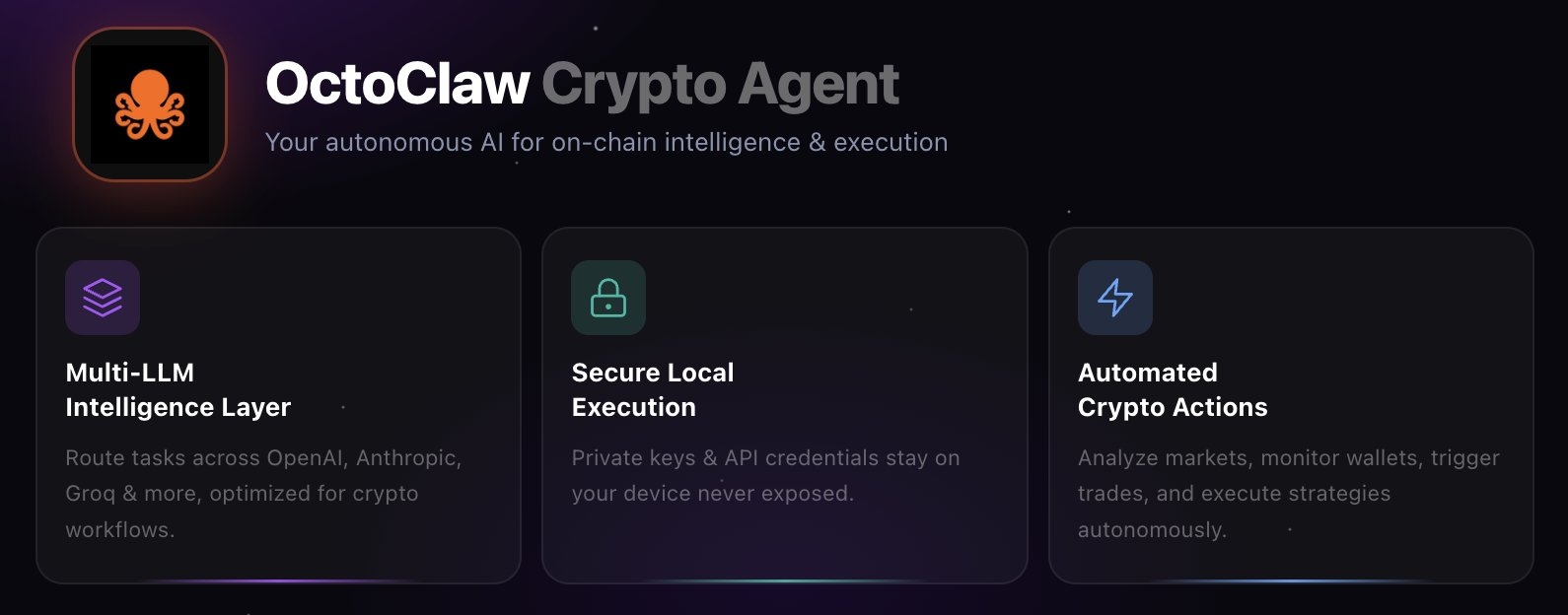
Instead of functioning like another chatbot that simply gives suggestions, it feels closer to an operating layer for workflows. You can research market activity, analyze on-chain movements, pull relevant data, automate repetitive tasks, and structure strategies without constantly switching between a dozen tabs. That may sound small, but if you spend enough time in crypto, you know how fragmented the experience usually is.
One minute you’re checking market sentiment, the next you’re tracking whale wallets, then moving into dashboards, analytics tools, social feeds, or spreadsheets trying to piece together information before making decisions. Most workflows feel messy because everything exists in separate places.
OctoClaw seems to be aiming at solving that friction.
I spent some time testing the desktop version and one of the first things I appreciated was how simple the onboarding felt. Usually, getting an AI system configured means opening tutorials, dealing with API keys, or spending unnecessary time trying to make things work. Here, the cloud setup felt unusually smooth. You choose a provider, pick the model you want to use, and the intelligence layer is basically ready.
That simplicity matters more than people realize.
A lot of technically strong tools fail because they assume users are willing to fight through setup friction. In reality, most people abandon products long before they experience the value. If something feels difficult in the first ten minutes, attention disappears quickly.
Another thing I found interesting is how flexible the setup feels depending on how you use crypto. If you’re focused on trading, there’s clear potential around research, monitoring volatility, and reacting faster to market changes. If you’re more into on-chain analysis or DeFi, it feels like something that could streamline repetitive research tasks and surface insights faster.
Of course, it’s still early.
I don’t think anyone should pretend a new tool instantly changes everything overnight, especially in crypto where hype tends to move faster than reality. The real test is always whether people still find value in it after the launch excitement fades.
But I do think OctoClaw feels directionally interesting because it pushes AI beyond just “giving information” and closer toward helping people actually execute workflows.
That shift matters.
For a while now, most AI conversations in crypto have focused on intelligence, better analysis, smarter outputs, cleaner insights. What’s been missing is utility. Can these systems actually reduce friction? Can they save time? Can they help close the gap between information and action?
After trying OctoClaw, that’s probably the biggest takeaway for me.
It feels less like an assistant that talks and more like a tool that might eventually help people do more with less effort. Whether it fully delivers on that vision remains to be seen, but for a first impression, it definitely feels like something worth paying attention to.