
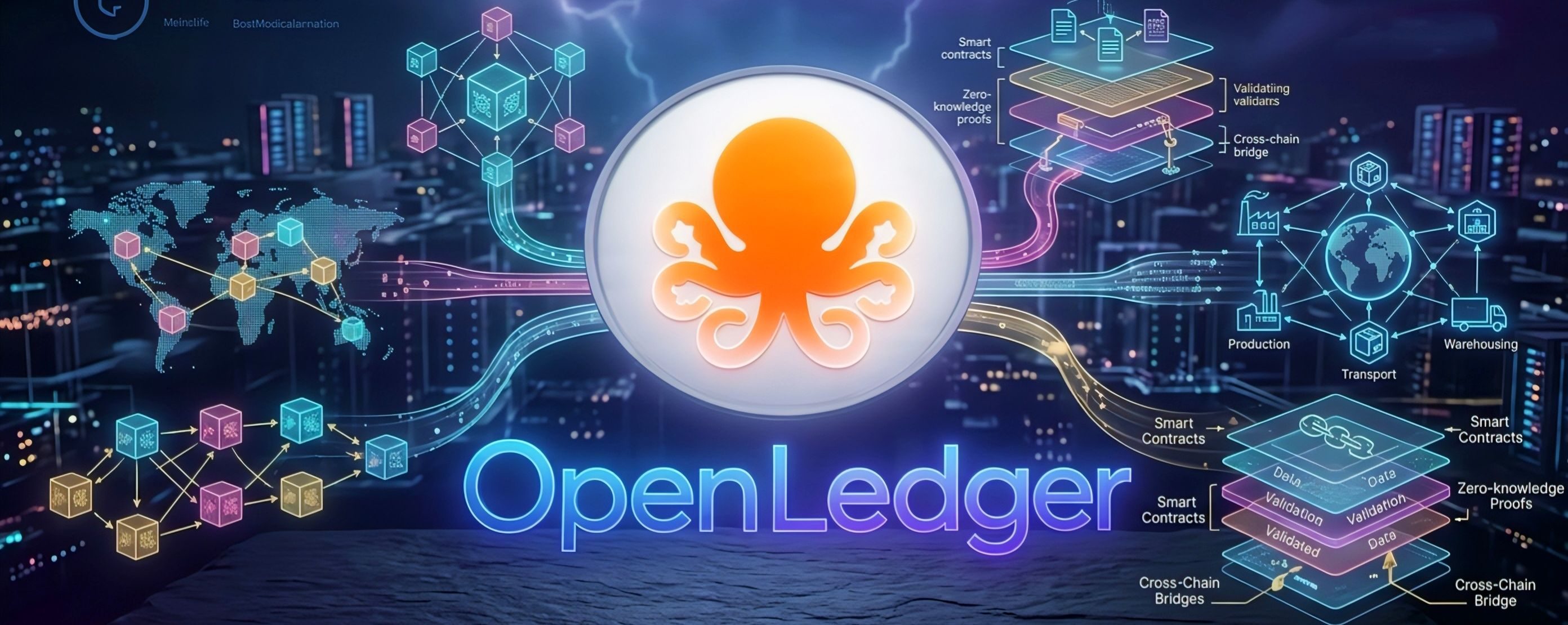
In the traditional financial system, money moves behind closed doors. Wall Street firms and retail applications maintain private databases. To verify a transaction, you have to trust the intermediary holding the pen. Cryptocurrency flipped this paradigm by introducing a system where the ledger is open for the entire world to see.
An #OpenLedgar acts as a decentralized network where transparency and consensus rewrite the rules of data sharing.
What is an Open Ledger?
@OpenLedger a shared, decentralized record-keeping system. Instead of a single company controlling the database, identical copies are distributed across thousands of independent computers (nodes) worldwide.
The network follows a strict set of cryptographic rules known as a consensus mechanism to validate data. Once transactions are verified and added, they become permanent.
The Three Pillars:
*Radical Transparency:
Anyone can inspect the ledger. You can trace a transaction from its origin to its current wallet, making the system completely auditable.
*Immutability:
Changing past records is practically impossible. To alter history, a malicious actor would have to control more than half of the network's computing power simultaneously.
*Decentralization:
There is no single point of failure. If a dozen nodes go offline, thousands of others continue securing the ledger.
Real-World Applications:
*DeFi & Settlement:
Traditional wire transfers take days to clear as banks reconcile internal ledgers. Open ledgers collapse this timeline into minutes, allowing smart contracts to execute loans and payouts without a middleman.
*Supply Chains:
Manufacturers, shipping companies, and retailers log data onto a single, tamper-proof timeline, allowing consumers to verify product authenticity.
*Data & Infrastructure:
Organizations leverage this architecture to manage decentralized infrastructure, verify identity credentials, and secure data routing without relying on tech monopolies.
The shift toward open ledgers represents a fundamental transition from trust us to verify us establishing a transparent backbone for the global digital economy.
