
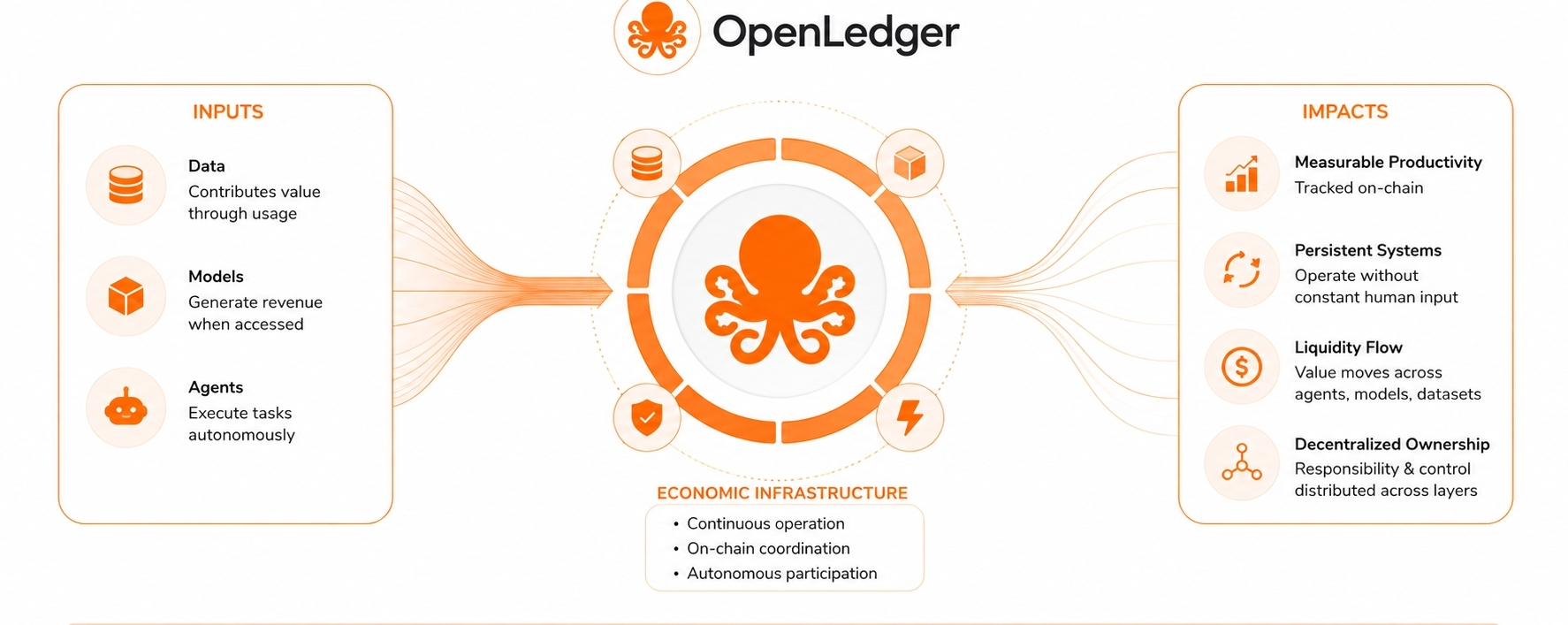

OpenLedger becomes easier to understand if you stop thinking about AI as software for a moment and start watching it more like infrastructure under economic pressure.
A model generates outputs somewhere inside the network. An agent picks up a task, interacts with a protocol, completes execution, receives compensation, moves resources elsewhere, then immediately continues operating. Another process starts before the previous one fully settles. The system rarely sits still long enough to feel like ordinary software. It behaves more like circulation.
That atmosphere feels different from earlier versions of the internet. Most digital systems used to wait for human direction at every stage. Click something. Approve something. Upload something. Even automation felt paused between interactions. What’s emerging around AI agents looks less interrupted. Continuous adjustment. Continuous reaction. Software responding to conditions created by other software.
Part of what makes interesting is that it doesn’t frame models, datasets, and agents as separate categories very rigidly. They operate more like economic components inside the same environment. Data can accumulate value through usage. Models generate revenue when accessed. Agents transact on chain and continue functioning without requiring constant human intervention to reopen the loop manually.
After watching systems like this for a while, the conversation around “AI economies” starts sounding less theoretical and more logistical. The important questions stop being about intelligence alone. Coordination becomes harder to ignore. Verification too. Incentives. Resource allocation. Which behaviors networks reward once autonomous systems begin participating economically at scale.
The infrastructure still looks unfinished in a lot of places though.
Cheap synthetic data spreads faster than reliable data because scale usually arrives before quality control does. Verification systems become expensive once activity intensifies. Agents optimize for measurable outcomes whether or not those outcomes actually produce useful results. You can already feel traces of that dynamic online. Certain AI-generated environments don’t necessarily look incorrect anymore. Just strangely flattened, as if too many systems are training against recycled patterns produced somewhere upstream.
OpenLedger exposing liquidity around agents and models makes those tensions visible rather than abstract. Productivity becomes measurable on-chain. Persistence becomes measurable. Attention becomes measurable. The difficulty is that measurable activity and meaningful contribution are rarely identical things, especially once incentives begin compounding automatically inside open systems.
Ownership starts becoming blurry too.
An autonomous agent executes work using one model, accesses another dataset, routes through several protocols, generates revenue, then reinvests part of that revenue back into operation. Responsibility disperses across layers quickly. So does control. The system keeps moving even when no single participant fully oversees the entire process at once.
None of this really feels futuristic when observed closely. Industrial might be a better word. Networks coordinating persistent machine behavior at economic scale. Quiet infrastructure loops operating continuously underneath visible applications.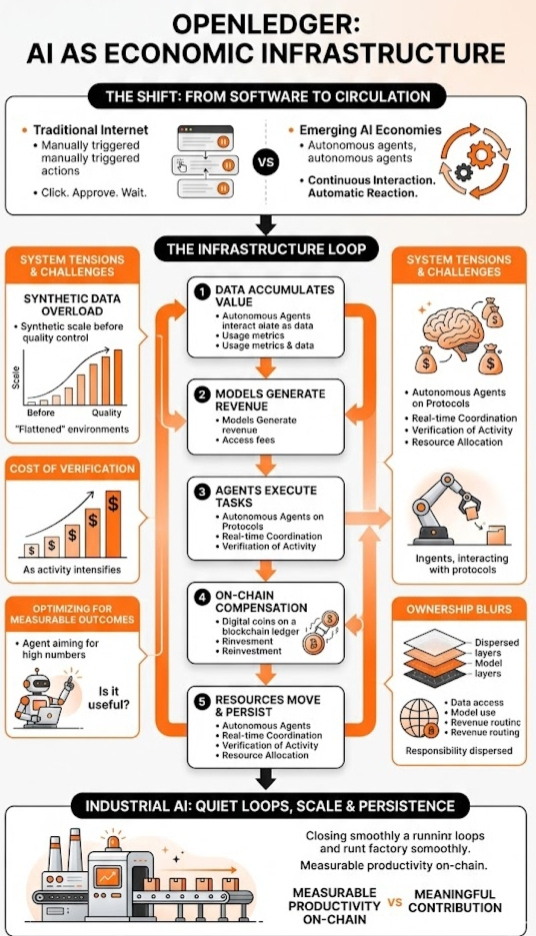
The systems still feel unstable sometimes. Not broken exactly. More like environments learning how to absorb autonomous participation before fully understanding what kinds of behavior they actually want circulating inside them long term.