



I’ve been thinking about coordination more lately. Not in the usual sense of communities, teams, or users gathering around a platform, but coordination as infrastructure itself.
Because once systems become large enough, the hard problem usually isn’t creating activity.
It’s organizing it.
That’s the part I keep coming back to.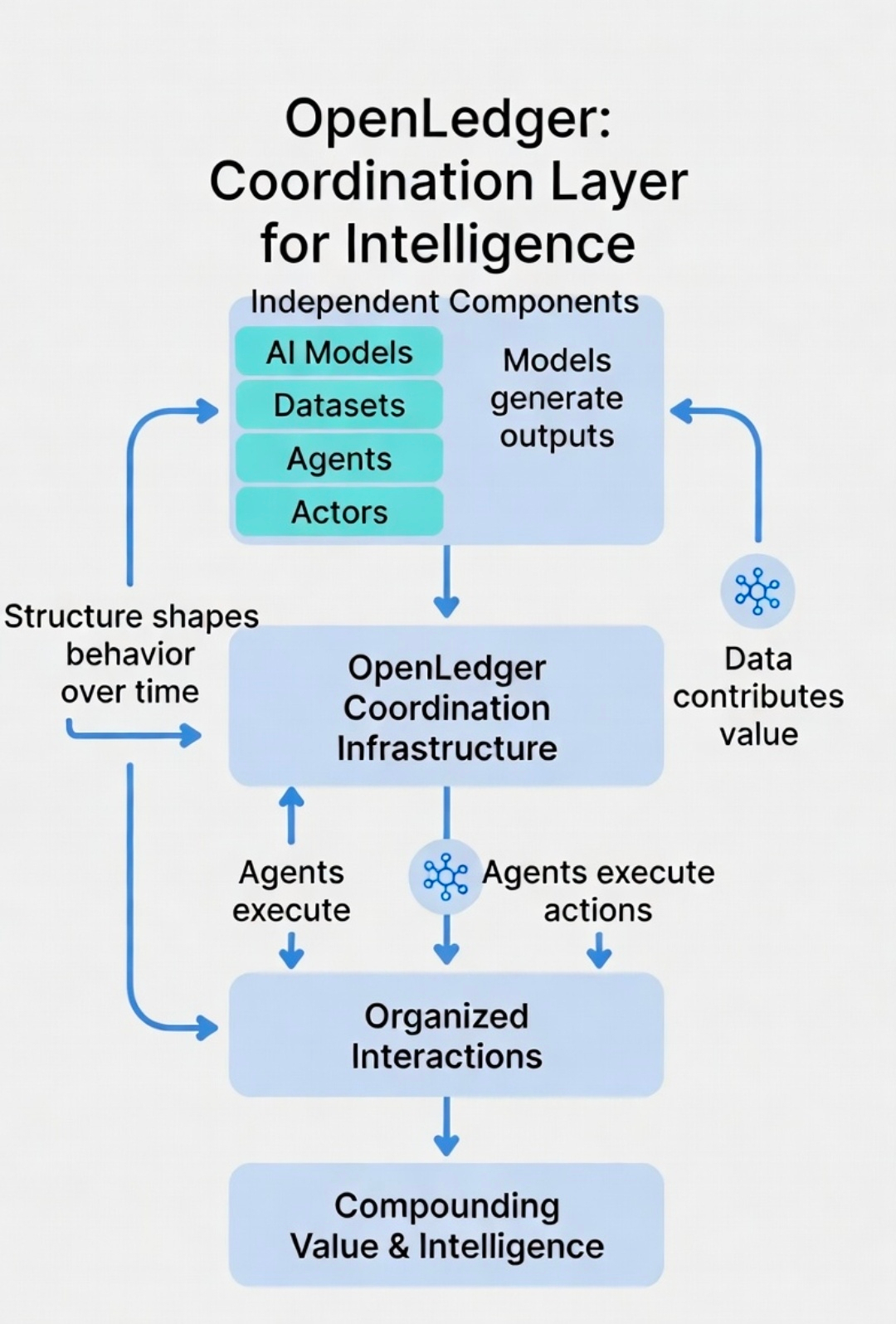
Most networks are good at enabling transactions. Some are good at enabling applications. But when you start adding AI agents, models, datasets, and independent actors into the same environment, the challenge changes.
Now the question becomes: how do all these moving parts actually work together?
@OpenLedger feels like it might be addressing that layer more than people realize.
Not just providing a place where AI systems can exist, but creating a structure where different forms of intelligence can interact economically. Data contributes value. Models generate outputs. Agents execute actions. And somewhere underneath, something has to coordinate how all of that connects.
That coordination layer feels easy to overlook.
Mostly because it’s invisible when it works.
But once systems scale, invisible layers become important. Without coordination, activity fragments. Data gets isolated. Models become disconnected. Agents operate inside separate environments without meaningful interaction.
Everything exists.
But nothing compounds.
At least from where I’m standing, OpenLedger seems less focused on building individual tools and more focused on creating conditions where separate systems can actually reinforce one another.
And that changes how the network reads.
Because instead of acting like a destination, it starts behaving more like connective tissue. Not necessarily the center of activity, but the thing allowing activity to organize itself across different layers.
That feels closer to coordination than infrastructure in the traditional sense
But coordination creates its own challenges.
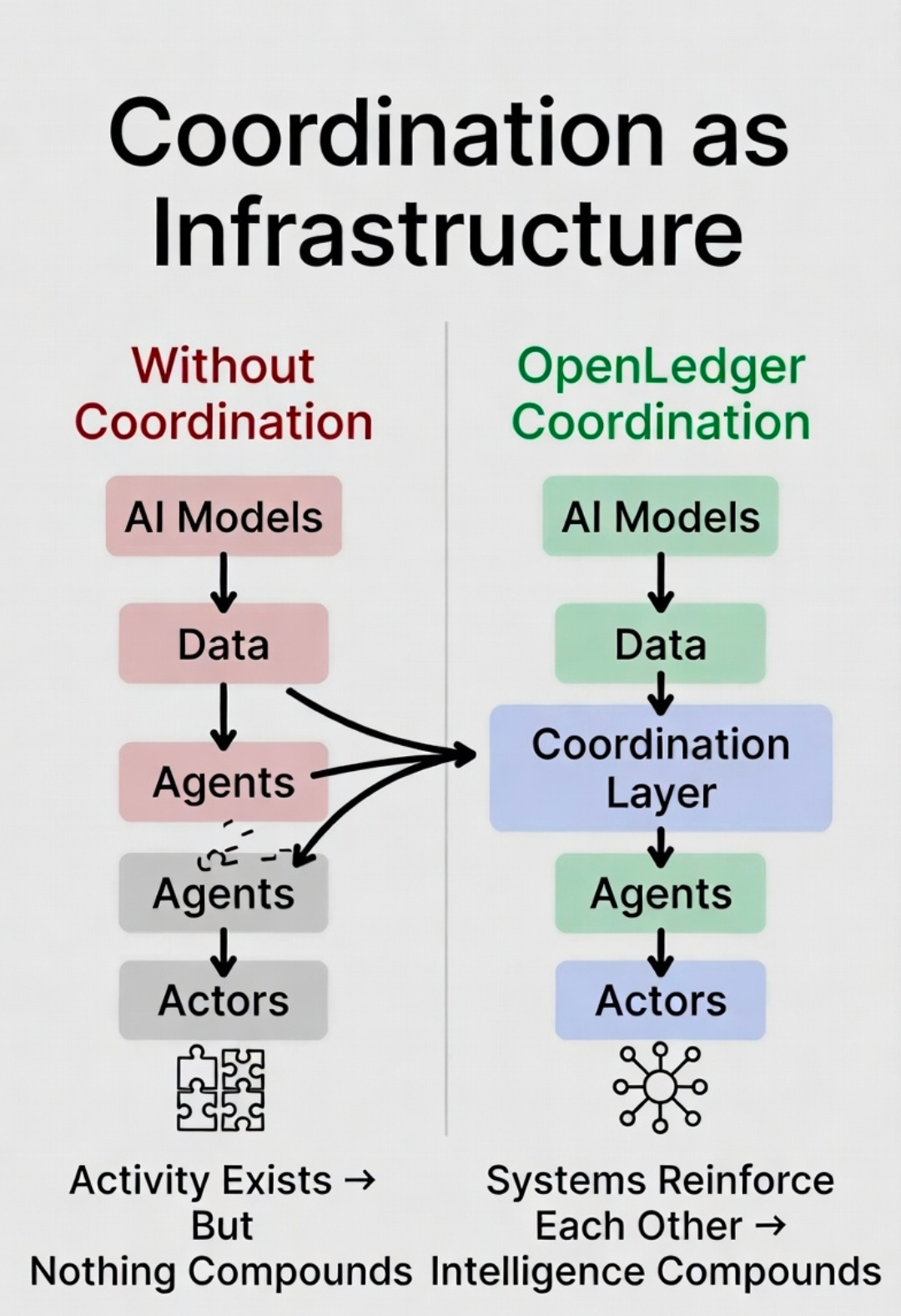
Because once a system begins organizing interactions between independent actors, it also starts influencing behavior indirectly. What gets connected matters. What becomes valuable matters. The structure itself begins shaping outcomes over time.
And those effects usually stay invisible until scale arrives.
I’m not fully convinced where OpenLedger lands yet
Maybe it stays as infrastructure. Maybe it becomes something larger.
But I do think people might be paying attention to the visible layer while missing something quieter underneath.
Not just a network enabling activity. But a system coordinating intelligence itself & coordination layers tend to matter more than they first appear.