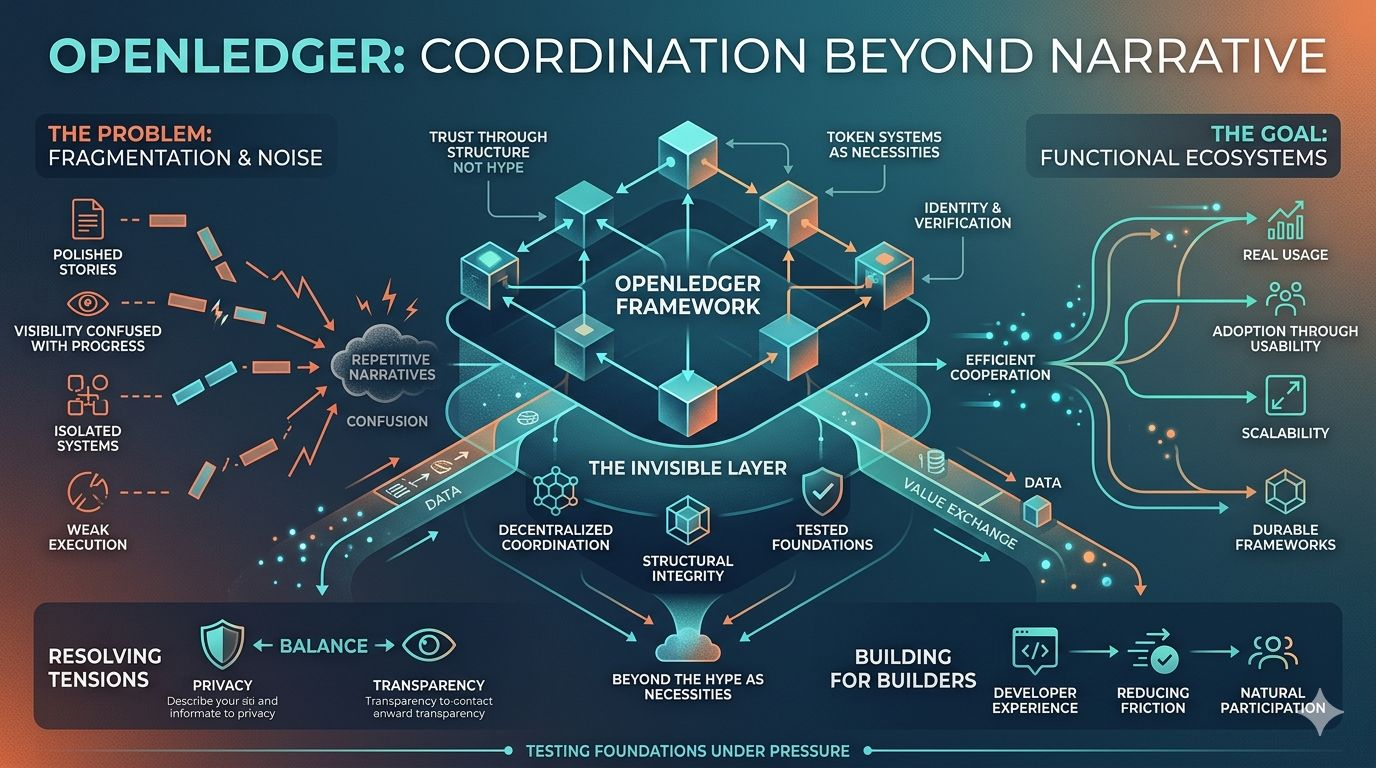
I keep noticing how often the same narratives come back wearing different clothes. Every cycle introduces a new language for the same promises, and after a while I stop hearing innovation and start hearing repetition. Even when people talk about coordination now, I find myself listening carefully for whether they mean actual structure or just another polished story about scale. That’s partly why I keep thinking about OpenLedger lately. Not because I’m convinced by it, but because it seems to sit closer to a problem I’ve watched repeat for years. OpenLedger keeps pulling my attention back toward the invisible layer underneath systems, the part most people ignore until things start breaking under pressure.
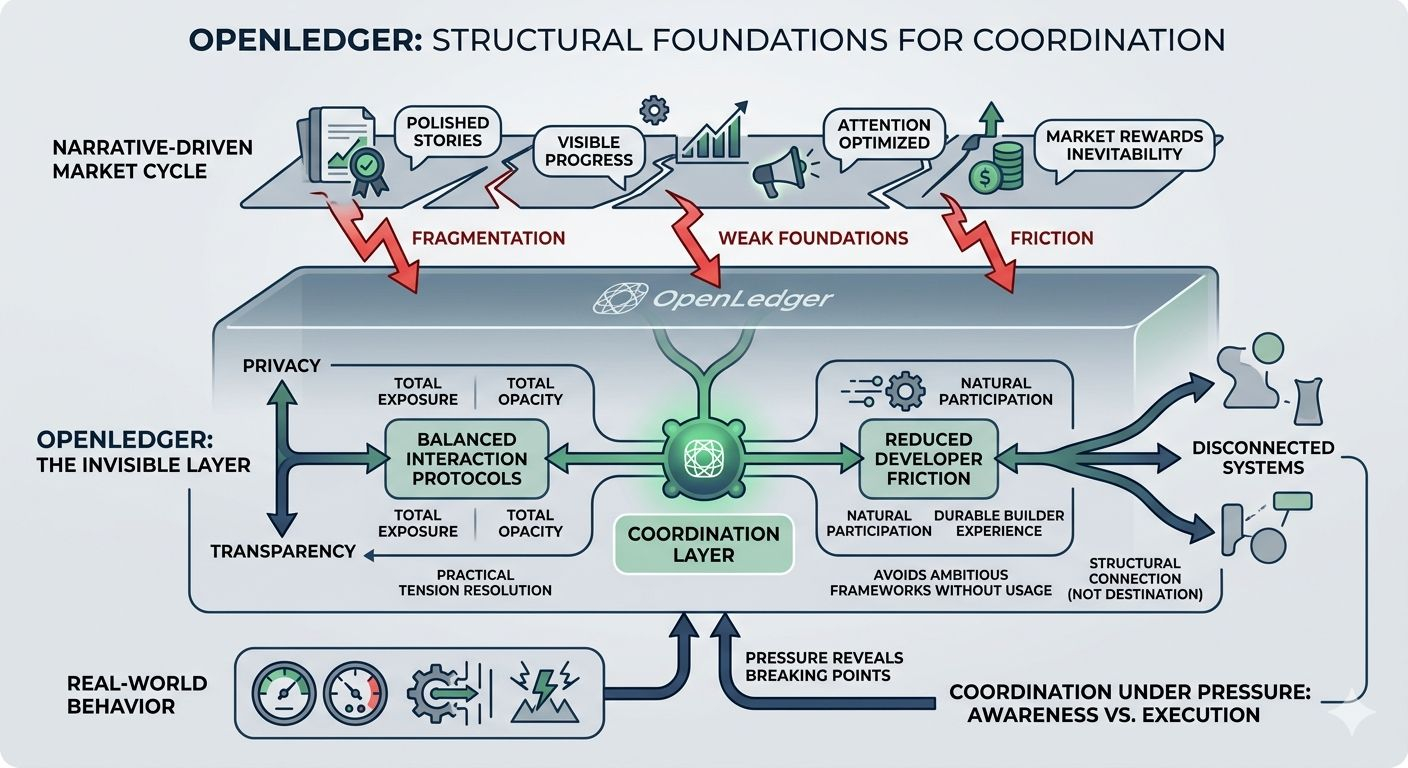
What wears me down is how often projects confuse visibility with progress. Everything gets optimized for attention first. Narratives travel faster than proof, and markets reward whatever sounds inevitable before anything has actually survived real usage. I’ve watched infrastructure become one of those words that can mean almost anything now. Every project claims to be foundational until you look closer and realize the foundations were never tested. That’s where OpenLedger feels slightly different to me, or at least more interesting to observe. OpenLedger seems less focused on presenting itself as a destination and more focused on whether disconnected systems can actually coordinate without collapsing into fragmentation once activity scales.
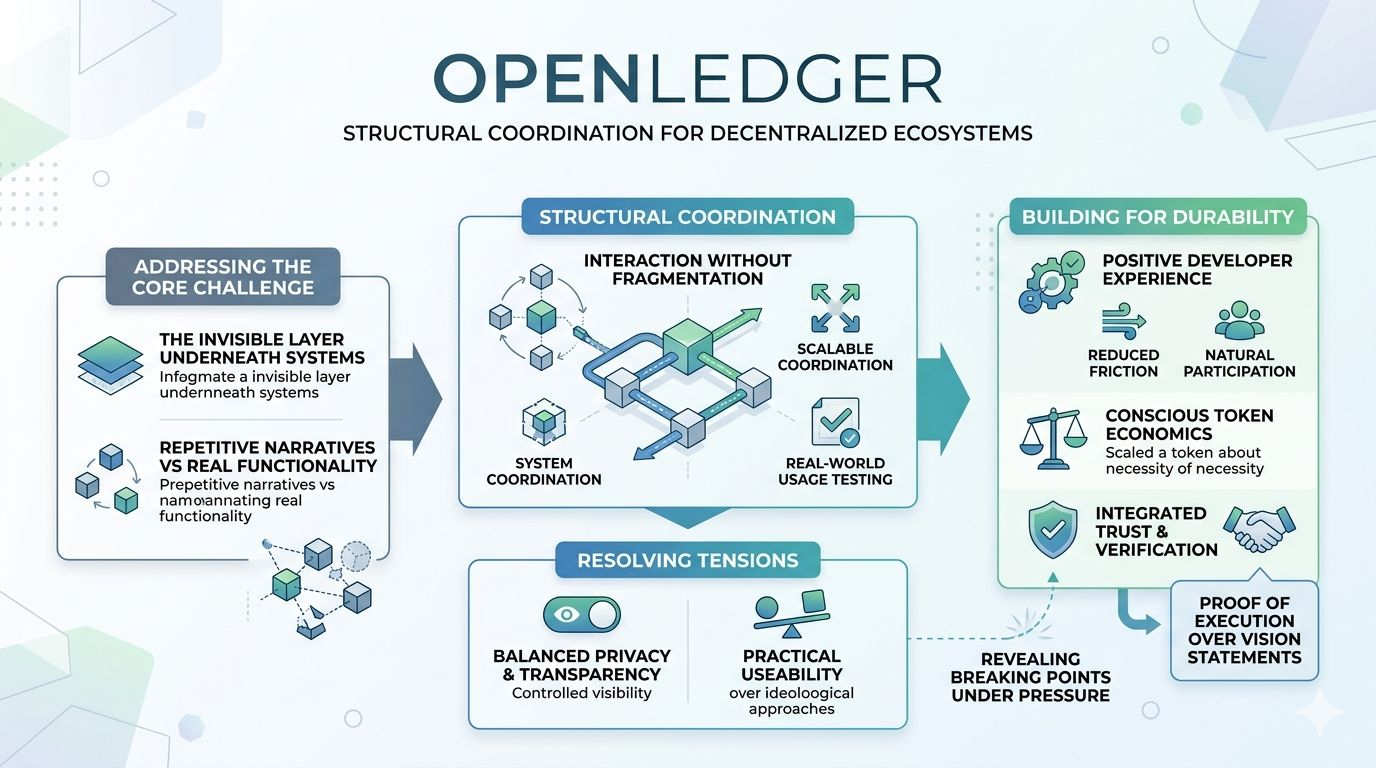
I think that’s also why I keep coming back to privacy and transparency as unresolved tensions that nobody really wants to admit are unresolved. Systems keep forcing the same tradeoff. Either everything becomes visible to the point where exposure starts feeling normalized in ways that shouldn’t be normal, or privacy solutions swing so far in the opposite direction that usability, accountability, and trust start falling apart. I rarely see balance handled well. Most approaches still feel ideological instead of practical. When I look at OpenLedger, I don’t really see a final answer there either, but I do see an attempt to think more carefully about how independent actors interact without every interaction turning into either total exposure or total opacity.
Another thing I can’t ignore anymore is how badly developer experience gets treated across the industry. People underestimate how many systems quietly fail because builders simply stop wanting to deal with them. Adoption rarely dies loudly. Most of the time it fades through friction, confusion, or tools that sound powerful in theory but become exhausting in practice. OpenLedger interests me because coordination only works if participation feels natural enough for people to continue using it when the excitement disappears. Otherwise it becomes another ambitious framework that exists mostly inside presentations instead of real environments.
I’ve also become deeply skeptical of how token systems are inserted into almost everything now. Too often they feel less like necessities and more like obligations attached to a narrative. The same thing happens with identity and verification systems. Everyone talks about trust, but trust still feels fragmented, inconsistent, and strangely fragile once real-world behavior enters the picture. OpenLedger seems aware of those pressures, though I still don’t know whether awareness is enough. I’ve seen too many large ideas collapse under weak execution to mistake ambition for durability anymore.
At this point, I think I trust breaking points more than polished narratives. Pressure reveals more than vision statements ever do. That’s probably why I’m still watching OpenLedger carefully. Not because I think it has solved coordination, but because coordination itself feels like the real problem underneath everything else. And the systems shaping that layer quietly tend to matter long before most people notice they’re there.