
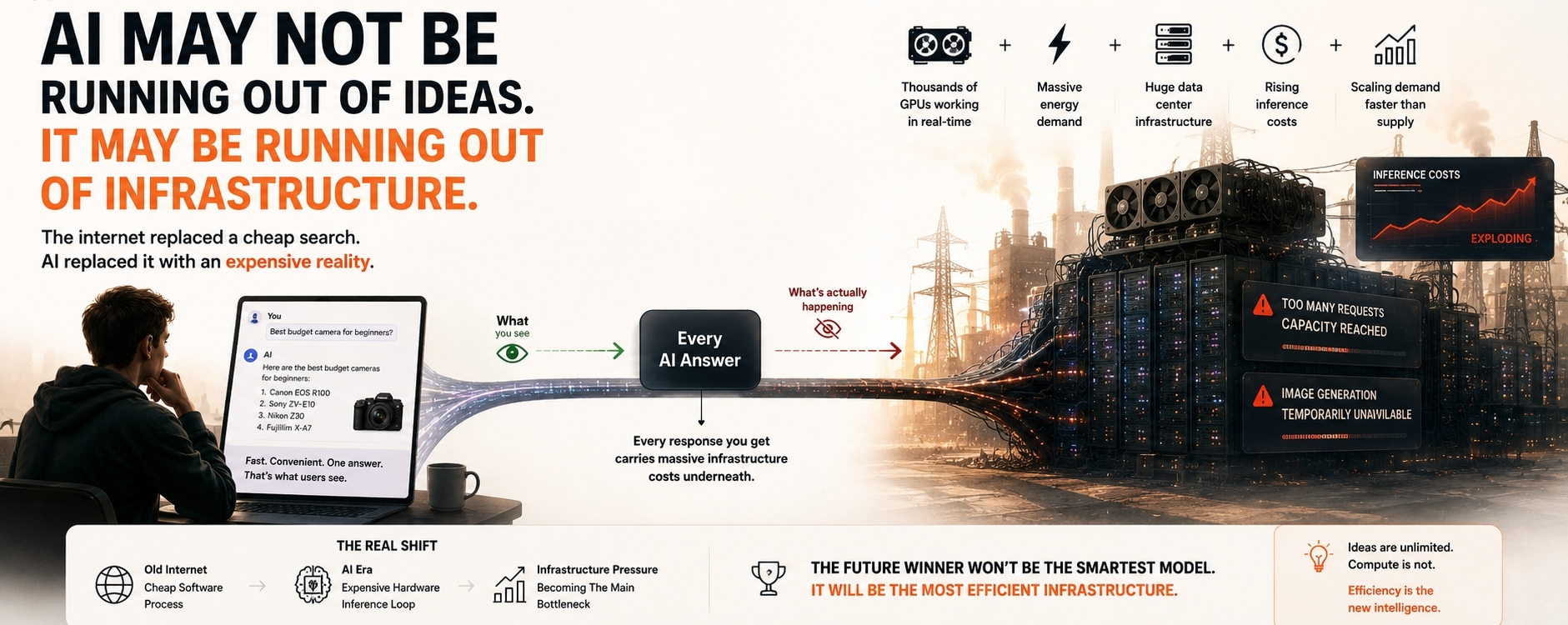
been thinking about something every time an AI model suddenly slows down
too many requests
capacity reached
image generation temporarily unavailable
most people see those messages as small technical problems
traffic spikes
servers overloaded
nothing unusual
fair enough
but the more i looked into the infrastructure side of AI the more those moments started feeling like signals of something much bigger underneath
because people are actively abandoning traditional Google search and moving toward AI-generated answers through ChatGPT, Perplexity, Gemini, and AI summaries every single day
most users experience that as convenience
faster answers
less clicking
less searching
but economically, something important is changing quietly
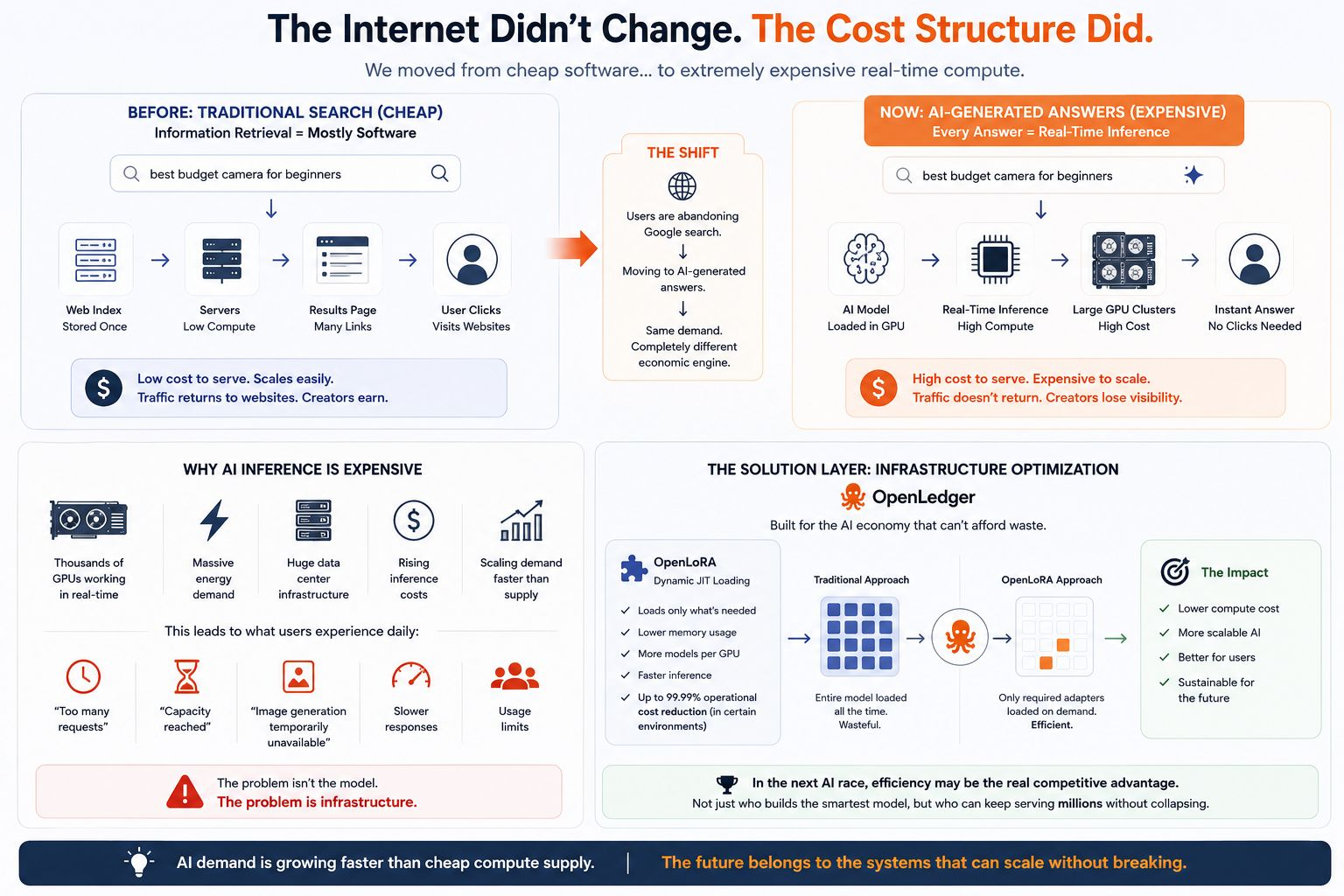
the internet is replacing a relatively cheap software process with an extremely expensive hardware loop
because every AI response now depends on real-time inference infrastructure
real GPUs
real electricity
real compute coordination
and thats the contradiction i dont think enough people fully see yet
AI feels lightweight on the surface but every answer carries infrastructure cost underneath it
you can already see the pressure building across the industry
next-generation AI clusters now require tens of thousands of advanced GPUs at once some estimates push that toward 100,000 chips for frontier-scale systems
which also means massive energy demand, data center expansion races, and cloud providers competing for limited hardware supply
users see a loading screen, companies see exploding inference costs underneath it
thats why Nvidia keeps becoming more valuable while AI firms keep racing for hardware access itself
because eventually the question stops being:
“can the model do this?”
and becomes:
“how long can the company afford to keep doing this millions of times every hour?”
thats the part of the @OpenLedger architecture that started feeling interesting to me because while most AI discussions stay focused on smarter outputs
OpenLedger seems focused on the infrastructure pressure building underneath AI itself
the project is built as an #Ethereum Layer-2 using the $OP Stack while integrating EigenDA to reduce the cost of coordinating massive amounts of AI attribution, workflow, and transaction data onchain
that matters because once millions of model interactions, datasets, and attribution records start stacking continuously
the coordination layer becomes expensive tooand honestly thats where most “AI + blockchain” narratives start feeling weak
they talk about intelligence but ignore throughput
they talk about agents but ignore compute pressure
what stood out most to me was OpenLoRA
because this doesnt read like simple AI branding it reads like hardware optimization for a market already approaching compute limits
instead of permanently loading massive models into GPU memory
OpenLoRA uses dynamic JIT loading to activate specialized adapters only when needed
which means lower memory usage faster inference handling
more models operating on the same hardware and dramatically lower operational overhead
the framework claims operational cost reductions as high as 99.99% in certain serving environments
and honestly thats the part that changes how this market starts looking
because the next AI race may not only be about who builds the smartest model anymore
efficiency itself may become the competitive advantage
you can already feel smaller versions of this daily
image queues during peak traffic
responses slowing down
generation limits appearing in real time
AI systems quietly rationing compute while demand keeps climbing users experience it as inconvenience
but economically it points toward something much larger:
AI demand is scaling faster than cheap compute supply
and historically when infrastructure becomes constrained
the systems surviving usually arent the ones consuming the most resources
theyre the ones using limited resources most efficiently
thats why this doesnt feel like a normal “AI + blockchain” narrative to me
it feels more like infrastructure preparing for a world where compute efficiency becomes one of the most important economic layers inside AI itself
because if the future internet runs continuously through AI systems
then scalability stops being a backend engineering detail
it becomes a survival problem for the entire industry
History proves that the biggest winners in AI may not necessarily be the systems generating the smartest answers
they may be the systems that figure out how to keep answering everyone without the infrastructure collapsing under its own cost