
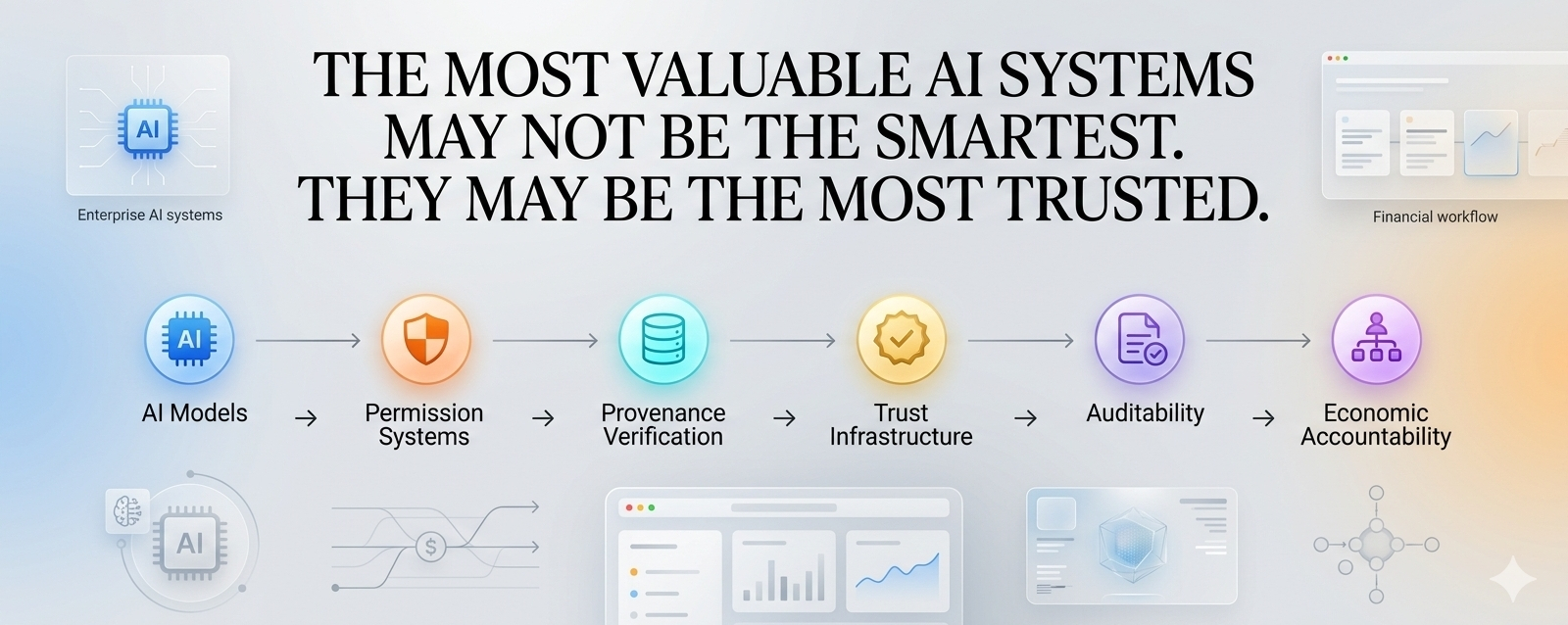
Everyone keeps talking about how powerful AI models are becoming.
🧠 Smarter reasoning
🤖 Autonomous agents
⚡ Infinite generation
But I think the more important shift is happening somewhere else entirely.
As AI systems begin influencing:
💰 financial decisions
🏢 enterprise automation
🛡️ compliance systems
🔄 autonomous transactions
the real challenge may stop being intelligence.
The challenge becomes trust.
Because once AI starts affecting money, access, and liability, companies will need answers to uncomfortable questions:
❓ Where did this output come from?
❓ Who influenced the model?
❓ Can the decision be audited?
❓ Who becomes responsible if something fails?
That’s where infrastructure projects like OpenLedger become interesting to me.
Not because “AI + crypto” sounds exciting.
But because accountability itself may become economically valuable.
The future AI economy may depend on:
📊 provenance
📜 attribution
🔍 auditability
🤝 trusted participation
⚖️ verifiable decision trails
And honestly, most people still underestimate how expensive trust becomes at scale.
A creative AI mistake is funny.
A financial AI mistake becomes a liability.
That difference changes everything.
Of course, narrative alone means nothing.
Real adoption and real enterprise demand will decide whether these systems matter long term.
Still, I think one idea is becoming increasingly important:
🚀 The most valuable AI systems may not be the smartest.
They may be the most trusted.