
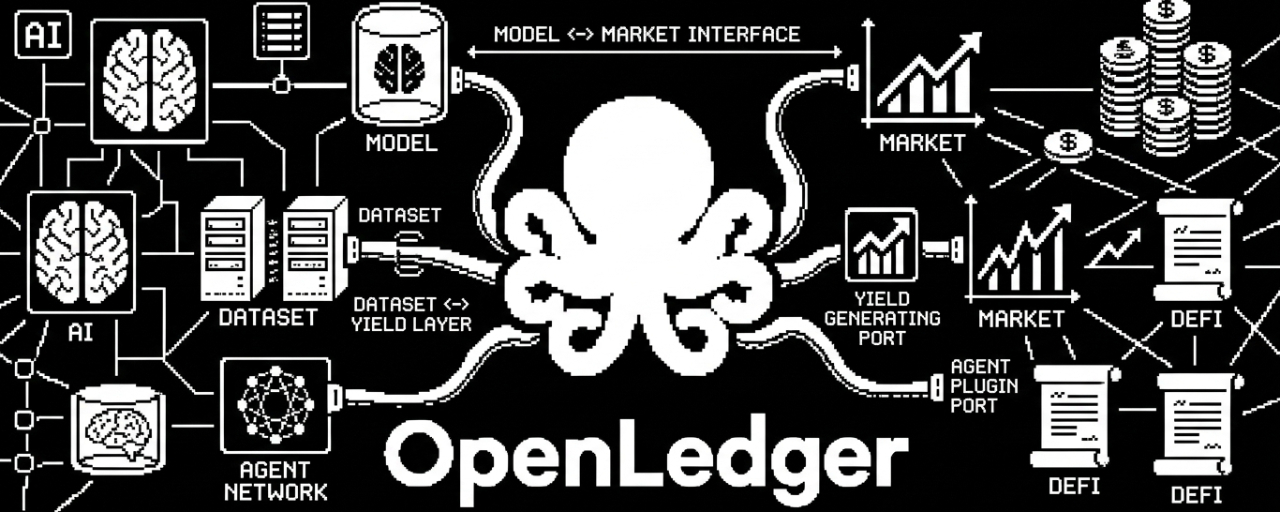
For a while, the decentralized AI space had a real problem nobody was naming out loud
I will be honest, I didn't expect this to be the piece that made AI finance actually click for me.
But the thing nobody talks about, DeFi built composable money infrastructure and AI built powerful models, and for years the two just sat there, unable to interact in any Standardized way.
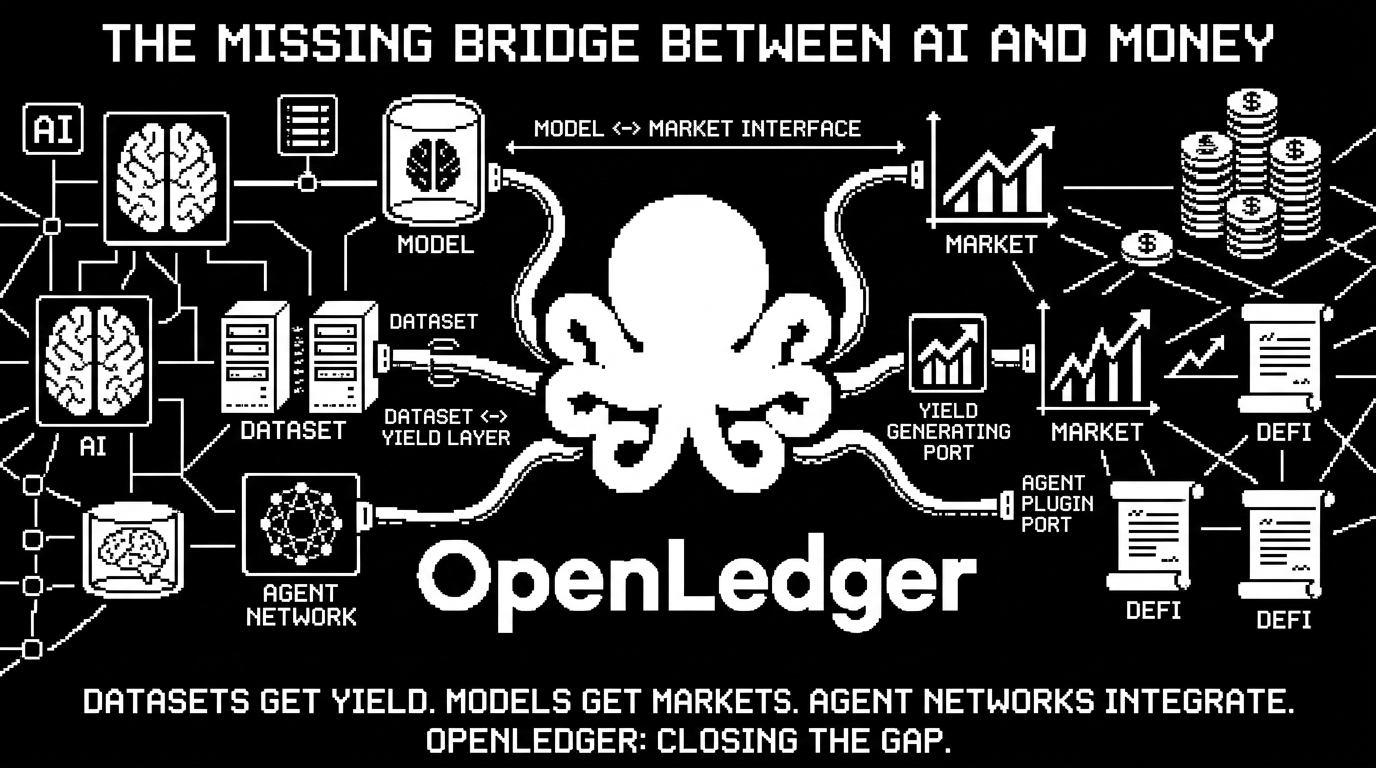
Datasets had no yield. Models had no market. Agent networks had no interface to plug into.
That's the gap OpenLedger is quietly closing.
What ERC-4626 Actually Does on OpenLedger
The ERC-4626 Tokenized Vault Standard isn't new. It's been used in traditional DeFi to automate yield logic across protocols.
What OpenLedger does is repurpoSe it for something nobody had done before.
Turning data assets and model utilities into yield-bearing financial blocks on an EVM-compatible Layer 2 ledger.
In practice, this means three things happen in sequence.Data contributors supply verified datasets to Datanets and AI developers deploy trained weights, these get wrapped inside an ERC-4626 vault. Because all vaults share the same API, the underlying asset pools can be evaluated, lent against, or cross-collateralized without friction.
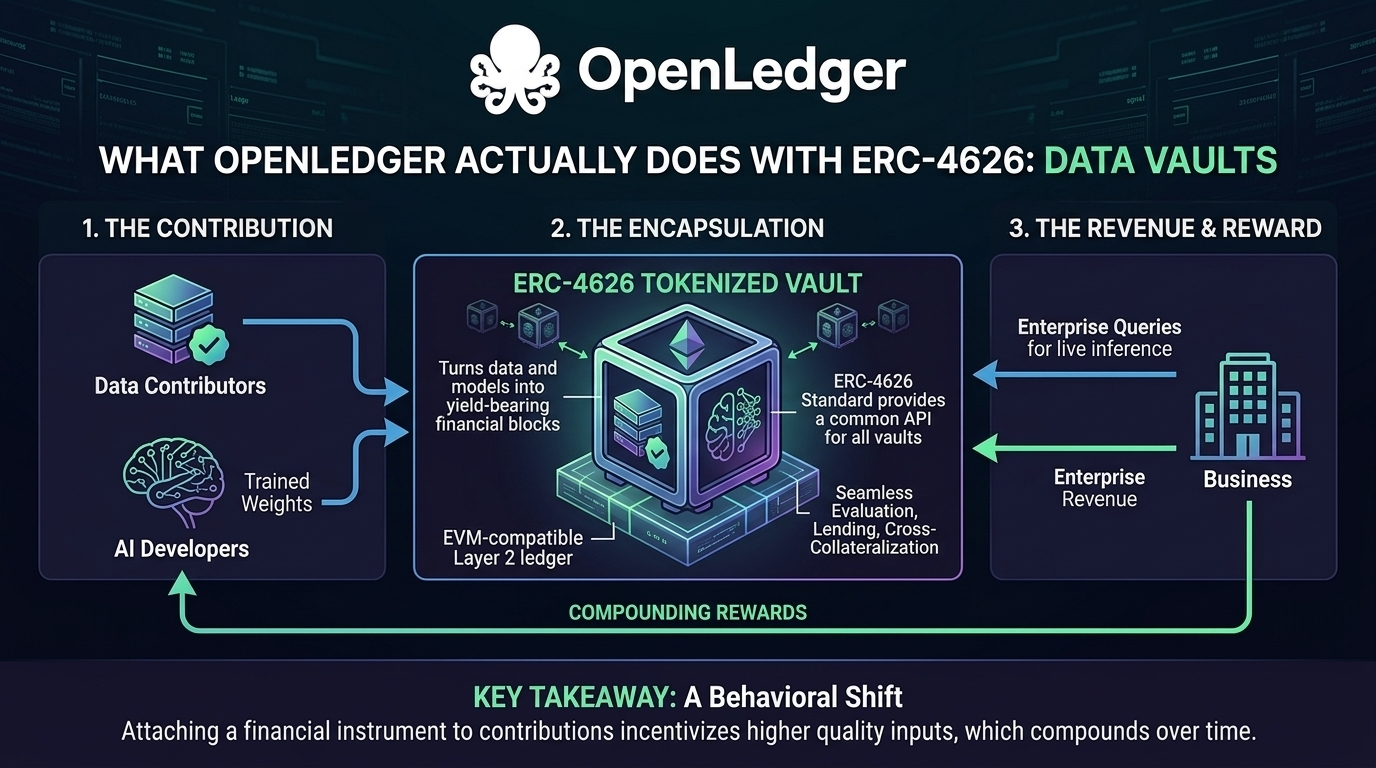
And as enterprises query those models for live inference, the revenue flows directly back to the vault, compounding rewards for the people who contributed.
What I find interesting about this setup isn't the technical cleverness.
It's the behavioral shift it creates. When contribution has a financial instrument attached to it, the incentive to contribute well goes up.
That's a small detail that compounds over time.
Agents Stop Being Traders and Start Managing Wealth
Before this integration on-chain agents were useful but limited. Buy, sell and hedge, repeat. Nothing wrong with that, but it's a narrow function.
ERC-4626 changes the game.
Because every vault speaks the same language, agents can now read yield metrics across the entire ecosystem in real time.
If a data vault's APR shifts, an agent can compare options, execute withdrawals, and reallocate capital into higher-yield pools, all within seconds, without human instruction. That's not active management anymore.
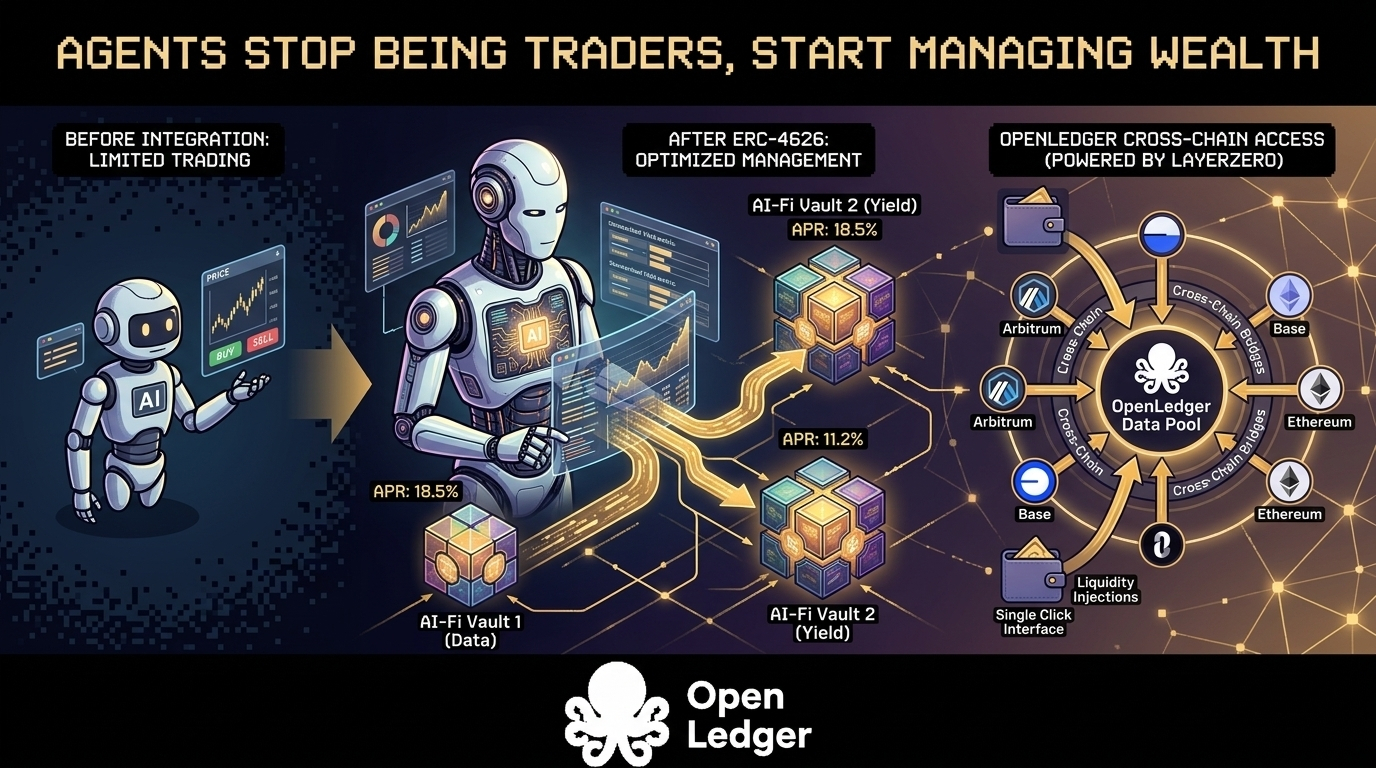
That's automated Wealth optimiZation running on top of AI Infrastructure. The agentic layer isn't executing trades now. It's managing a portfolio.
One Chain Shouldn't Be the Ceiling
A data vault is only as valuable as the capital it can attract.
OpenLedger addresses this through a cross-chain bridge built with LayerZero, making the network accessible from over 130 separate Layer 1 and Layer 2 blockchains.
A user on Arbitrum, Base, or Ethereum can inject liquidity directly into an AI-Fi vault in a single transaction.
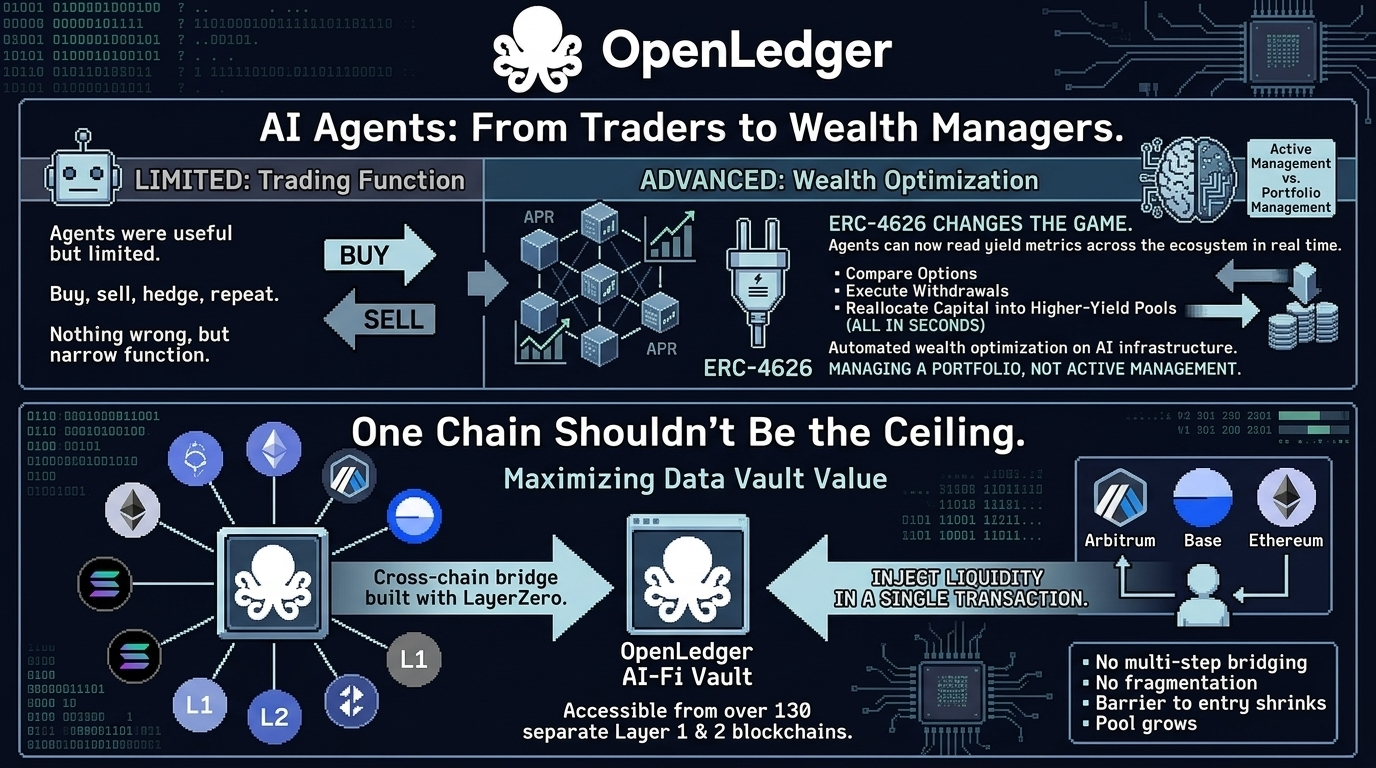
No multi-step bridging, no fragmentation.
The pool grows because the barrier to entry shrinks. That's how you build a network that isn't constrained by where someone started.
Why the OpenLedger Infrastructure Is the Real Story
what I keep coming back to OpenLedger isn't building a product.
It's building a layer.
Proof of Attribution handles the verification side, making sure contribution is tracked and ownership is clear.
ERC-4626 handles the financial side, making sure that ownership translates into yield.
The $OPEN t0ken is the transactional layer that holds it together.
When you stack those three, data stops being something that sits in storage and starts being something that works.
I've watched enough projects launch shiny interfaces and fade inside a year.What tends to survive is infrastructure that solves a structural problem quietly and well.
This feels like that. Not because it shouts about what it can do, but because the architecture makes sense the longer you look at it.
