


The AI industry is creating enormous value right now but the way that value is distributed still feels deeply broken.
Most people only focus on the surface layer of AI. Bigger models faster inference better chatbots and more powerful agents dominate the conversation every day. But underneath all of that there is another economy forming quietly in the background.
The attribution economy.
And honestly I think this may become one of the most important battlegrounds in AI over the next few years.
Every modern AI system depends on contributions from somewhere. Data does not magically appear. Human interaction research market activity online behavior content and feedback loops all shape the intelligence models people use today. Even the most advanced systems are heavily dependent on information generated by millions of users across the internet.
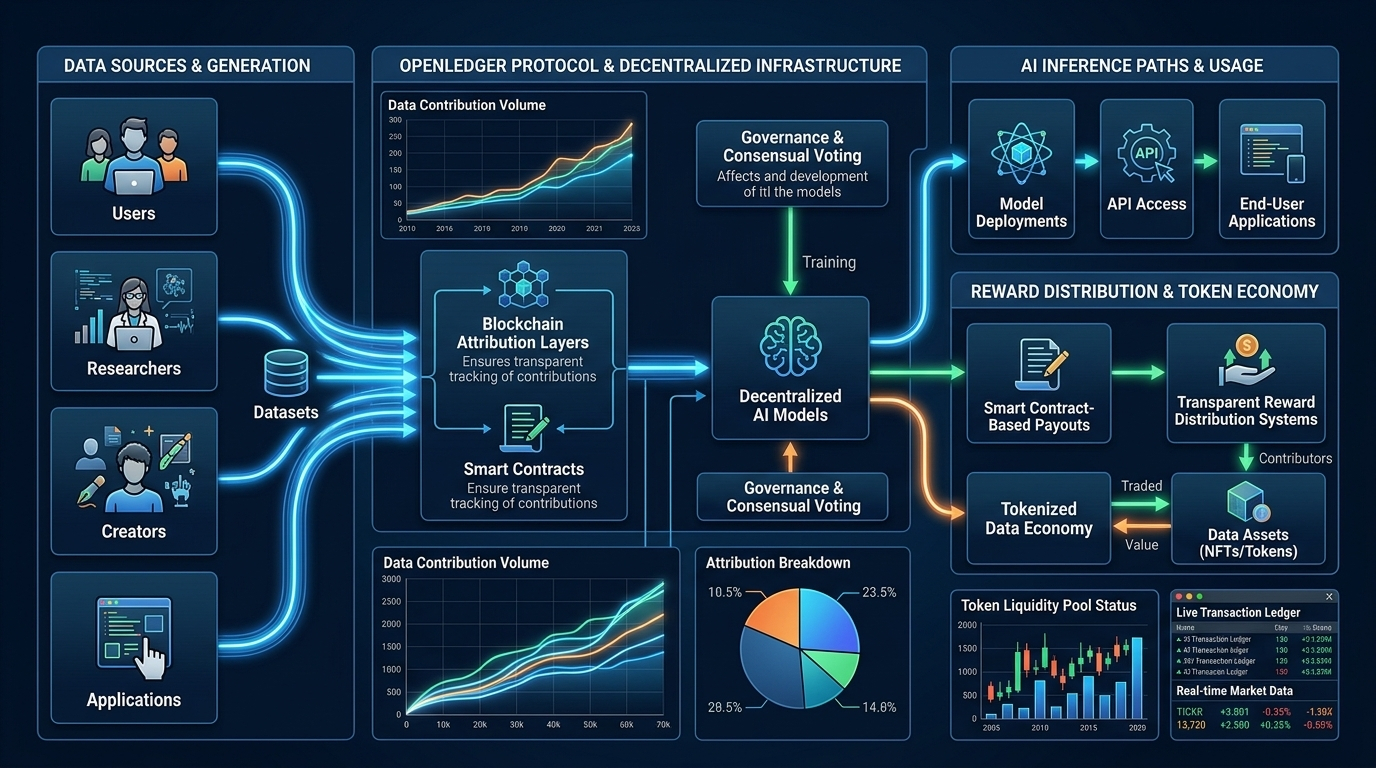
Yet almost nobody contributing to those systems actually captures meaningful value from them.
That imbalance is becoming harder to ignore.
This is why OpenLedger caught my attention recently because the project is not simply trying to build another AI blockchain narrative around hype and speculation. The core idea behind $OPEN appears much deeper than that.
OpenLedger is exploring whether attribution itself can become part of the economic infrastructure of AI.
That changes the discussion completely.
Right now most AI systems operate like closed black boxes. People interact with them every day but very few understand where the outputs actually come from or which datasets influenced the final result. In many cases the contributors behind those systems become invisible the moment their data enters the training pipeline.
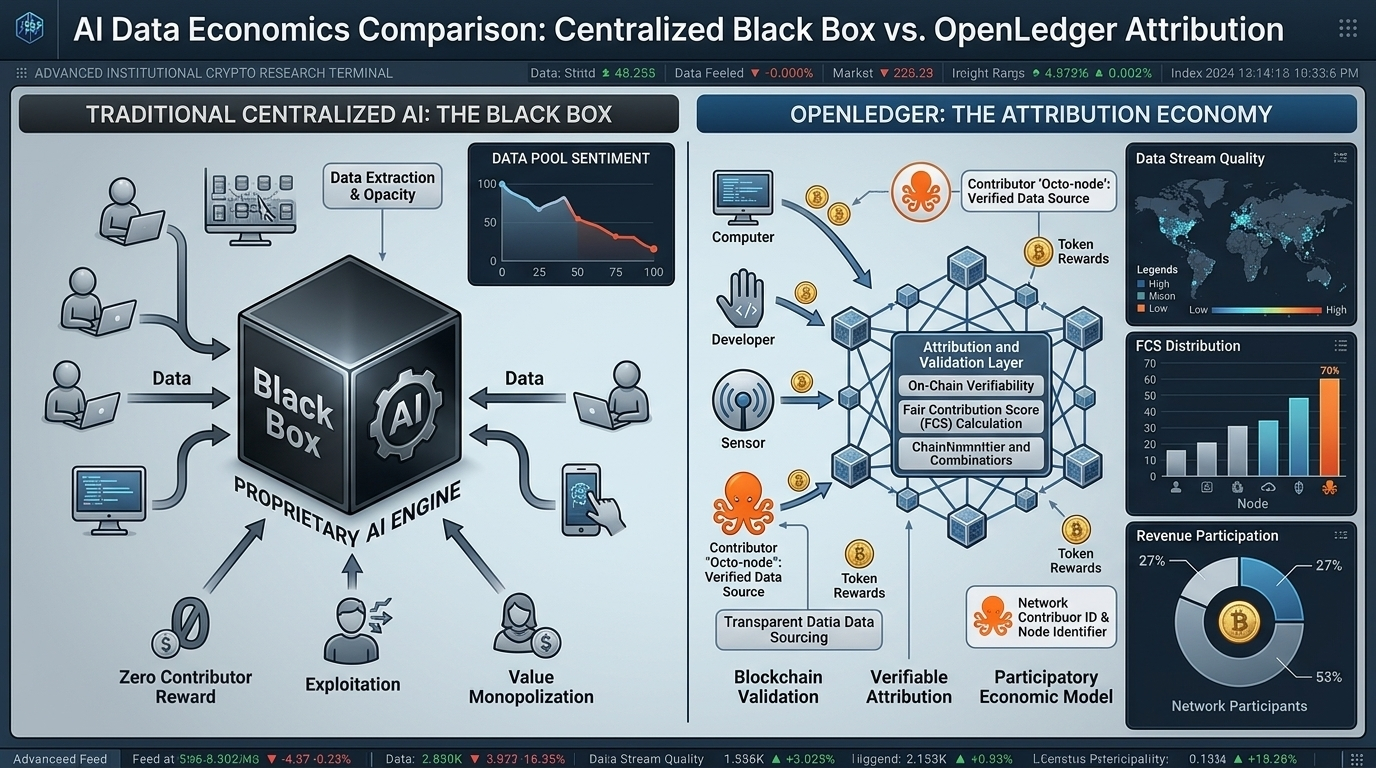
OpenLedger is trying to push in the opposite direction.
The project focuses heavily on Proof of Attribution which aims to make AI contribution more transparent and economically measurable. If datasets models and AI agents can be tracked properly then contributors may eventually participate in the value they help create instead of simply feeding centralized systems for free.
I think this is one of the strongest parts of the OPEN narrative because it touches a real problem inside AI economics instead of inventing artificial utility.
The timing also matters.
AI infrastructure narratives are exploding across crypto in 2026. Almost every week another project claims to be building decentralized AI coordination agent economies or next generation intelligence systems. But once you look deeper many of those projects still rely heavily on marketing while offering very little discussion around ownership and value distribution.
That is where OpenLedger feels different to me.
It is focusing on who gets rewarded inside AI ecosystems instead of only focusing on who controls the models.
Still I do not think this narrative is risk free at all.
Actually some parts of it are pretty disturbing if you think long term.
If attribution economies become fully financialized there is a possibility that human knowledge itself slowly turns into an asset market. Every interaction every contribution and every behavioral signal could eventually be measured monetized and priced.
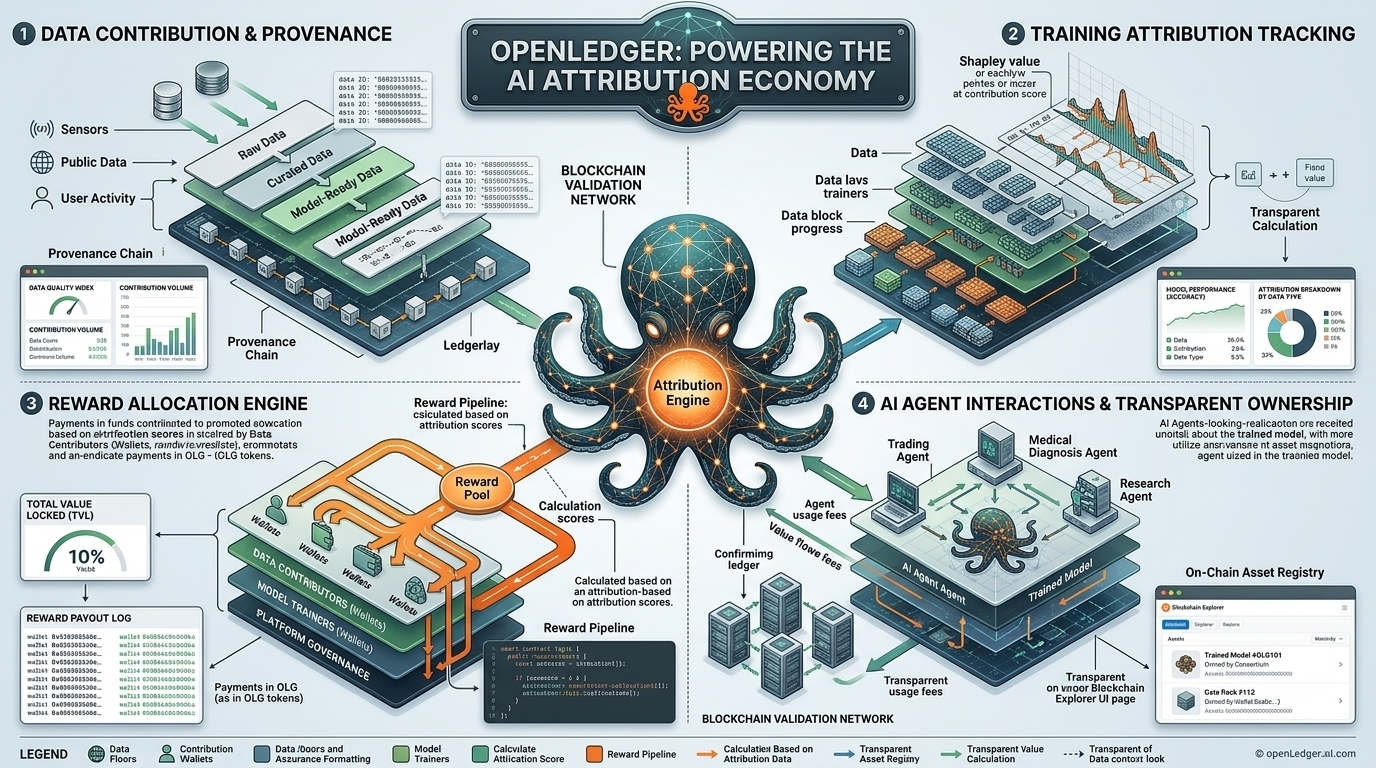
That creates difficult questions.
Who owns intelligence once everything becomes traceable.
Can open attribution systems remain fair once speculation enters the picture.
And what happens if the people controlling attribution infrastructure eventually gain too much influence over AI economies themselves.
These are not small concerns.
Another challenge is accuracy.
Attribution inside AI is incredibly difficult because modern models learn from huge interconnected datasets where contributions overlap constantly. Measuring who truly added value is far more complex than most people realize. A system may claim transparency while still struggling to identify meaningful contribution fairly.
That could become a serious weakness if the ecosystem grows too quickly without strong verification standards.
I also think decentralized AI systems still face a brutal reality when competing against centralized companies.
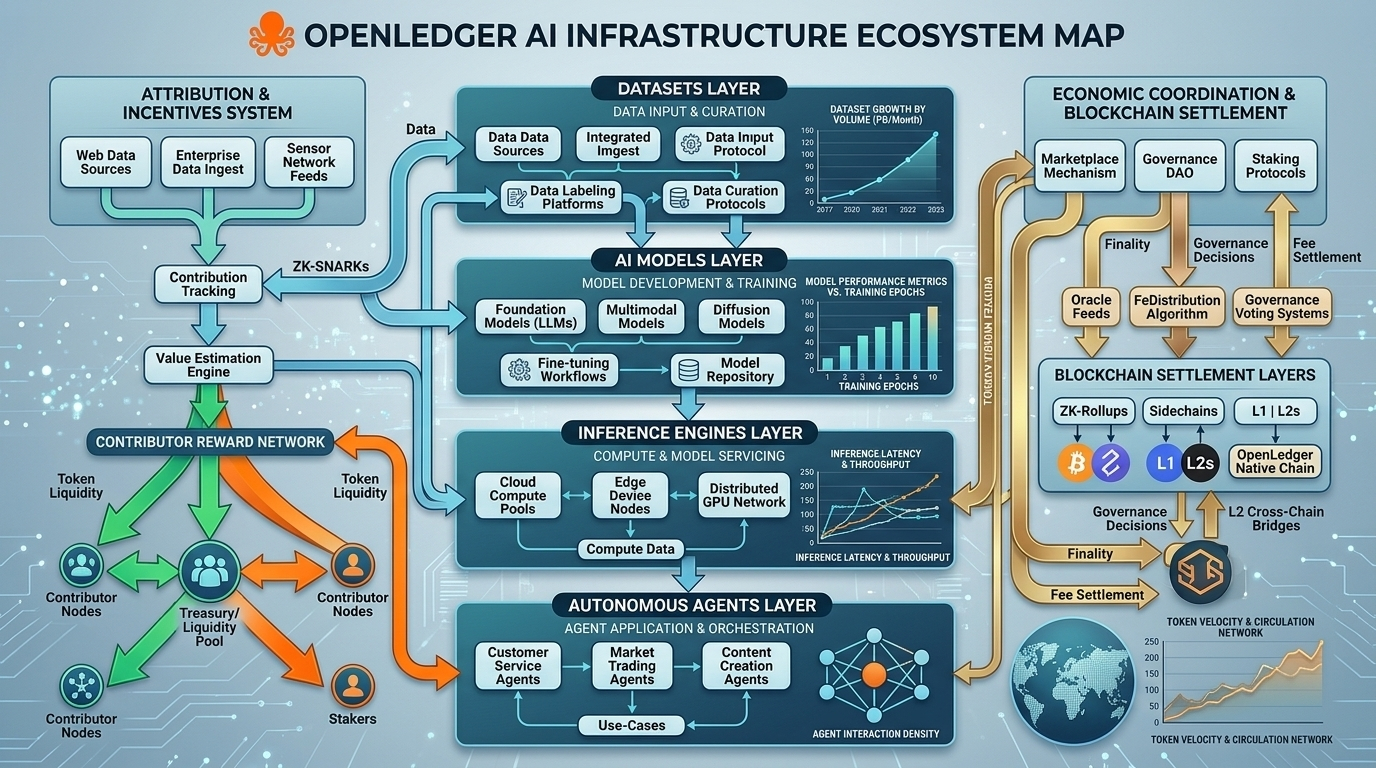
The largest AI firms already control massive infrastructure capital compute power and distribution networks. Open systems are more transparent but they are often slower less coordinated and harder to scale efficiently. So even if OpenLedger’s thesis makes sense economically execution will still be extremely difficult.
Still I keep coming back to the same thought.
The invisible contributor problem in AI is real and eventually the market will have to confront it.
Right now billions of dollars are flowing into AI development while the people generating valuable signals across the internet mostly remain unpaid and unseen. That imbalance probably becomes harder to sustain as AI economies mature.
Maybe OpenLedger succeeds in creating a fair attribution layer for AI ecosystems.
Maybe it doesnt.
But I do think the broader narrative around AI ownership contribution and economic transparency is becoming impossible to ignore now.
And if the next phase of AI really becomes centered around agents autonomous systems and decentralized coordination then attribution may end up mattering just as much as intelligence itself.
