
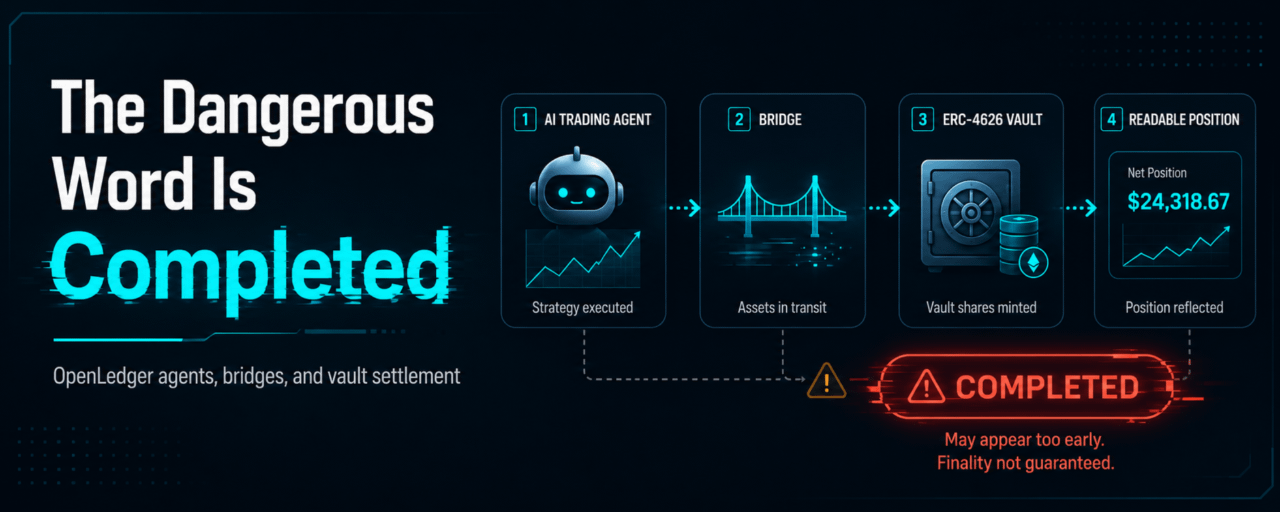

A completed OpenLedger run above a zeroed-out React dashboard is already a bug report, even if every individual service thinks it did its job.
The user does not see “asynchronous settlement.” They see a balance that went weird after an agent touched it. Source tx is visible, destination view is stale, the frontend is still rendering whatever the indexer last managed to digest, and somebody ends up poking the ERC-4626 vault by hand because the share balance might be there while the app is still acting like the original asset should be sitting in the same slot.
This is the part vibe-coded OctoClaw agents make too easy to ignore. Cloud Config accepts a route, the agent gets an instruction built, gas is estimated, maybe the first execution log even looks clean, and then some resolver sees the local process stop without throwing and calls the run completed. That is not completion. That is a worker reaching the end of its script while the rest of the state machine is still catching up in public.
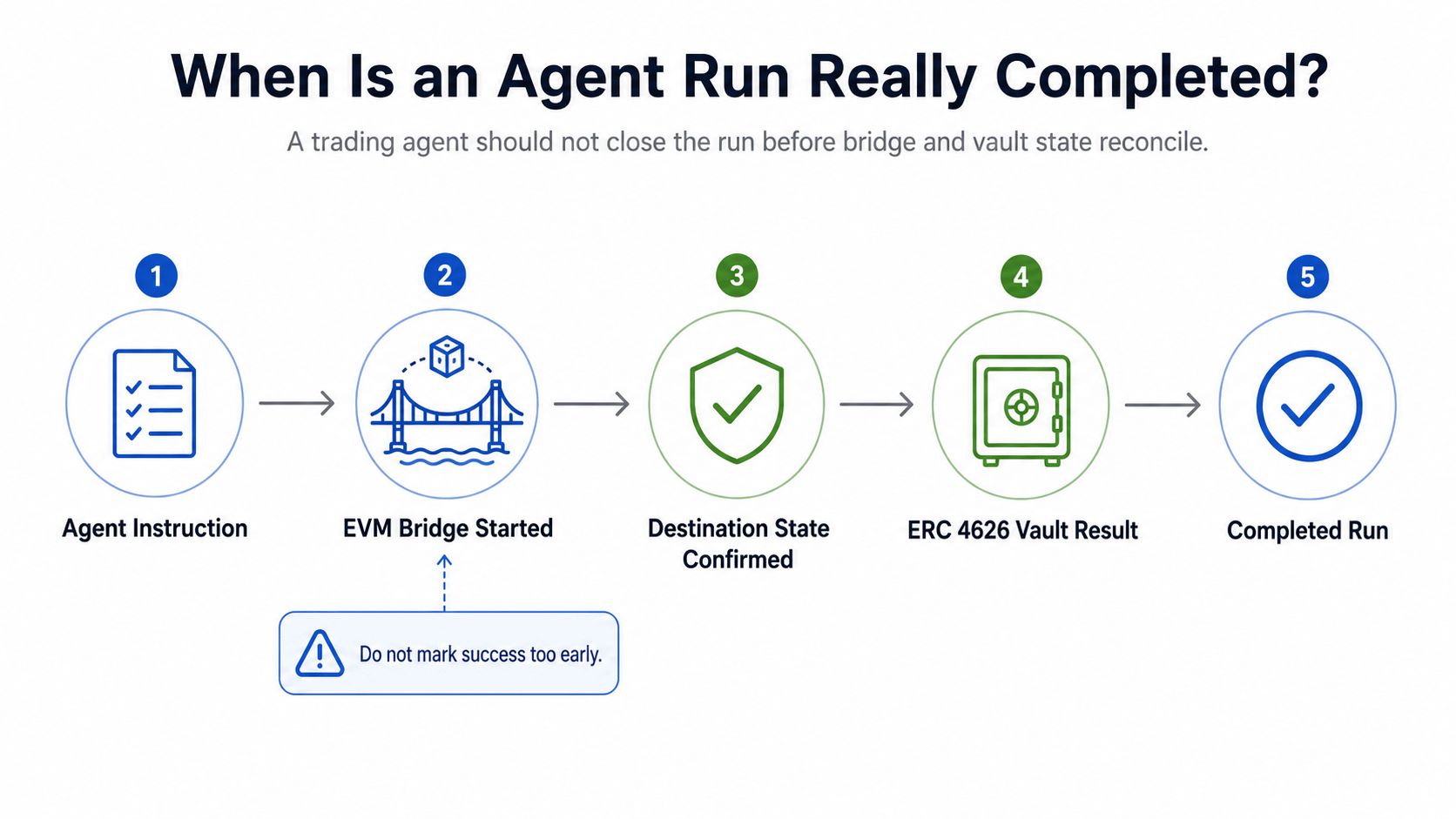
The ugly thing with EVM bridge latency and ERC-4626 accounting is that they do not fail in a nice straight line. A bridge can have a confirmed source-side tx and still not give the next leg usable destination state yet. The vault can correctly mint shares while the UI has no readable position to show. A laggy indexer can make both of those look worse than they are. Meanwhile the activity table may already have gas, resource usage, and $OPEN attribution recorded against the run, which means the cost trail looks more final than the position it supposedly paid to create.
Anyone who has spent a night comparing RPC responses against a frontend cache knows how dumb this gets. One endpoint says the destination balance moved. Another lags behind. The vault contract says shares exist. The dashboard shows zero or some stale pre-deposit number. The agent logs look successful because from the agent’s local point of view they are successful. Then support has to explain that the money is probably not gone, the vault just represents it differently, the bridge took time, and the indexer has not caught up yet.
That explanation is technically reasonable and still a terrible product state.
Completed cannot mean the OctoClaw process terminated. It cannot mean a tx hash exists somewhere. It cannot mean the route handler stopped complaining. On a path that crosses bridge finality and then depends on ERC-4626 share visibility, completion has to mean the external state has actually reconciled into something the user can read without turning into a block explorer operator.
Cloud Config should be carrying that mess as a real end condition, not just holding runtime knobs. The config needs to validate the dependency chain as one ugly object: the agent instruction, the bridge leg that made the destination side usable, the vault conversion, the visible balance or share position, the gas spend, and the $OPEN usage record all pointing back to the same run instead of drifting around as separate “successful” fragments.
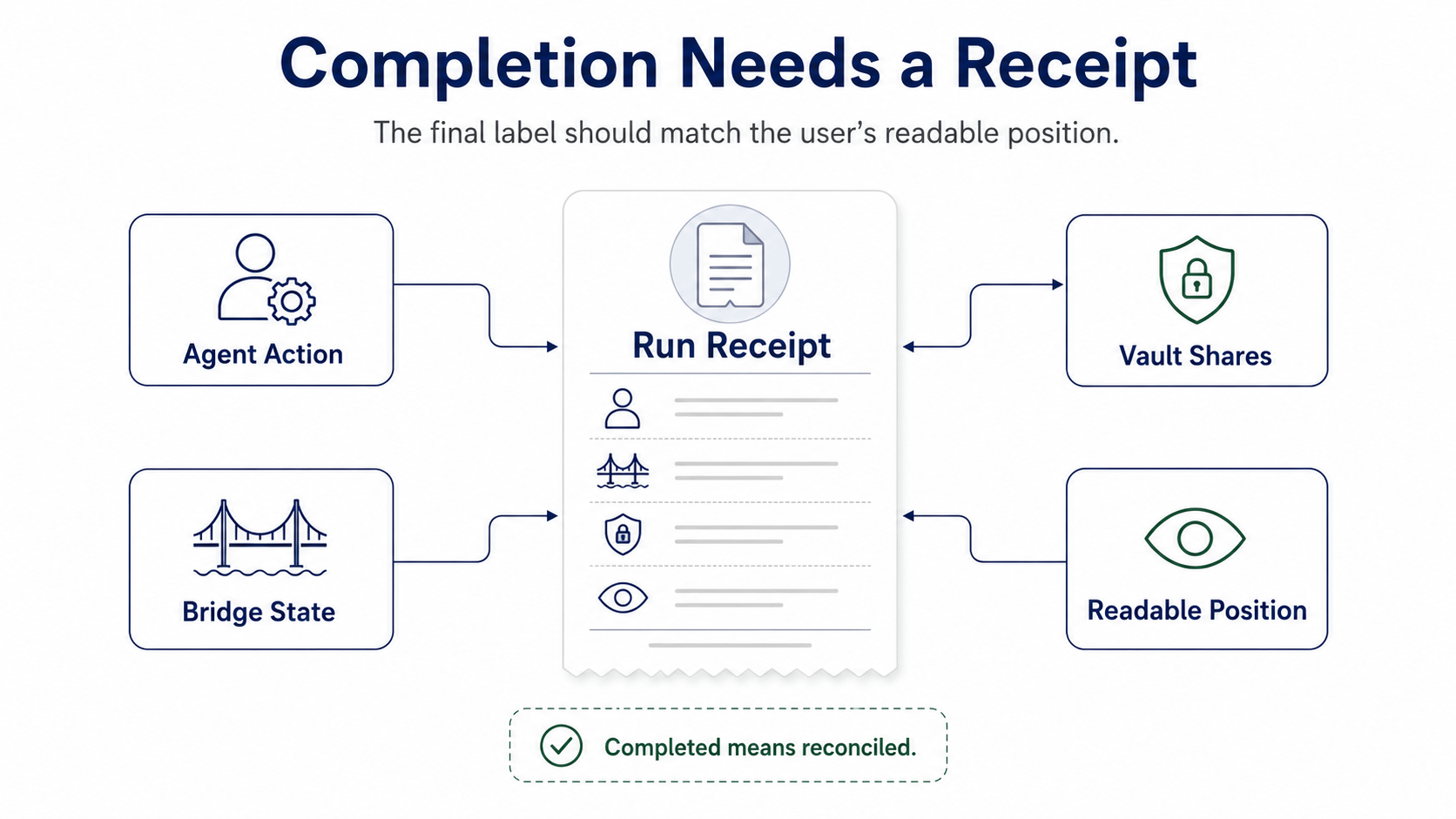
Calling this “just indexing” is how these systems rot. Indexing lag is not separate from completion if the completed state is shown to a user through that index. Bridge latency is not separate from completion if the next action depends on bridged capital being usable. ERC-4626 share accounting is not separate from completion if the user sees a position screen that cannot explain why assets became shares.
Leave the run pending. Mark it blocked. Show the unresolved dependency. Anything is better than resolving early and making the user reverse-engineer the path after the system already claimed the run was finished.
If completed fires before the reconciled state can survive a refresh, a wallet check, and a direct contract read, the status label is just noise. Users stop trusting noise very quickly.