
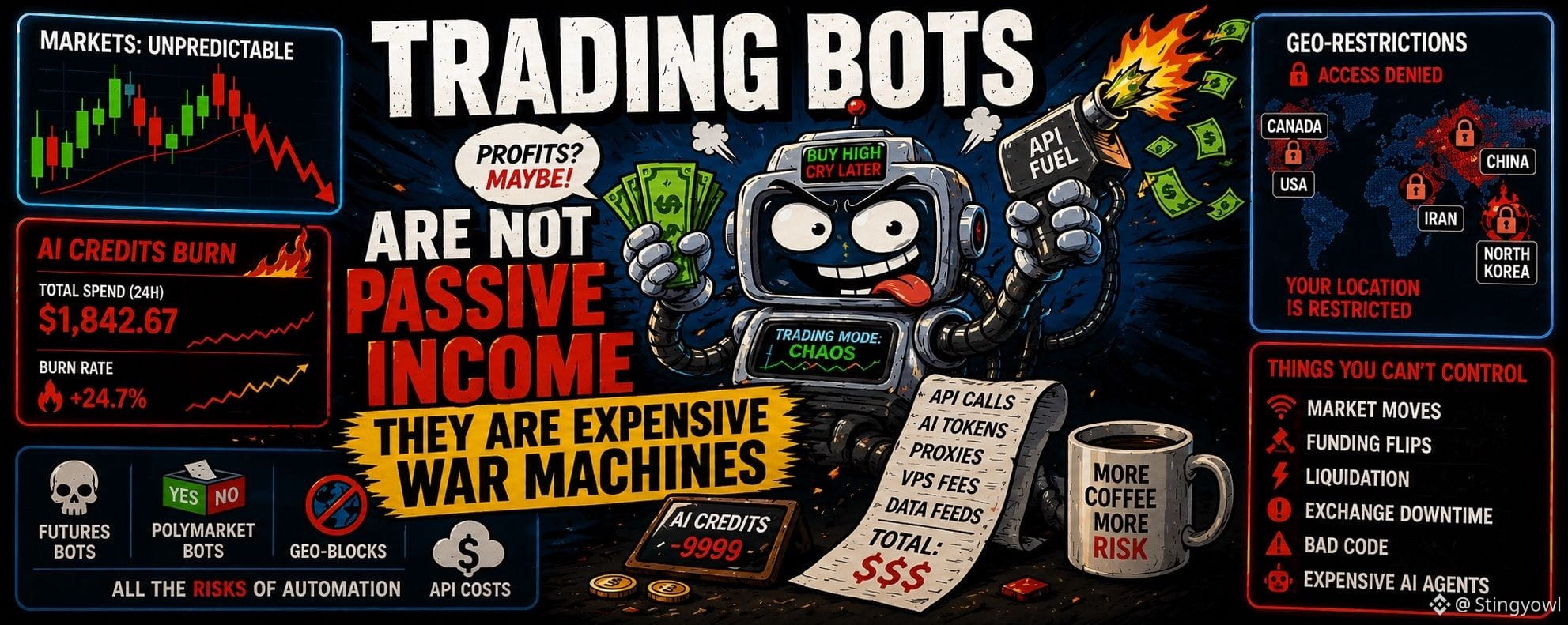
A futures bot does not forgive bad risk management.
It simply liquidates you faster.
That sounds dramatic, but it is true.
Spot bots can already be risky.
But futures bots are a completely different animal because they trade with leverage, margin, funding fees, liquidation levels, and much less room for mistakes.
A normal trading mistake becomes bigger.
A small configuration error becomes dangerous.
And one bad setup can damage the whole account if the bot is not protected properly.
That is why beginners need to understand one thing before running a futures bot:
The goal is not to automate aggression.
The goal is to automate control.
━━━━━━━━━━━━━━━
1. Leverage makes every mistake bigger ⚠️
Leverage is the reason futures bots look attractive.
It is also the reason they are dangerous.
With leverage, a small price move can create a much larger gain.
But the same is true in the other direction.
A small wrong move can create a large loss.
This is where beginners get trapped.
They see leverage as a shortcut to faster profits.
But leverage is not free power.
It is borrowed risk.
If the bot enters too large, trades too often, or fails to exit properly, leverage turns a normal mistake into an account-threatening problem.
A futures bot must treat leverage like fire.
Useful when controlled.
Destructive when ignored.
━━━━━━━━━━━━━━━
2. Cross margin can turn one mistake into a bigger problem 🔥
Cross margin is especially dangerous for beginners.
With isolated margin, risk is limited to the margin assigned to that position.
With cross margin, the position can use more of the available account balance to avoid liquidation.
That sounds safer at first.
But it can become much more dangerous.
Because one bad position can start affecting the whole account.
If a futures bot keeps adding, averaging down, or holding a losing position too long, cross margin can pull more and more account equity into the problem.
That is how one bad trade becomes an account-level issue.
For beginner bots, isolated margin is often easier to control.
Cross margin requires serious discipline, strict limits, and very clear emergency rules.
Without that, the bot is not managing risk.
It is borrowing more time to be wrong.
━━━━━━━━━━━━━━━
3. Liquidation is not just a theory 💀
Liquidation is not some rare event that only happens to reckless traders.
In futures, liquidation is always part of the game.
If the market moves far enough against the position and margin is not enough, the exchange closes the position.
The bot does not get to argue.
The trader does not get extra time.
The exchange simply protects itself.
That is why every futures bot needs to know:
Where is liquidation?
Where is the stop loss?
How much account equity is at risk?
What happens if price gaps fast?
What happens if the stop order fails?
What happens if volatility expands?
Beginners often focus on take profits.
Professionals focus on liquidation distance.
Because if liquidation is too close, the strategy is already fragile before the trade begins.
━━━━━━━━━━━━━━━
4. Stop-loss logic must be hard-coded 🚨
A futures bot without a real stop-loss system is dangerous.
Not “risky.”
Dangerous.
The bot must know exactly where the trade is invalidated.
Not emotionally.
Not “maybe if it bounces.”
Not “give it more room.”
A hard invalidation point.
For every trade, the bot should know:
• entry price
• stop-loss price
• position size
• maximum loss
• liquidation distance
• take-profit zones
• what to do if the stop order fails
A stop loss is not just a line on the chart.
It is the difference between a controlled loss and a disaster.
And in automated futures trading, controlled losses are part of survival.
The goal is not to avoid every loss.
The goal is to make sure no single loss matters too much.
━━━━━━━━━━━━━━━
5. Averaging down can destroy bots fast 📉
Averaging down feels smart when price eventually bounces.
It feels genius during a lucky recovery.
But in futures trading, averaging down can become deadly.
Especially when automated.
If the bot keeps adding to a losing position without strict limits, risk grows exactly when the setup is already failing.
That is backwards.
Some advanced systems use scaling carefully.
But beginners should be extremely careful with bots that “buy more when price drops” or “add until recovery.”
That is often just a slow liquidation strategy with better branding.
A futures bot should never be allowed to add endlessly.
There must be hard limits:
• max adds
• max position size
• max loss
• max margin usage
• no adding after invalidation
• emergency shutdown after abnormal drawdown
If the bot is allowed to keep adding forever, the account becomes the stop loss.
━━━━━━━━━━━━━━━
6. Funding fees matter more than beginners think 💸
Futures trading is not free.
Funding fees can slowly eat into performance, especially if the bot holds positions for longer periods.
A strategy that looks profitable on price movement alone can become much weaker after fees and funding are included.
This matters for bots because bots may hold trades mechanically.
They do not naturally think:
“Is this position still worth holding after funding?”
Unless you program that logic.
A futures bot should be aware of:
• funding rate
• funding time
• expected holding period
• whether funding supports or hurts the position
• whether the trade still makes sense after costs
Small costs become big when repeated often.
And bots repeat things very well.
That includes mistakes.
━━━━━━━━━━━━━━━
7. Overtrading is amplified by automation 🌀
A human trader may overtrade after emotion.
A bot can overtrade because of bad logic.
Both are dangerous.
But the bot can do it faster, cleaner, and without fatigue.
If the strategy generates too many signals, the bot may enter again and again during choppy conditions.
That creates:
• more fees
• more slippage
• more false entries
• more liquidation exposure
• more emotional pressure on the trader watching it
This is why futures bots need filters.
Not every signal deserves a trade.
Good filters may include:
• volatility filter
• trend filter
• liquidity filter
• spread filter
• funding filter
• cooldown after losses
• max trades per day
• no-trade zones during major events
A futures bot should not trade because it can.
It should trade because conditions justify risk.
━━━━━━━━━━━━━━━
8. Position sizing is the real strategy 🧮
Beginners often think the strategy is the entry signal.
In futures trading, position sizing may matter more.
Two bots can use the same entry.
One survives.
One gets liquidated.
The difference is usually size.
A good futures bot calculates position size based on risk, not excitement.
It should answer:
How much can I lose if the stop is hit?
How far is the stop?
How much leverage is used?
How much margin is required?
How much total account equity is exposed?
What happens if several positions lose together?
The position should fit the risk plan.
The risk plan should not be adjusted to justify the position.
That is how beginners get into trouble.
They decide the trade first.
Then they try to make the risk look acceptable.
A bot should do the opposite.
Risk first.
Trade second.
━━━━━━━━━━━━━━━
9. Emergency shutdown rules are mandatory 🛑
Every futures bot needs a kill switch.
Not optional.
Mandatory.
There must be conditions where the bot stops trading immediately.
Examples:
• daily loss limit reached
• too many failed orders
• API errors repeat
• drawdown exceeds limit
• position size becomes abnormal
• margin usage too high
• connection unstable
• market volatility exceeds limit
• bot opens unexpected duplicate orders
A good bot does not keep trading just because the script is running.
It must know when to stop itself.
This is one of the biggest differences between a toy bot and a serious system.
The bot should not only know how to enter.
It should know when it is no longer allowed to continue.
━━━━━━━━━━━━━━━
10. The safest beginner approach ✅
If you are new to futures bots, keep the setup boring.
Boring is good.
Start with:
• isolated margin
• low leverage
• tiny position size
• one market
• one strategy
• hard stop loss
• max daily loss
• limited number of trades
• no endless averaging down
• clear alerts
• readable logs
• manual review after every trade
Do not start with aggressive leverage.
Do not run five strategies at once.
Do not let the bot trade every coin.
Do not scale after one lucky win.
Do not assume a backtest understands liquidation.
The bot must earn more risk through stable behavior.
Not through hype.
━━━━━━━━━━━━━━━
Final takeaway ⚔️
Futures bots can be powerful.
They can execute faster.
They can remove hesitation.
They can follow risk rules.
They can catch setups while you sleep.
They can bring discipline to a strategy.
But they can also destroy an account if built badly.
Leverage does not forgive weak logic.
Cross margin does not forgive emotional sizing.
Liquidation does not care about your thesis.
A futures bot should never be built around the question:
“How much can this make?”
It should start with:
“How much can this lose, and how fast can I stop it?”
Because in futures trading, survival is the first edge.
Everything else comes after.
━━━━━━━━━━━━━━━
Tomorrow’s article:
“Polymarket Bots: Why Prediction Markets Are Harder Than They Look 🎯”
I’ll explain why prediction market bots are not normal trading bots, why market interpretation matters more than price action, and how one misunderstood resolution rule can turn a smart-looking trade into a very expensive mistake.