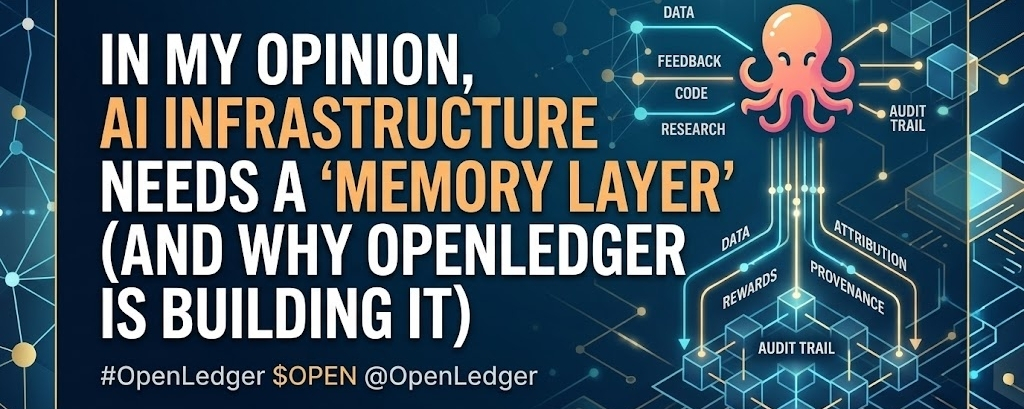
We often treat AI like magic but listen to me carefully: it is not. We provide a prompt, and the system delivers code, analyzes data, or gives an answer. But beneath that "magic" is a massive, opaque chain of labor. Thousands of people curate datasets, refine models, and provide critical feedback, yet this work is largely invisible. Once that input enters the "black box" of a centralized platform, the contributor’s trail fades, and the value is captured entirely at the top.
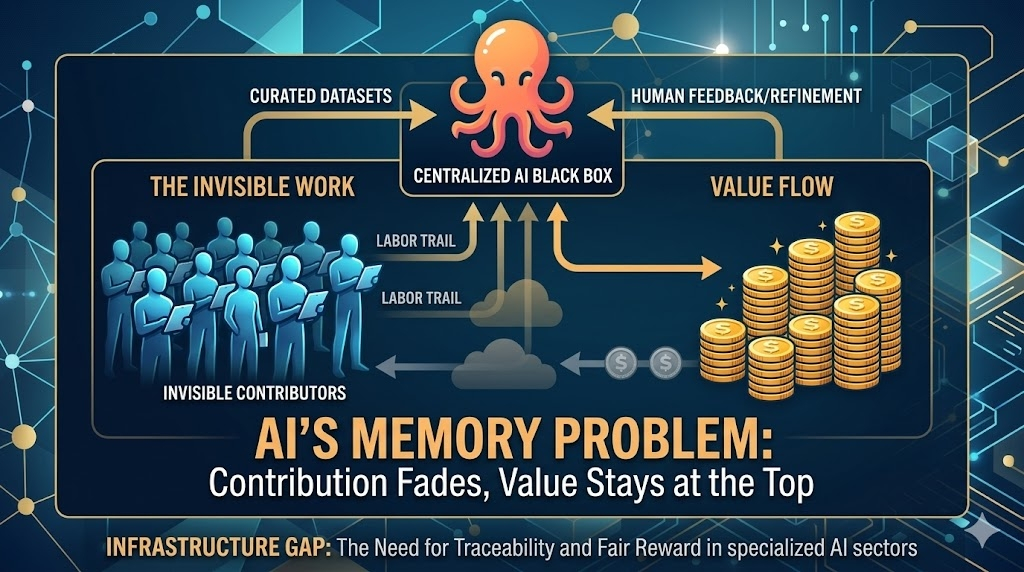
I think this is the fundamental problem with the current AI economy: AI has a memory problem.
Why This is an Infrastructure Gap
As AI models evolve from generic tools into specialized systems for healthcare, finance, and legal sectors, the quality of the "fuel"—the data—becomes everything. Generic internet scrapes are no longer enough. We need domain-specific expertise, high-quality research, and precise human feedback. However, contributors are becoming aware of their value. Developers and data researchers are increasingly unwilling to feed systems that don't recognize their contributions.
Finally, this is where @OpenLedger stands out from the crowded L2 landscape. Instead of just chasing "faster" or "cheaper" transactions, OpenLedger is tackling the structural plumbing of AI.
The Move Toward Accountability
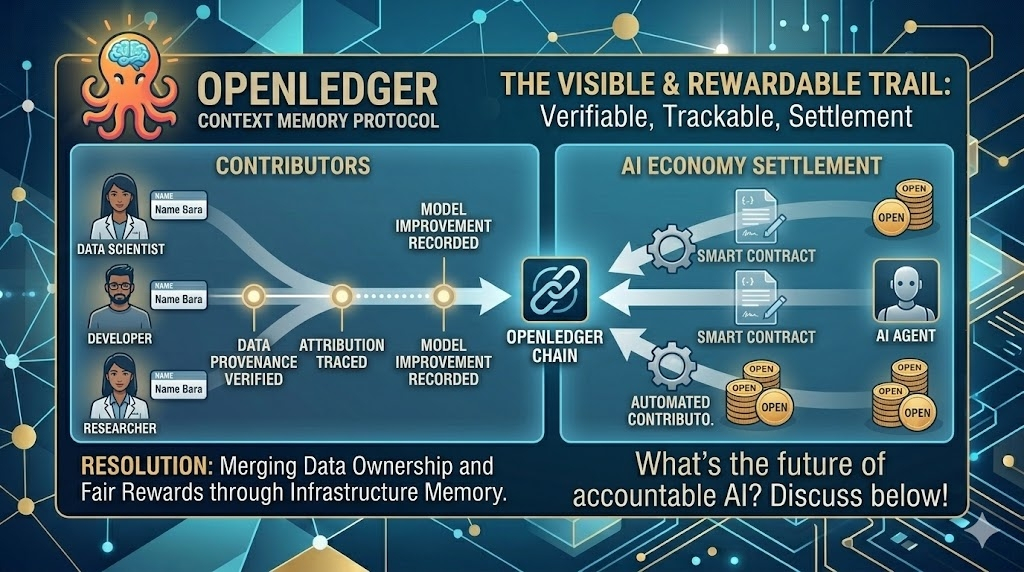
OpenLedger is focused on a core missing layer: Contribution Memory. By leveraging blockchain, they aren't just creating a ledger of asset movement; they are building a record layer for AI workflows.
You know one thing: if we want to build a sustainable AI economy, the system must be able to verify:
1. Provenance: Where did the training data originate?
2. Attribution: Who provided the specific correction that improved model accuracy?
3. Settlement: How is the value generated by an AI agent distributed back to the network?
By using $OPEN as the native token for this ecosystem, the project bridges the gap between decentralized infrastructure and AI performance. It effectively turns "hidden labor" into a verifiable, traceable, and rewardable asset.
Is This the Endgame for AI? What do you think??
While the technical challenge of handling real-time AI inference on an Optimistic Rollup is significant, the philosophical shift is undeniable. We are moving from an era of extractive, closed-source platforms to one where contributors have actual leverage.
You know that for builders and data providers, this is the first real sign of an "accountable AI" economy. It’s not just about hype; it’s about creating the rails where merit—and not just platform control—determines value.
From the past few days, I have been deep diving into their documentation and, you know what, the 'Contribution Memory' concept is definitely the most exciting part for me. I’m tracking how this architecture evolves because it’s tackling the exact friction points that will define the next phase of the AI/Web3 convergence. If you’re building in this space, let’s discuss—are you seeing the same shift in how data quality is being valued?