
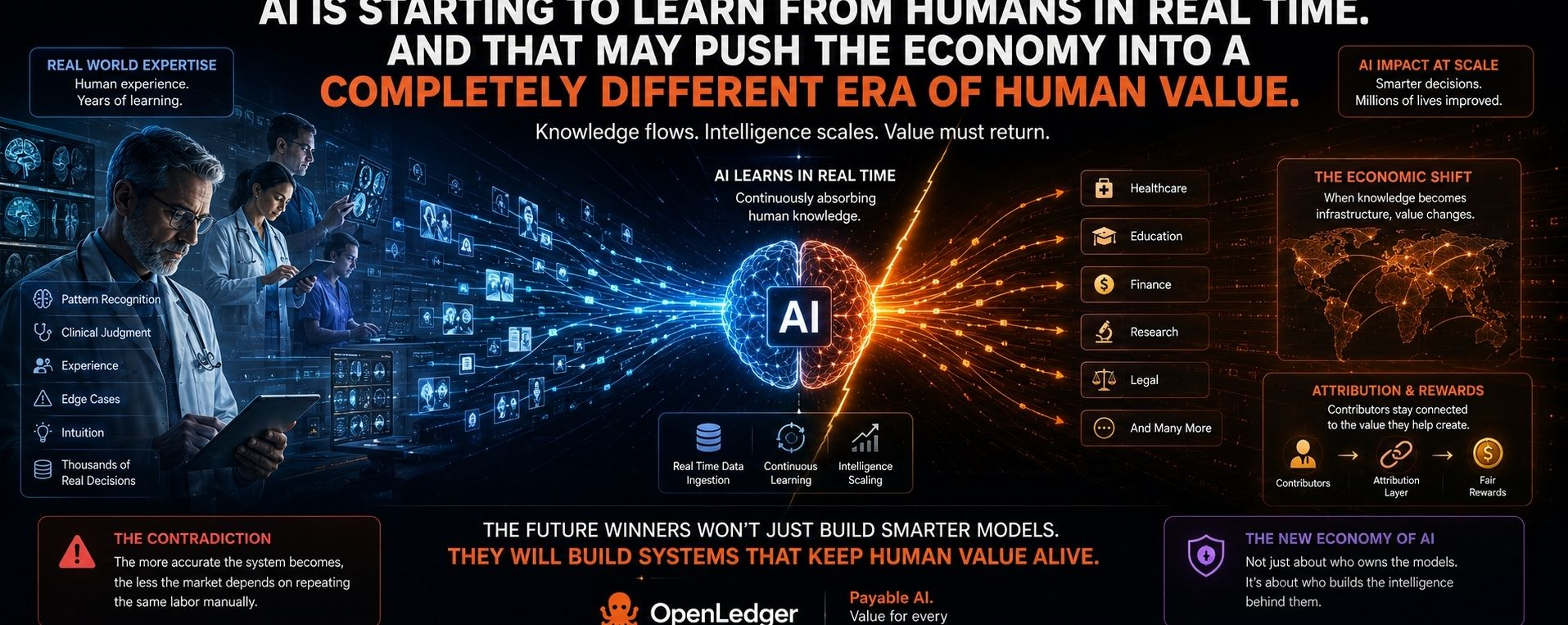
The more AI spreads into daily life, the more one thing keeps standing out to me
most people focus on what AI can now do better write faster search faster diagnose faster generate faster
but i think the deeper shift is happening somewhere else entirely
AI is no longer only replacing repetitive labor
it is starting to absorb specialized judgment itself and healthcare may become one of the clearest examples of that transition
a doctor today does far more than memorize symptoms real diagnosis comes from years of pattern recognition small signals unusual reactions edge cases tiny details repeated across thousands of patients until instinct itself becomes economically valuable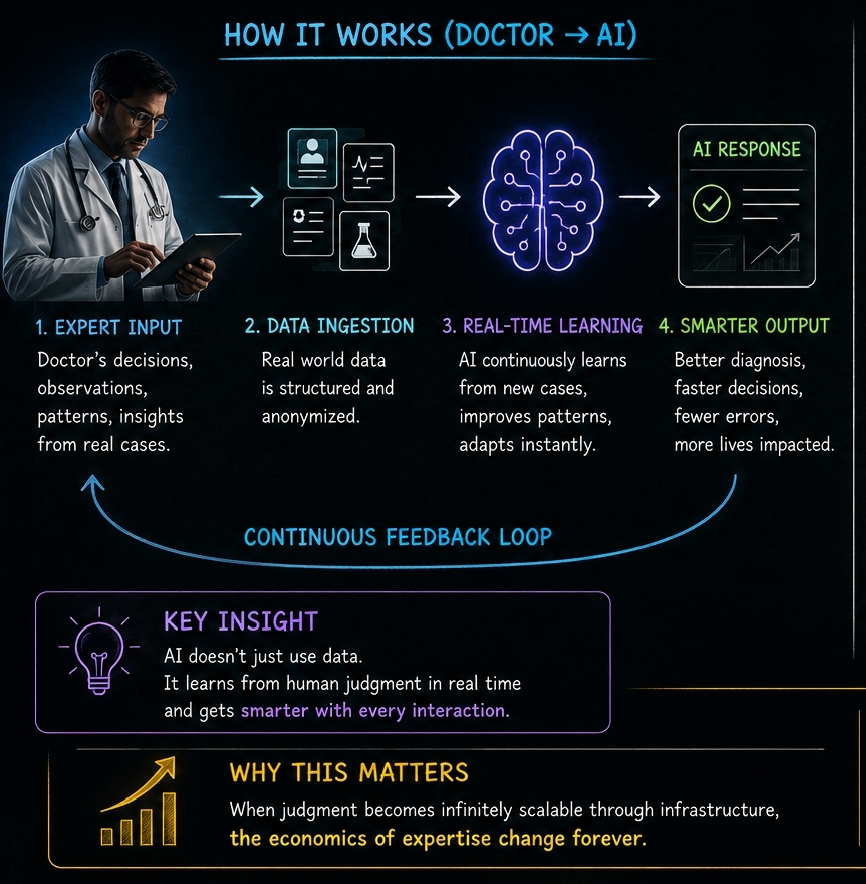
now imagine millions of those decisions continuously feeding intelligent systems
over time AI stops behaving like a static software tool and starts behaving more like a continuously trained system learning directly from collective experience in real time
and honestly thats where the pressure starts becoming harder to ignore
because the same experts helping improve these systems may also be helping automate parts of the expertise that once made them valuable in the first place
not instantly not completely
but gradually that creates a contradiction worth naming
Economic Self-Replacement
the more accurate the system becomes the less dependent the market becomes on repeating the same labor manually every time
and i dont think most people fully see what kind of economic shift that may create across society itself
because historically expertise scaled slowly knowledge stayed attached to time
AI breaks that relationship
once the infrastructure exists learned judgment can scale across millions of interactions simultaneously
that changes something much bigger than productivity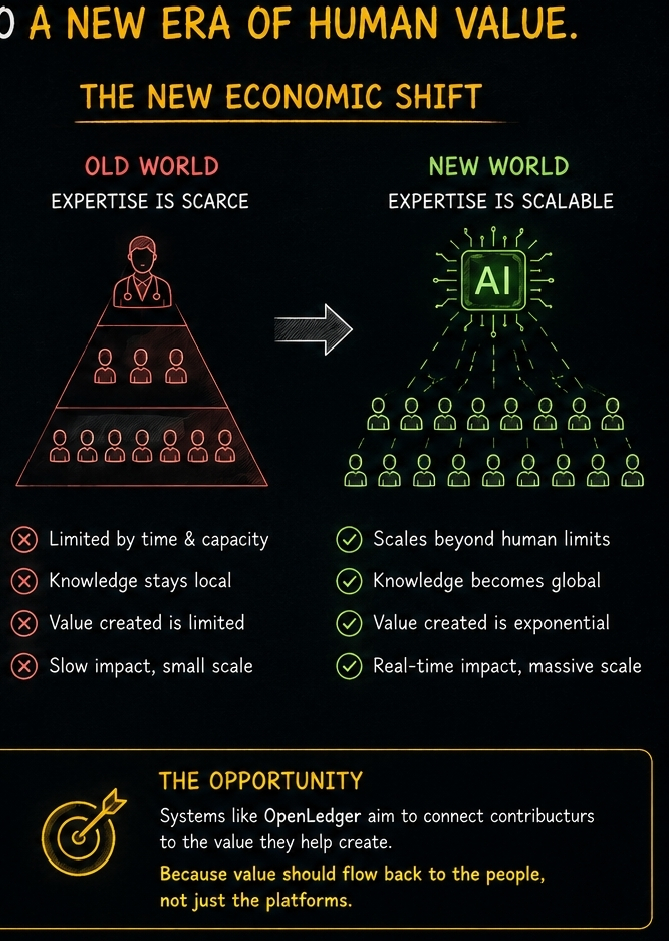
it changes the economics behind expertise itself
because if judgment becomes infinitely scalable through infrastructure then scarcity itself starts weakening across many high-skill professions
the systems scale , the contributors usually dont
and another pressure appears at the exact same time
if experts are actively helping train these systems should all the long-term value only flow toward the companies operating the models
that is the part where @OpenLedger started feeling interesting to me not because the system is magically perfect
but because it is trying to solve a structural pressure that already seems to be forming across AI itself
because if AI keeps scaling without mechanisms connecting contributors back to the value they help create the incentives eventually start breaking apart the models improve
the people supplying the knowledge layer slowly become interchangeable
most AI discussions still focus almost entirely on outputs
smarter models , faster responses , better agents
but OpenLedger seems focused on something much deeper attribution
the ability to track coordinate and potentially reward the contribution layer helping improve AI systems over time
because right now most knowledge disappears into training pipelines after the value gets absorbed
the models compound the people behind them usually dont
OpenLedger’s “Payable AI” model tries to approach that differently
if medical experts contribute datasets diagnostic refinements correlations or specialized insights that improve future AI behavior the contribution itself could become economically traceable instead of becoming invisible after training
and if systems like this actually work at scale they may help create a healthier relationship between AI systems and the people continuously improving them
and honestly i think thats the part that matters most
because the next AI economy may not only be defined by who owns the smartest models
it may be defined by whether contributors remain economically connected to the systems they helped build
especially as synthetic content floods the internet and trusted real-world expertise becomes harder to source
and healthcare may only be the beginning
education, finance ,scientific research, legal systems
every industry where judgment trains intelligent systems may eventually face the same question
who captures the value once knowledge becomes machine infrastructure
because the future winners in AI may not only be the companies building the smartest models
they may also be the systems that figure out how to keep contributors economically connected to the intelligence they help create