I spent a nights trying to figure out what OpenLedger is actually doing behind the scenes. I mean what is really going on underneath the interface and the positive posts. Not the story they tell the public. The real way it works.
Most cryptocurrency systems want to talk about how fast they're how many people are using them. They want users to focus on the rewards they can get because that is easier to understand than the problems they are trying to solve. OpenLedger seems different because what they are building is really hard to explain in terms.. Maybe that is why most projects do not even try to build it.
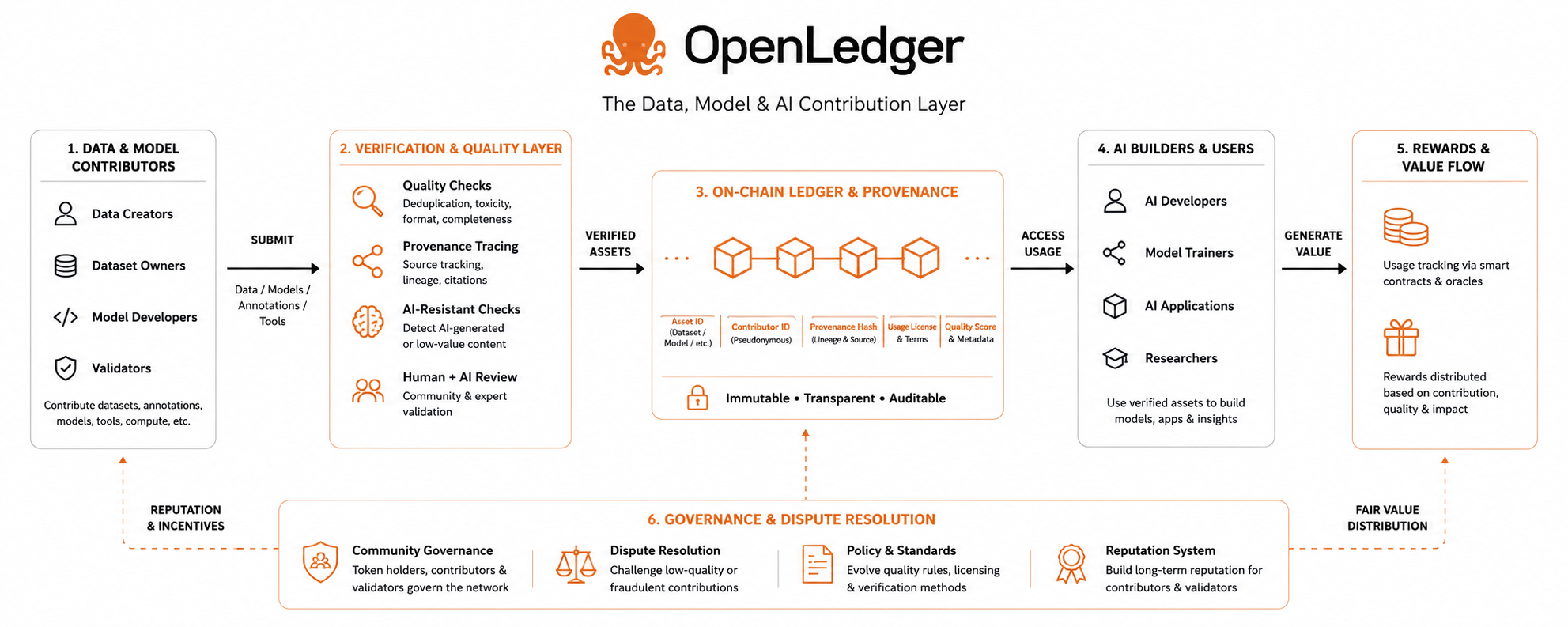
I started to notice this when I saw how they handle data that users contribute to the network. Usually when a platform says users own their data it does not really mean anything. The platform still controls who can see it. They still decide how it can be used to make money. OpenLedger seems to be trying to solve the problem of how to keep track of who contributed what to intelligence systems.
That sounds simple. When you think about it it gets really complicated. Who actually created something ? Who trained the intelligence? Which dataset was used to teach it? How should rewards be given out over time? How can we make sure people are using the system honestly without giving away information?
Most projects do not even try to answer these questions because they are really hard to solve. I compared it to how artificial intelligence systems work. Someone uploads some information and then the system uses it.. After that the connection between the person who created it and the value it has is lost.
Nobody keeps track of what happens to it after that because it is too hard. It would require a lot of work to build a system that can do that. It would also mean being accountable for what happens to the data. OpenLedger seems to be taking on that challenge.
That is what caught my attention. Not because I think they will definitely succeed but because they are trying to solve a problem that most people avoid. I noticed another thing about how their system works. It seems to be focused on verifying that the data is real and useful than just collecting as much data as possible.
That changes the way people are rewarded for contributing. Many artificial intelligence projects just want to get much data as they can but OpenLedger seems to care more about making sure the data is good and can be used. At least that is what it looks like far.
In theory that sounds great.. In practice it is much harder. Systems that try to verify everything always sound good until they have to handle a lot of users. Then people start to find ways to cheat the system. It becomes political.
There are examples of cryptocurrency systems that seemed fair at first but then became manipulated. That risk is still there with OpenLedger. I do not think enough people are talking about that honestly. When money is involved people stop behaving and start trying to get as much reward as they can even if it means contributing something that is not really useful.
I kept wondering how OpenLedger will handle that in the term. Especially when artificial intelligence starts creating its data and it becomes harder to tell what is real and what is not. That is already a problem. It is going to get worse.
If artificial intelligence systems start training on data that was created by artificial intelligence systems then the quality of the data will get worse and worse. Some researchers are already talking about this problem. It is not getting enough attention.
So another question is, how will OpenLedger make sure that the data is original and valuable without becoming too restrictive? I do not think there is an answer to that.. At least they seem to be aware of the problem and they are trying to solve it.
Most systems today just assume that all data is equal and that is not true. I also noticed that OpenLedger does not spend a lot of time talking about how decentralized they're. That was refreshing because a lot of blockchain projects make it sound like being decentralized makes them trustworthy.
Reality is more complicated than that. Just because a system is decentralized does not mean it is fair or trustworthy. OpenLedger seems to be more focused on making sure their system is auditable than just talking about decentralization.
That is important because if artificial intelligence economies become as big as people think they will then someone will need to keep track of where the value's coming from and where it is going. Without that the whole system will be based on taking value from contributors without giving them anything in return.
Maybe OpenLedger will. Maybe they will not.. At least they are trying to solve a real problem rather than just creating a useless blockchain product. There were some things that I did not like about the system though.
Some parts of it were still unfinished. It was hard to understand how it worked without reading a lot of explanations. That makes it hard for new users to join because they have to learn a lot before they can even start using it.
Honestly that might be their biggest challenge. Not the technology,. Communication. Because what they are building is something that's hard to explain and it sits between artificial intelligence, data markets and blockchain accounting systems.
That is not easy to explain in one sentence to people who are not familiar with cryptocurrency terminology. I kept thinking about how successful cryptocurrency products made things simple even if the technology, behind them was complicated.
OpenLedger still feels like a system that's more complicated than it needs to be. Maybe that will get better later. Maybe it will always be a problem. One thing that I do like though is that the project keeps focusing on the layer of artificial intelligence systems.
Not the fancy. The demo, but the underlying economics. Who contributes, who verifies, who gets rewarded and who loses ownership over time. That is the part that's hard to look at because when you start to examine it closely most current artificial intelligence systems start to look incomplete.
Maybe that is why not many teams are working on that problem. Because the hard work that needs to be done underneath the surface does not get much attention as the polished product that sits on top of it.