
Lately, I’ve been noticing a strange shift in the way people behave during market dips. Usually when the market turns red timelines fill with panic and fear spreads quickly across crypto communities. People start asking the same questions again and again about selling recovery and whether the bull run is over. But recently even during weak market conditions I kept seeing users talk about something completely different. Instead of focusing only on price action people suddenly became deeply interested in AI and blockchain infrastructure.
At first I honestly didn’t understand why these conversations were becoming so serious. Crypto communities normally jump from one narrative to another without spending much time on deeper discussions. One week people chase memes, the next week they move toward gaming or trending altcoins. But this time the energy felt different because users were not just showing excitement they were asking thoughtful questions. I kept seeing discussions about data ownership decentralized AI, AI agents and who truly benefits from artificial intelligence.
The more I read those conversations the more curious I became about the direction the market was slowly moving toward. I noticed many users questioning why giant AI companies continue growing richer while ordinary users receive nothing in return. After all regular internet users generate enormous amounts of data every single day without realizing its value. Every search, every click, every conversation and every uploaded image becomes useful information somewhere inside AI systems. Yet most of the financial value created from that data stays concentrated inside centralized corporations.
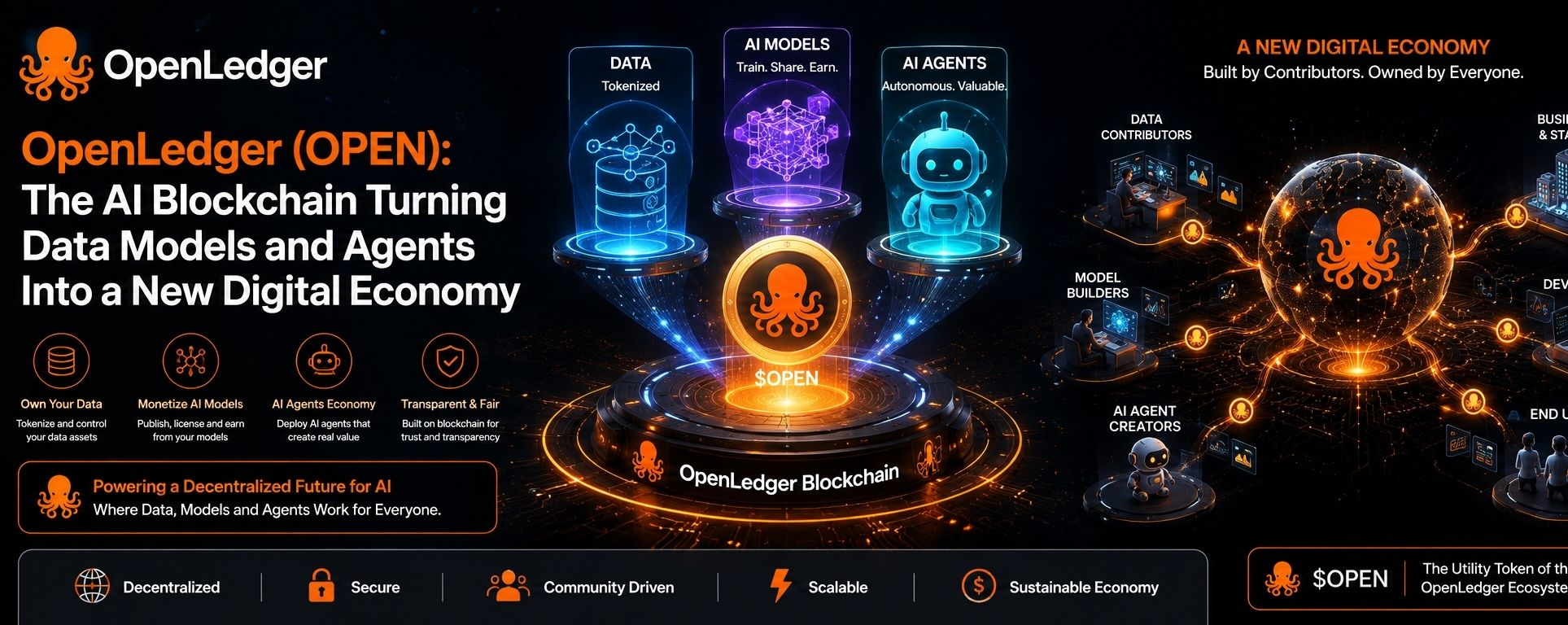
That realization slowly changed the way I looked at AI projects connected to blockchain technology. When I first heard about OpenLedger (OPEN) I assumed it was simply another AI token trying to benefit from hype. But after spending more time understanding the project the idea behind it started making real sense to me. OpenLedger focuses on unlocking liquidity for data AI models and autonomous agents within a blockchain ecosystem. Instead of users contributing value for free the project explores ways for participants to actually monetize their contributions inside the AI economy.
What really stood out to me was how simple the core idea becomes once you stop looking at the technical language. Today, most people interact with AI only as consumers while corporations control the infrastructure and profits behind the scenes. Users provide the inputs, developers build the systems and companies capture nearly all the financial rewards generated by those systems. OpenLedger seems to push toward a different structure where contributors can participate directly in the value creation process. That idea feels surprisingly aligned with the original spirit of crypto and decentralization.
Crypto has always been deeply connected to the concept of ownership and financial participation. Bitcoin challenged centralized money and gave users more control over digital value for the first time. Ethereum later expanded that idea by allowing developers to build decentralized applications and financial ecosystems. Now AI blockchains appear to be exploring another major shift involving decentralized intelligence economies. Instead of only tokenizing money or applications, projects like OpenLedger are attempting to tokenize intelligence data and machine-driven activity itself.
Another thing I noticed is how investor behavior around AI projects feels very different compared to previous crypto trends. In earlier cycles many people blindly chased hype without caring much about long-term utility or infrastructure. But now retail users seem more interested in understanding scalability, architecture, token utility and real-world relevance before investing. Maybe the market matured after multiple cycles filled with speculation and disappointment. Or maybe artificial intelligence simply feels too important for people to treat like another temporary narrative.
AI is no longer a futuristic concept that exists only inside technology conferences or science fiction discussions. Students already use AI tools daily to study, write, and research information more efficiently than before. Businesses increasingly rely on artificial intelligence to automate tasks improve productivity and reduce operational costs across industries. Developers continue building AI-powered applications and autonomous agents capable of handling increasingly complex responsibilities. Even content creators now compete with AI while also benefiting from the tools it provides for creativity and efficiency.
That is probably why the liquidity aspect of OpenLedger became the most interesting part for me personally. In crypto liquidity changes the entire behavior of markets because it creates incentives for participation and growth. Once something becomes a liquid asset, markets naturally form around it and ecosystems begin expanding very quickly. OpenLedger appears to apply that same economic logic to data AI models and autonomous digital agents. The project essentially explores whether intelligence itself can become part of an onchain economy where value flows more openly between participants.
Of course the space is still extremely early and there will definitely be hype weak projects and unrealistic promises along the way. Crypto markets have always been filled with noise whenever a major technological narrative starts gaining attention. But underneath all the excitement something genuinely important feels like it is slowly developing around AI infrastructure. People are no longer focused only on short-term pumps because they are trying to understand where the next digital economy could emerge. And honestly, that growing curiosity is probably why projects like OpenLedger (OPEN) continue attracting more attention across the market.
