
I literally remember when most infrastructure narratives in crypto used to feel obvious.
You could usually understand them in one sentence.
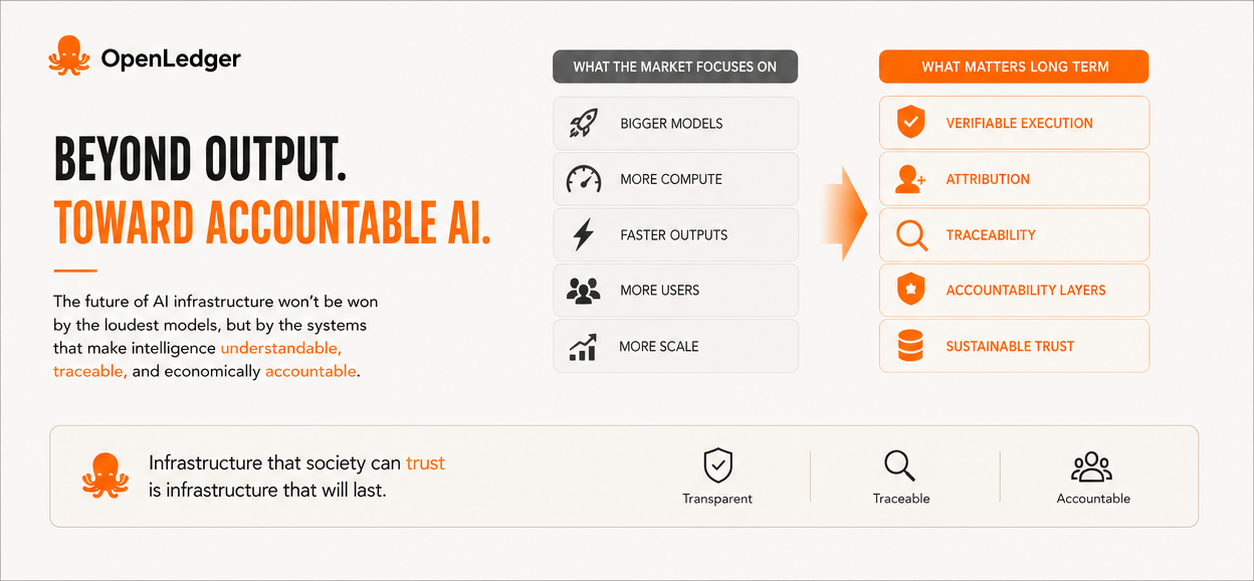
Faster chain. Cheaper infrastructure. More scalability. More users.
Even early AI narratives followed the same pattern. Bigger models more compute, more automation. Everything revolved around expansion. The assumption was simple: the systems with the most intelligence would eventually dominate.
But lately I keep noticing something different underneath all of this.
The conversation around AI is slowly shifting away from generation and moving closer toward accountability.
Not loudly. Not dramatically.
Quietly.
That’s honestly the part that keeps pulling my attention back toward OpenLedger.
Because the more integrations and infrastructure partnerships appear around the ecosystem, the less it feels focused on making AI louder and the more it feels focused on making AI understandable.
That sounds boring at first.
But maybe that’s exactly why it matters.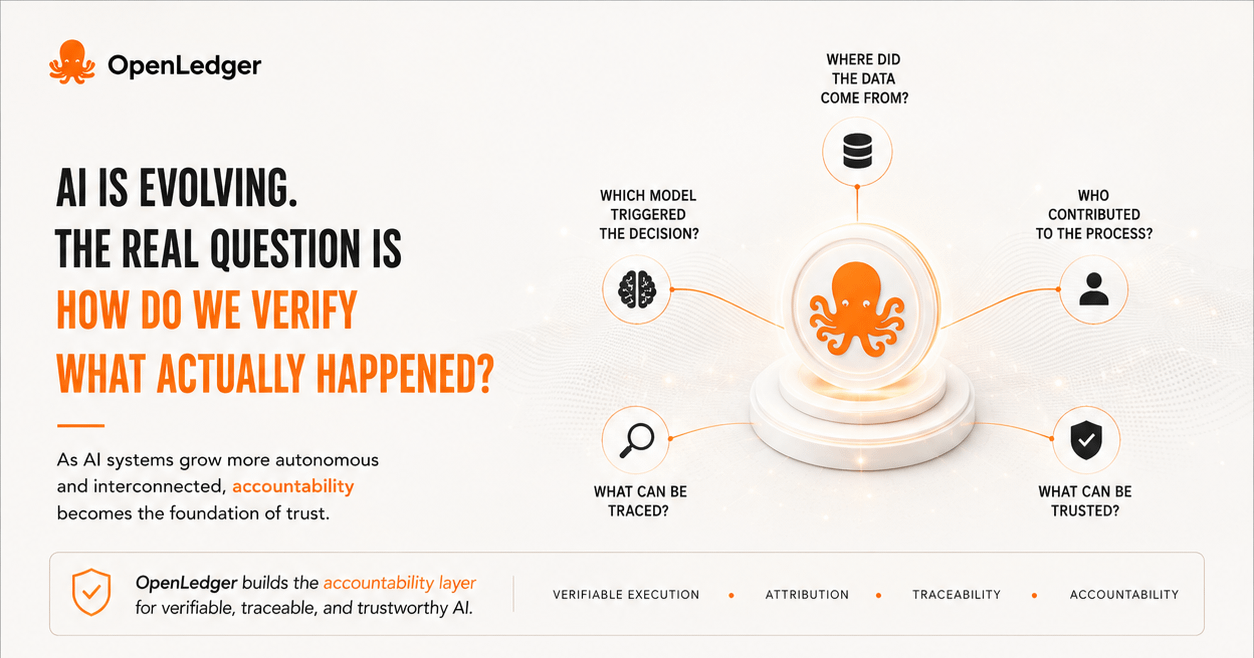
Most people still look at AI through the lens of output. Faster content. Smarter responses. Better automation. But once AI systems start interacting with financial systems, applications, data providers, and autonomous agents at larger scale, another problem quietly appears underneath everything else:
How do you verify what actually happened?
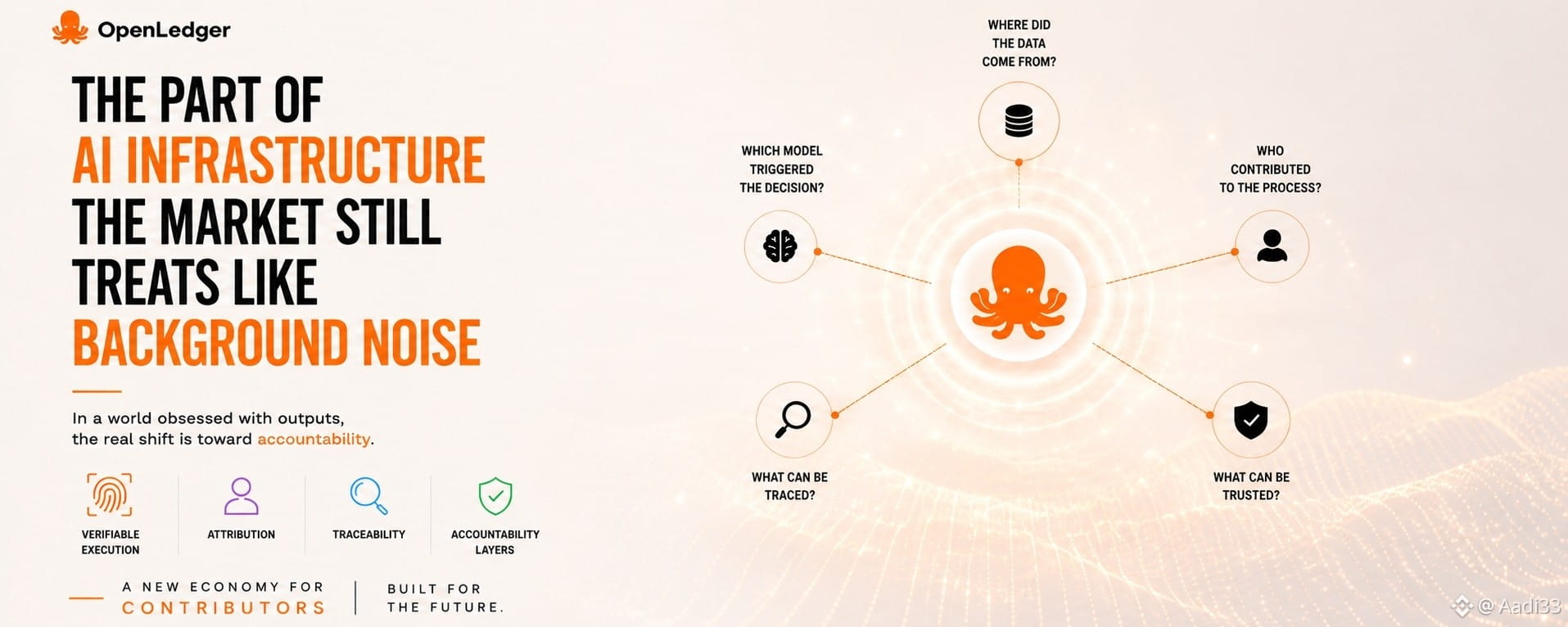
Where did the data come from? Which model triggered the decision? Who contributed to the process? What can be traced? What can be trusted?
The strange part is that these questions usually become important after ecosystems grow, not before.
Markets tend to reward excitement first.
Infrastructure usually gets ignored until dependency starts forming around it.
That’s why OpenLedger $OPEN feels different to me lately.
Not because it’s trying to dominate attention every day, but because more of its direction seems centered around structure instead of hype.
Verifiable execution. Attribution. Traceability. Accountability layers.
None of these are emotionally exciting narratives compared to the usual AI speculation people chase during fast-moving markets.
But the systems that survive long term are often the ones solving problems nobody fully cares about yet.
That’s the pattern I keep thinking about.
The more I watch AI infrastructure evolve, the more it feels like the market may still be focused on the visible layer while quieter systems are building the foundations underneath it.
Maybe that changes later. Maybe it doesn’t.
But OpenLedger increasingly feels less like a project trying to capture short-term excitement and more like infrastructure quietly positioning itself for a future where AI systems need to become explainable, traceable, and economically accountable.
And honestly I am started to think the shift may become more important than most people realize right now